Meloni's Angelic Likeness in Roman Church Fresco Causes Vatican Outrage
An unusual artistic tribute to Italy's populist Prime Minister Giorgia Meloni has sparked controversy and been removed from a historic Roman church after Vatican intervention. The incident has ignited a broader debate about the intersection of politics, religion, and art in Italy's sacred spaces.
The Controversial Restoration
Earlier this century, artist Bruno Valentinetti painted a mural tribute to Umberto II, Italy's last king, in a side chapel of the ancient San Lorenzo in Lucina Basilica in Rome's historic center. The photorealist work was widely considered an unsightly addition to a church that houses Guido Reni's magnificent 17th-century Crucifixion masterpiece.
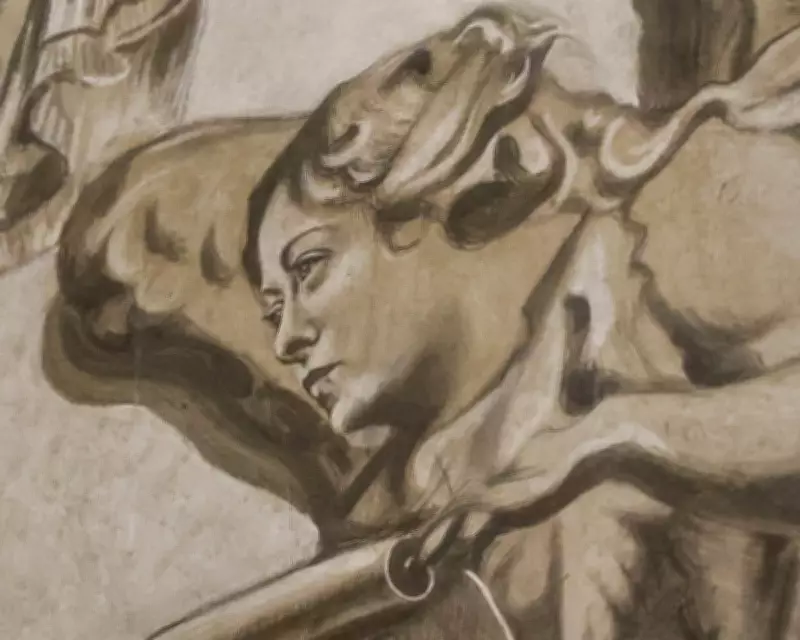
When water damage necessitated restoration work recently, the 83-year-old Valentinetti undertook repairs himself and made a controversial addition: he gave one of the angels the unmistakable face of Prime Minister Giorgia Meloni, clearly based on photographic references of the far-right leader.

The artist's motivations remain unclear – whether personal admiration, political statement, or artistic whim – but the result was immediate controversy. The fresco has since been altered to remove Meloni's likeness following protests.
Political and Historical Resonances
The location of Meloni's portrait carries particular historical weight. Umberto II's father, Victor Emmanuel III, collaborated with Mussolini's fascist regime before abdicating to his son in 1946 in an attempt to salvage the monarchy's reputation. Italians nevertheless voted for a republic that same year, sending Umberto II into exile.
"Given Meloni's political roots, her appearance in this specific chapel raises questions about potential affinities with Italy's authoritarian past," noted art critics. Meloni herself responded to the portrait with a characteristic "Who, me?" reaction when questioned about the angelic depiction.
Vatican Intervention and Artistic Tradition
Cardinal Don Baldo Reina expressed "bitterness" about the secret portrait, and Valentinetti claimed Vatican pressure led to the removal of Meloni's face. The cardinal argued that "images of sacred art and Christian tradition cannot be misused or exploited," maintaining a separation between sacred and profane realms.
However, this position contradicts Italy's rich artistic history. For centuries, Italian churches have featured portraits of contemporary figures in religious scenes:
- In Florence's Santa Maria Novella, Domenico Ghirlandaio's 15th-century frescoes include portraits of the wealthy Tornabuoni family
- The Medici family commissioned numerous works featuring themselves in sacred contexts, including Botticelli's depiction of Cosimo de' Medici touching Christ's foot
- Fra Filippo Lippi's Virgin and Child in the Uffizi Gallery is widely believed to portray his partner, nun Lucrezia Buti
Artistic Revenge and Hidden Portraits
Some of Italy's most celebrated religious art contains hidden portraits with personal meanings. The most famous example appears in Michelangelo's Last Judgment in the Sistine Chapel. When papal official Biagio da Cesena criticized Michelangelo for including too many nude figures, the artist retaliated by giving Minos, judge of Hell, Cesena's face – complete with a snake biting his genitalia.
"These historical examples demonstrate how Italian religious art has always engaged with contemporary life and politics," explained art historians. "The distinction between sacred and profane has never been absolute in Italy's artistic tradition."
Modern Context and Political Divisions
The key difference in the Meloni case lies in artistic quality and contemporary political context. Valentinetti's work lacks the artistic merit of Renaissance masterpieces, and today's political climate makes such depictions more contentious.
With Pope Leo XIV's Vatican positioned to the left of Meloni's government, the implication that the right-wing leader "belongs with the angels" proved particularly problematic. The incident highlights how Christianity's role in Italian society has evolved from permeating daily life to becoming a more tenuous presence often overshadowed by political divisions.

The controversy ultimately raises fundamental questions about art's purpose in sacred spaces and whether modern expectations for church art to be "safe and contemplative" represent a departure from Italy's rich tradition of politically engaged, humanized religious art that bridged the gap between heaven and earth.