Anselm Kiefer's Monumental Tribute to Forgotten Female Alchemists in Milan
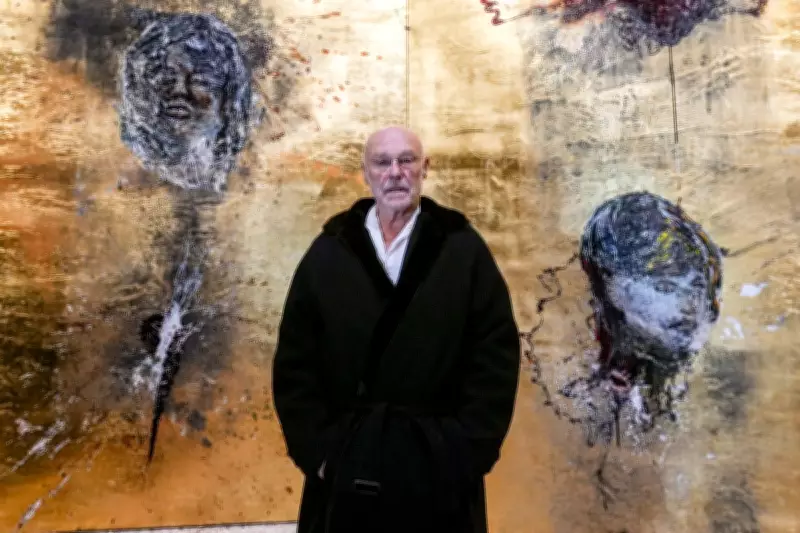
German contemporary artist Anselm Kiefer has unveiled a powerful new exhibition in Milan that pays homage to the overlooked women of proto-science. Titled "The Women Alchemists," the site-specific installation opened this week at Palazzo Reale as part of the city's cultural programming for the 2026 Winter Olympics.
A War-Scarred Setting for Historical Reflection
The exhibition occupies the Sala delle Cariatidi, a ceremonial hall severely damaged during an Allied bombing raid in 1943. Kiefer was immediately inspired by the room's crumbling caryatids—sculpted female figures that served as architectural supports—which have been left as a memorial to wartime destruction.
"I quickly came to the idea of the women alchemists, that is, women who were equal with men, who experimented with medicine exactly as men," said the 80-year-old artist, renowned for his monumental works examining history, memory and collective trauma.

Forty-Two Monumental Panels Celebrating Lost Contributions
Kiefer created 42 panels for the exhibition, some standing nearly six metres tall. Each features a female alchemist whose contributions to early chemistry and medicine were historically overshadowed by male achievement. The artist spent considerable time researching these overlooked figures, ensuring their stories would finally receive recognition.
Despite focusing on women's historical contributions, Kiefer insisted this was not a feminist exhibition. "I am half woman. How can it be feminist?" he asked a packed conference room during the preview, prompting applause from attendees.
An Innovative Installation Design
Originally hoping to hang the paintings high above the fragile caryatids, Kiefer instead arranged them to zig-zag across the ballroom floor like ornamental screens. This creates a pathway for visitors to reflect on the lives of the 38 women depicted, including Milan's own Caterina Sforza, daughter of Galeazzo Maria Sforza who served as Duke of Milan from 1466-1476.
The installation cleverly interacts with the hall's original wall mirrors, creating what Kiefer describes as "an interaction between what is hidden, and what is revealed." To achieve this effect, the artist meticulously recreated the museum space in his studio, placing mirrors in their corresponding positions.
Visual Symbolism and Artistic Technique
Kiefer represents each female alchemist in full figure, creating a deliberate contrast with the fragmented half-bodies of the caryatids. The imposing canvases feature swirling thick paint dominated by blueish-green, gold, black and silver tones.
The female alchemists—often historically mischaracterised as witches—are depicted with three-dimensional plants that formed the basis of their work, alongside books where they recorded their experimental results. Clouds and shrouds throughout the works denote the mystery surrounding these pioneering women.
Curatorial Perspectives on Artistic Alchemy
Exhibition curator Gabriella Belli offered insightful commentary on Kiefer's approach. "Kiefer is an alchemist in the way he approaches art," she observed. "For him, painting is always birth, destruction, regeneration, birth, destruction, regeneration. This is the process of alchemy, which is the transformation of matter."
Belli clarified that the exhibition represents "an act of important recognition, and not necessarily an act of justice or feminism," emphasising its historical rather than political focus.
Milan's Expanded Cultural Programme
"The Women Alchemists" runs from February 7th to September 27th, forming part of Milan's extensive cultural calendar accompanying the Winter Olympics. This includes the rare opening of a room in the Sforza Castle featuring a wall painting by Leonardo da Vinci.
Kiefer has a significant history with Italy and Milan specifically. His installation "The Seven Heavenly Palaces" remains permanently displayed across town at Hangar Bicocca, making "The Women Alchemists" exhibition a powerful counterpoint within the city's artistic landscape.

Despite the exhibition's significance, Milan's top cultural official Tommaso Sacchi confirmed there are currently no plans for permanent display. "I am not here to announce the complete donation of the works to Palazzo Reale," Sacchi joked during the preview, leaving the exhibition's future beyond September uncertain.