I'm Sorry, Prime Minister Review: The Yes Minister Universe Finally Loses the Plot
Jonathan Lynn's trilogy of sitcom-to-stage adaptations culminates in a slow and implausible satire of contemporary politics and the so-called 'woke' age. I'm Sorry, Prime Minister vividly captures the poignant feeling of losing power after a lifetime of pursuit, but its directionless narrative ultimately forgets it was meant to have a coherent plot.
A Messy World of Fading Influence
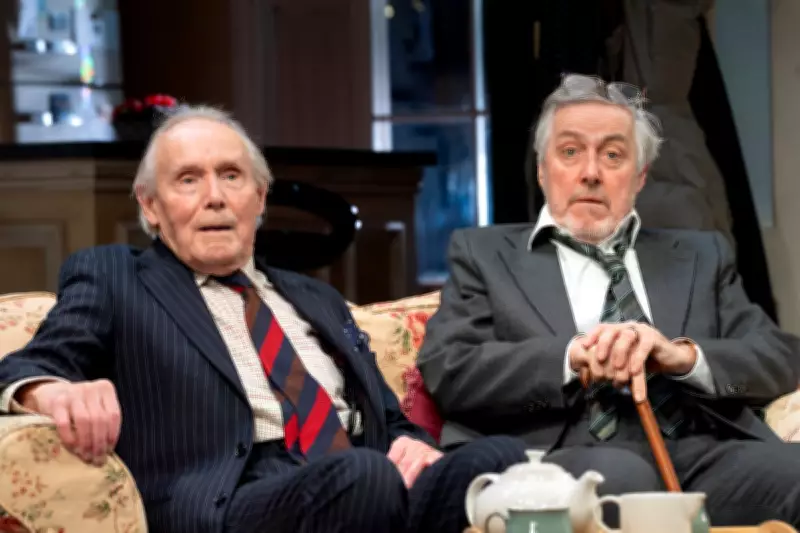
"We're in the dustbin of history," laments retired civil servant Sir Humphrey, played by Clive Francis, as he mourns the loss of his minions and political sway. Former prime minister Jim Hacker, portrayed by Griff Rhys Jones, is too preoccupied with personal discomfort to agree, hurriedly waddling to the bathroom. This chaotic scene sets the tone for the final instalment in the Yes Minister adaptation series, which shifts from Westminster's rat-ridden labyrinths to the fresher air of Oxford.
Hacker has secured a comfortable retirement as Master of a college, but his man-of-the-people bluntness repels students who demand his removal. Sophie, a Black lesbian working-class English graduate played by Stephanie Levi-John, embodies everything Hacker dislikes and misunderstands, including her role as his care worker tasked with washing his greying underpants.

Satirical Struggles and Political Nuances
While the original Yes Minister sitcom prided itself on political neutrality, Lynn admits in the programme notes that it was Margaret Thatcher's favourite show. In this play, Sophie's perspectives are portrayed as naive yet broadly reasonable, but they struggle for fair hearing when trigger warnings alone provoke audience guffaws. Hacker's views, depicted as laziness and opportunism, are hard to offend, as highlighted in exchanges with college legal bod Sir David, played by William Chubb.
Rhys Jones captures Hacker's harrumphing self-importance, a man held together by charm rather than principles. Francis shines as Sir Humphrey, delivering fluent jargon masterclasses and comedic physicality, though the plot lacks the ingenuity expected from the TV series.
Directionless Narrative and Claustrophobic Setting
The two-hour show suffers from a lack of plot, with the first half feeling like an elaborate setup that drags, and the second abandoning dramatic tension for daytime chat show-style discussions. Acerbic moments, such as Sir Humphrey calling out Hacker for semi-accidentally triggering Brexit, offer brief highlights, but overall, the play feels trapped in its single-room setting.
Lee Newby's set design, cluttered with framed pictures and books, mirrors Hacker's fading prestige. The ending is both cosy and implausible, emitting a hollow warmth akin to an electric coal fire. I'm Sorry, Prime Minister runs at London's Apollo Theatre until 9 May, but its satire fails to ignite meaningful engagement with modern political issues.