The National Museum Cardiff has unveiled a major retrospective of Gwen John, hailed as Wales's greatest modern artist. The exhibition, titled 'Strange Beauties', immerses visitors directly into her spiritual and austere world, bypassing biographical details to focus on her artistic essence.
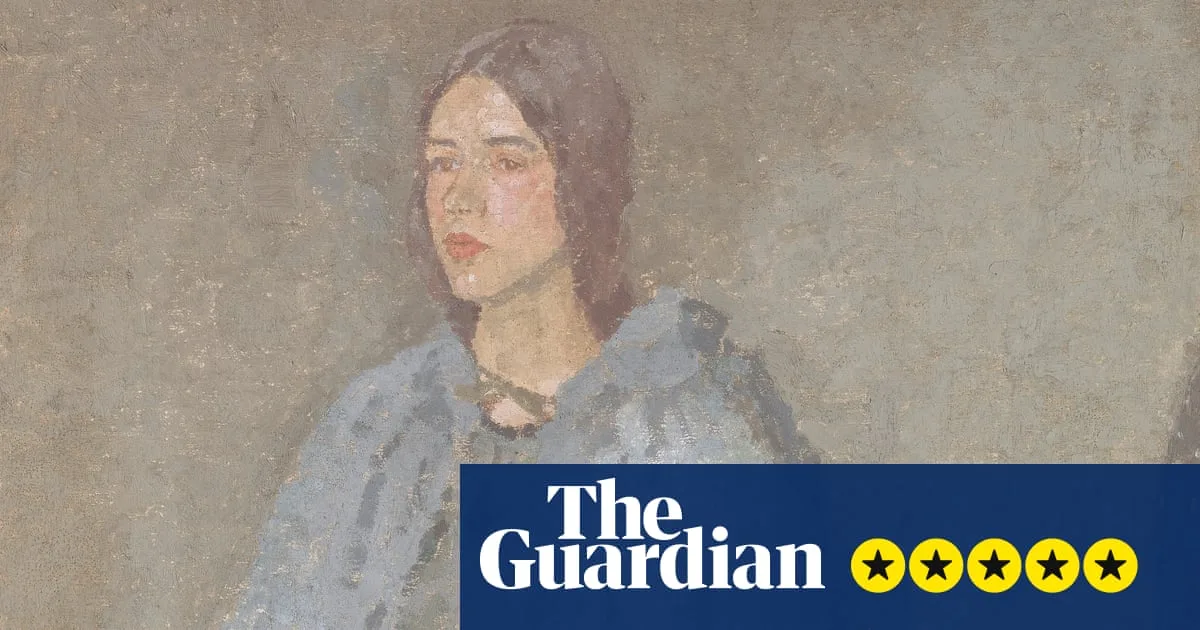
John's work is characterised by a stark reduction of social detail, concentrating instead on inner experience. A series of paintings from around 1920 depicts a young woman in a blue dress reading a letter or sipping soup, with variations in titles such as 'The Letter' and 'The Convalescent'. The absence of period clutter or anecdotal elements underscores her focus on solitude and emotional truth.
Her early works, like the 1898 portrait 'Mrs Atkinson', already display this pared-down style. John's friendship with Dorelia McNeill, whom she painted in a warm lamplight in Toulouse, hints at deeper affections. In Paris, she modelled for and had an affair with Auguste Rodin, whose bronze portrait of her is included in the show.
John's embrace of nudity as natural is evident in her 'Self-Portrait, Nude, Sketching' (c.1908-9), where she stands unabashed before a mirror. This drive for freedom from social constraints parallels male modernists like Matisse and Schiele. Yet she was also drawn to religious life, converting to Catholicism and painting a series of nuns from the community at Meudon, where she lived from 1911.
The exhibition includes 'The Pilgrim', a woman in a blue cape evoking Christian symbolism, and a rare smiling portrait of Mother Marie Poussepin. John's mysticism and commitment to essential truths are celebrated throughout, with the museum having acquired its first work by her in 1935.