Black Watch: The Iraq War Epic That Conquered Global Theatre
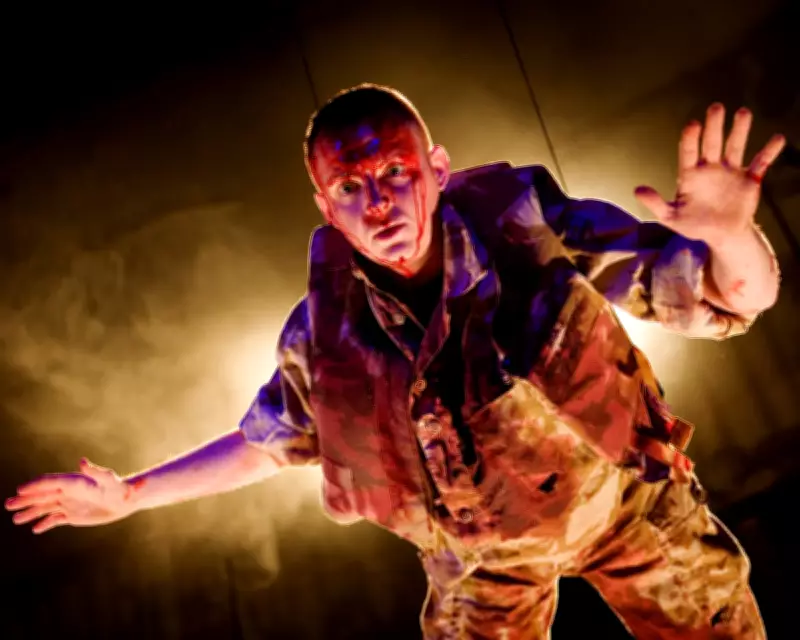
Within six months of its launch in 2006, the National Theatre of Scotland (NTS) produced a globe-conquering hit with Black Watch. Inspired by tragic events at Camp Dogwood in Iraq, this humane portrayal of young squaddies on the frontline transported audiences from a Fife pub to a war zone, where a pool table transformed into a tank and nothing was more heartbreaking than a letter from home.
The Genesis of a Masterpiece
Vicky Featherstone, the founding artistic director of NTS, recalls her first day in 2004 when she bought a Glasgow Herald. "On the front page was an article saying Tony Blair was going to get rid of Scotland's individual regiments and turn them into the Royal Regiment of Scotland. On page three, there was a sad story about three soldiers from the Black Watch regiment who had been blown up by an IED along with an Iraqi translator. In the gap between page one and page three was a story that had to be told," she explains. Featherstone immediately called playwright Gregory Burke to follow this story.
Burke, whose voice mirrored that of the soldiers from Fife and Tayside, felt a deep connection. "The Black Watch all come from Fife and Tayside and were the people I grew up with. My voice was the voice of the soldiers," he says. Despite not knowing them personally, he quickly found common ground, with one soldier noting, "Oh, you know my sister."

Building on Scottish Tradition
The play was built on a rich Scottish theatrical tradition, drawing inspiration from works like Bill Bryden's The Ship and John McGrath's The Cheviot, the Stag and the Black, Black Oil. Director John Tiffany urged Burke not to write a conventional play but to revive the big Scottish theatre event show, though he admits, "I had no idea how to do it."
Finding the right interviewees was crucial. Burke notes it took time to locate soldiers who were the right age, had been in Iraq, were not too institutionalised to talk, and were articulate enough to provide material. Meanwhile, Featherstone recalls a pivotal night when Tiffany and movement director Steven Hoggett were struggling. "One night, John rang me up. He was with Steven Hoggett at John's flat. He said, 'We don't know what it is yet.' I went round and we drank red wine, and I was just going, 'You have to find what it is. It's really important.' The wine sorted it out," she laughs.
Rooted in Reality and Theatrical Innovation
Actor Brian Ferguson, who played Cammy, based his character on a real soldier who spoke to the cast for an hour. "That changed everything because then you've got someone whose story you really want to do justice to," he says. Tiffany was struck by the soldiers' generosity and intelligence, which demolished his preconceptions and shaped the play's approach to audience engagement.
Though billed as verbatim theatre, Burke applied author's prerogative to embellish and dramatise, exploring broader themes like the history of Scottish soldiering and Scotland's martial identity. Actor Emun Elliott highlights the balance between theatricality and devastating subject matter, with abstract elements like miming letters from home or a fashion parade adding depth.
Designer Laura Hopkins' innovative set, centred on a pool table, allowed seamless transitions between the pub and war scenes. "The pool table allowed us to switch between the pub and the other scenes. At one point we were trying to build a tank on top of it, but nothing was working. I was struck that the dimensions of the interior of this tank were the same as the footprint of the table. As soon as we tried the idea of the soldiers emerging from inside the pool table, we thought, 'Yes, that's the way to do it,'" she explains.
Gruelling Preparation and Emotional Impact
The cast underwent rigorous training to embody soldiers authentically. Elliott recalls gruelling three-hour workout sessions with Hoggett, leaving them in the best shape of their lives. Tiffany arranged for a regimental sergeant major from the Black Watch to teach them how to march, an experience that was initially brutal but ultimately pride-inducing.

Despite doubts before the dress rehearsal, the first preview was a revelation. Burke remembers, "When the knife came up through the pool table, there was a gasp. John and I were at opposite ends of a row and we leant forward to look at each other as if to say, 'We are on to something here.'" The audience response was overwhelming, with standing ovations becoming a regular occurrence.
Global Tour and Personal Connections
Originally deemed impossible to tour, Black Watch went on a seven-year global tour. In Glenrothes, families of fallen soldiers attended, with one mother thanking Tiffany for giving her son back to her for two hours. Elliott shares a poignant moment: a father gave him a keyring with pictures of his son, a gesture that was both tragic and beautiful.
In New York, the play attracted diverse audiences, including Lou Reed and Rupert Murdoch on the same night. Burke notes that while Americans venerate their armed forces, making criticism of the Iraq War difficult, the play resonated deeply, especially in places like Austin, Texas, with its veteran community.
Legacy and Influence
Featherstone reflects on the play's role as a tool of soft power for the SNP government, but without cynicism. "We were a national theatre and we were asking difficult questions about what it is to be Scottish and they were not censoring us in any way. It was a platform and it was more than you could ever have expected from a national theatre in its second year," she says.
The play opened doors for its actors, with Elliott gaining American management and an agent, and Ferguson noting that actors from Black Watch are often recognised for their confidence and vitality. Jackie Wylie, the current artistic director of NTS, emphasises its generational impact: "Black Watch inspired a generation of talent. Jack Lowden, the second Cammy, was clear that his career started with Black Watch – he was 20. It put Scottish theatre on a global map and defined the company."
Today, Black Watch remains a landmark in theatre history, a testament to the power of storytelling and its ability to connect audiences worldwide with the human cost of conflict.