Architect's Mission to Rebuild Church and Restore Multicultural Heritage in Quake-Hit Antakya
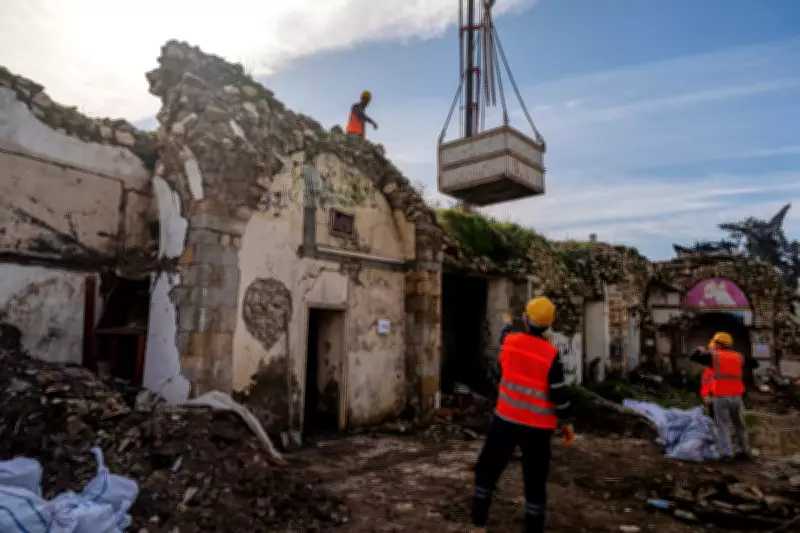
Architect Buse Ceren Gul is on a determined mission to restore a 166-year-old Greek Orthodox church, aiming to help reconnect locals with their city's multicultural past in the earthquake-devastated Turkish city of Antakya. The church, which lies in ruins three years after catastrophic earthquakes, once served as a beacon of the region's diverse heritage.
Devastation and Historical Loss
The magnitude 7.8 earthquake on February 6, 2023, followed by another hours later, ranks among Turkey's worst disasters. In Antakya, the quakes destroyed much of the historical town center, including hundreds of thousands of buildings across Turkey, resulting in over 53,000 deaths and another 6,000 in neighboring Syria. The destruction threatened to erase Saray Avenue, one of Antakya's oldest streets and a hub for Christians, Muslims, and Jews of different sects.
"The old city is central to the earliest memories of anyone who grew up here," said 34-year-old Gul, who belongs to the Alevi Muslim community. "'Have we vanished?' I asked myself when I first saw the site in the aftermath of the quakes." She believes that raising the old city back to its feet might prove Antakya's roots can be preserved once again.

Restoring St. Paul's Church
St. Paul's Church, part of the Greek Orthodox Patriarchate of Antioch on the eastern bank of the Orontes River, was completely rebuilt in 1900 after an 1872 earthquake. Gul had been studying and working on the church's renovation before the 2023 quakes. Of the 293 cultural heritage sites damaged in Hatay province, the church is among the few with approved architectural drawings, which Gul was drafting.
"When I was working on those plans, one of my mentors told me to draw in a way that the church can get rebuilt if it gets demolished," Gul recalled. "I never thought this grand structure could actually be obliterated, but I drafted a point-by-point plan." After saving the rebuilding plans from her office ruins post-quake, she secured support from the World Monuments Fund, a nonprofit focused on preserving endangered cultural heritage.
Challenges in Reconstruction
With technical and financial contributions from the fund, Gul's team cleared tons of rubble, recovering intact stones, but work has stalled awaiting more funding. The Greek Orthodox Church Foundation of Antakya, overseeing the project, lost up to 95% of its income after the earthquakes, according to president Fadi Hurigil. The church's main income came from rents on Saray Avenue shops catering to tourists, and their reopening is key to generating income as aid dwindles.
The Ministry of Environment, Urbanization and Climate Change has contracted a company for shop redevelopment since the beginning of the year. However, the main challenge is the return of people who once filled the church's courtyard and Saray Avenue district. Most houses in the historical center remain in ruins, displacing the majority of the Greek Orthodox community.
Community Displacement and Cultural Fears
Hurigil noted that 370 to 400 families lived in central Antakya pre-quake, with only about 90 returning, though others visit for ceremonies. "The community's biggest need to be able to return to Antakya is the reconstruction of their homes and commercial properties," he said. Many live outside Antakya in smaller districts or surrounding cities due to the lack of a wider urban restoration plan.
Residents like Evlin Hüseyinoğlu, whose family home near Saray Avenue had minor damages, find it financially risky to restore without a decisive urban plan, so they live in Arsuz, a three-hour drive away. Community leaders fear extended displacement will upend Antakya's long-established intercultural harmony.
"We grew up in Saray Avenue, now there is no Saray Avenue," said Dimitri Dogum, 59, a St. Paul's Church official whose family lived in Antakya for 400 years. "So many people have left the city already and it could take another five years until Antakya recovers." Dogum, who is Christian, worries that children will not form the interfaith friendships he enjoyed, fearing the loss of the culture of living together.

Historical Context and Resilience
Known as Antioch in the Middle Ages, Antakya dates to the sixth century B.C.E., with Hellenistic, Roman, and Ottoman layers surviving at least five earthquakes of magnitude 7.0 or higher since 115 C.E. Gul's efforts symbolize a broader struggle to preserve this rich, multicultural history against natural disasters and modern challenges.