Tudor Portrait's Hidden Truth: Anne Boleyn's 'Sixth Finger' Myth Debunked After 400 Years
Anne Boleyn's 'Sixth Finger' Myth Debunked by Tudor Portrait

For centuries, the reputation of Anne Boleyn, Henry VIII's second wife, has been shadowed by a persistent and malicious rumour: that she possessed a 'sixth finger', a supposed sign of witchcraft. Now, groundbreaking analysis of a 400-year-old portrait has finally provided compelling visual evidence to dispel this long-standing slander.

Infrared Revelation at Hever Castle

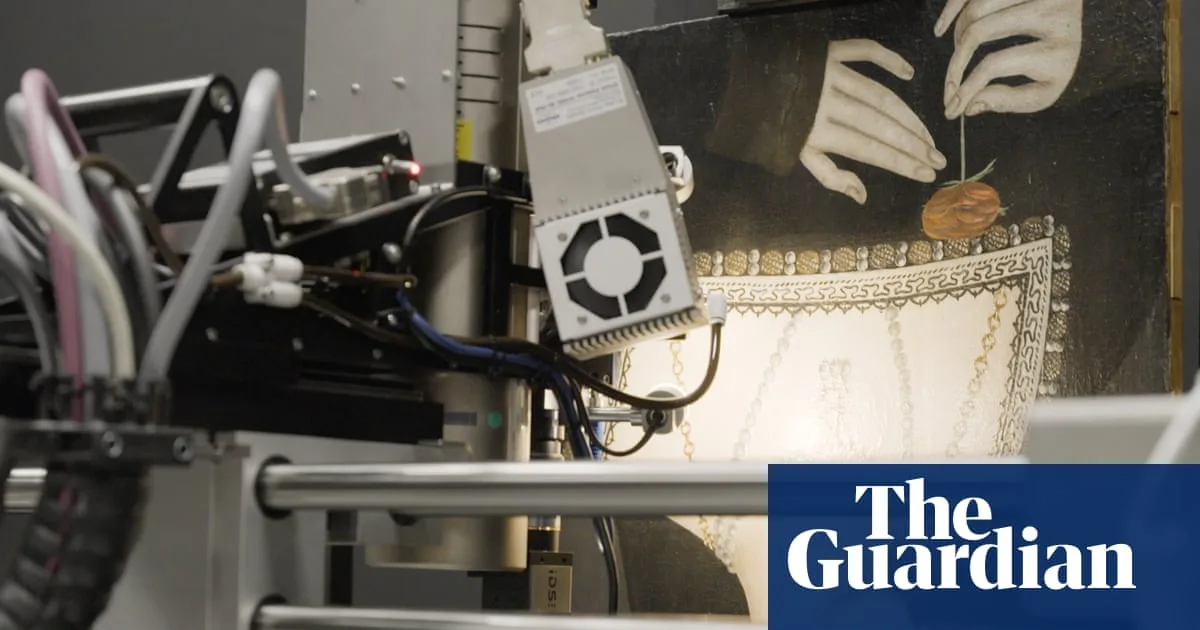
Curators at Hever Castle in Kent, Anne Boleyn's childhood home, have employed advanced infrared scanning technology on the famous 'Rose' portrait. The results have uncovered a fascinating artistic intervention hidden beneath layers of paint for over four centuries. The infrared reflectography, conducted by the Hamilton Kerr Institute, part of the Fitzwilliam Museum in Cambridge, allows experts to see through paint to the original sketch beneath.

A Deliberate Departure from Tradition

During the Tudor period, portraits were typically created using standardised facial patterns called 'patterns', which were reused in workshops rather than painted from life. The standard 'B' pattern used for Anne Boleyn's portraits never included her hands. However, the Rose portrait reveals a significant deviation.

Dr Owen Emmerson, assistant curator at Hever Castle, explained to the Daily Mail: 'This preliminary design was laid down with confident, continuous lines, indicating it was transferred from a pre-existing pattern. In this design, Boleyn's hands extend downwards and disappear beneath the bottom edge of the panel, as they do in all standard 'B' pattern portraits.'

The crucial discovery is that at a later stage, the artist deliberately altered this plan. Anne's hands were painted in, clearly visible and cutting across the earlier design. Dr Emmerson describes this choice as a 'clear visual rebuttal to that slander' and a deliberate effort to 'visually reject hostile myths and reassert Anne Boleyn as a legitimate, dignified queen.'

Political Propaganda and Royal Legitimacy

Anne Boleyn was Queen of England for just three years between 1533 and 1536 before Henry VIII had her executed for treason. Her only surviving child, Elizabeth I, would become the longest-reigning Tudor monarch. However, Boleyn faced persistent slander intended to justify the accusations against her and to discredit Elizabeth's claim to the throne.

The most prominent of these claims was that she practised witchcraft, supposedly evidenced by being 'physically unnatural' with six fingers. Tree-ring analysis (dendrochronology) dates the Rose portrait to 1583, placing it firmly within Elizabeth I's reign. Curators suggest the alteration was likely commissioned during this period as part of Elizabeth's campaign to restore her mother's reputation.

Dr Emmerson notes: 'When Elizabeth came to the throne and remained unmarried, Catholic propaganda seized on her mother's reputation to undermine her authority, frequently portraying Anne as morally corrupt or even 'witch-like'. In response, Elizabeth worked to restore her mother's status, formally recognising her as queen by act of parliament and adopting Anne's symbols and emblems as her own. This portrait forms part of that broader campaign.'

The Scientific Process Behind the Discovery

The research team used infrared reflectography, a technique where infrared light passes through paint layers until hitting something absorbent. Since carbon-based black pigments strongly absorb infrared light, this reveals the original underdrawing. The scan clearly shows the artist's initial sketch without hands, over which the visible hands were later added.

This makes the Rose portrait unique among surviving likenesses of Anne Boleyn. While no portraits from her lifetime exist, with all being copies from earlier works, this is the only known example where the artist deliberately chose to show her hands, specifically to counter the sixth finger myth.

Anne Boleyn's Historical Context

Born in 1501 to Thomas Boleyn, Earl of Wiltshire, and Elizabeth Howard, Anne Boleyn received an unusually good education for an upper-class Englishwoman while growing up in the Netherlands and France. After returning to England, she joined Henry VIII's court, prompting the king to annul his marriage to Catherine of Aragon.

Following their marriage in 1533, Anne's failure to produce a male heir led to false accusations of treason, adultery, and incest. Henry VIII had her beheaded in April 1536, declaring their daughter Elizabeth illegitimate. The Rose portrait's alteration represents a significant effort, decades later, to reclaim her dignity and legitimacy.

The discovery at Hever Castle not only sheds new light on Tudor artistic practices but also reveals how portraiture was used as a powerful tool in political and dynastic conflicts, fighting propaganda with carefully crafted visual evidence.