AI Analysis Challenges Authenticity of Van Eyck Paintings in US and Italian Museums
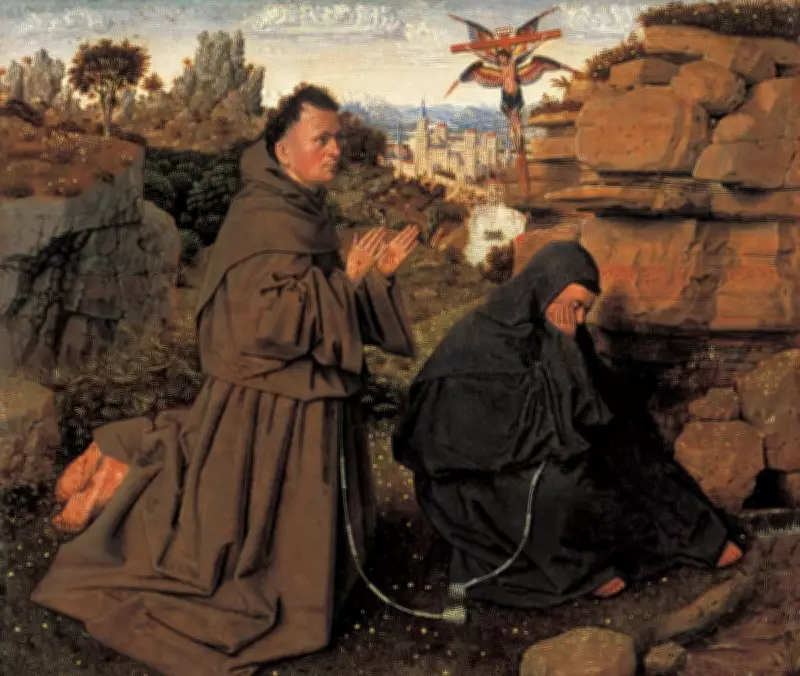
An artificial intelligence analysis has cast significant doubt on the authenticity of two paintings attributed to the 15th-century Flemish master Jan van Eyck, housed in prominent museums in the United States and Italy. The works in question are near-identical versions of Saint Francis of Assisi Receiving the Stigmata, displayed at the Philadelphia Museum of Art and the Royal Museums of Turin, both of which have long been considered rare surviving pieces by one of Western art's most revered figures.
Scientific Tests Reveal Negative Results for Brushstroke Detection
Conducted by Art Recognition, a Swiss company collaborating with Tilburg University in the Netherlands, the AI-based tests were unable to detect Van Eyck's distinctive brushstrokes in either painting. The analysis concluded that the Philadelphia version was 91% negative for authenticity, while the Turin painting scored 86% negative. These findings suggest that neither work may have been painted by Van Eyck himself, potentially reclassifying them as studio productions from his workshop.
Dr Carina Popovici, chief executive of Art Recognition, expressed surprise at the results, noting that she had expected at least one painting to test positive. In contrast, the analysis of another Van Eyck masterpiece, The Arnolfini Portrait at the National Gallery in London, showed an 89% likelihood of being authentic, highlighting the dramatic nature of the negative outcomes for the Philadelphia and Turin pieces.

Expert Opinions and Historical Context
Till-Holger Borchert, a leading Van Eyck scholar and director of the Suermondt-Ludwig-Museum in Aachen, stated that the AI findings support previous scholarly suggestions that both versions are studio paintings. He emphasized that this raises further questions about their origins and the possibility of a lost original by Van Eyck. Dr Noah Charney, an art historian, described the results as surprising, noting that they indicate both paintings might be workshop copies, challenging the romanticized notion of the solitary artist.
Van Eyck is celebrated for perfecting oil painting techniques, with his works renowned for their luminous detail and naturalistic quality. Despite his fame, fewer than 20 paintings are universally accepted as his own, making any potential reattribution significant for art history. The National Gallery in London is preparing an exhibition of Van Eyck portraits scheduled for November, which may now include discussions on these authenticity debates.
Broader Implications and Criticisms
Critics of AI-based art analysis argue that factors such as a painting's condition and subsequent restorations could affect brushstroke detection, potentially skewing results. However, Art Recognition has a track record of accuracy, including identifying up to 40 fake paintings on eBay in 2024 and questioning the authenticity of Rubens' Samson and Delilah in 2021. The Philadelphia and Turin museums have been contacted for comment but have not yet responded publicly to the findings.
This development underscores the growing role of technology in art authentication, prompting museums and scholars to re-evaluate historical attributions. As AI tools become more sophisticated, they may continue to reshape our understanding of artistic heritage, blending traditional scholarship with modern scientific methods.