Tehran Engulfed in Chaos as Airstrikes Intensify
Iranians awoke on Thursday to a fresh wave of explosions rocking Tehran, marking the sixth consecutive day of warfare since the United States and Israel initiated assaults that have claimed more than 1,200 lives, including the country's supreme leader, Ali Khamenei. Among the casualties are 168 children tragically killed at a school in the southern province of Hormozgan, with thousands more injured across the nation.
Escalating Military Actions and Civilian Toll
Washington has pledged to strike targets deeper within Iran, while Israeli officials reported dropping over 5,000 bombs since the onset of their offensive. In retaliation, Iran launched missiles and drones, hitting locations across the Middle East, including Israel, the United Arab Emirates, Qatar, and Saudi Arabia. Iranian President Masoud Pezeshkian vowed that the nation would defend itself vigorously.
Just a week prior, Iran's foreign minister, Abbas Araghchi, engaged in nuclear negotiations in Geneva, indicating that Tehran and Washington were moving closer to agreement. However, two days later, Israel and the US commenced a war lacking a clear legal mandate or basis, with minimal consultation from Congress or the American public.

Photographer Captures the Destruction
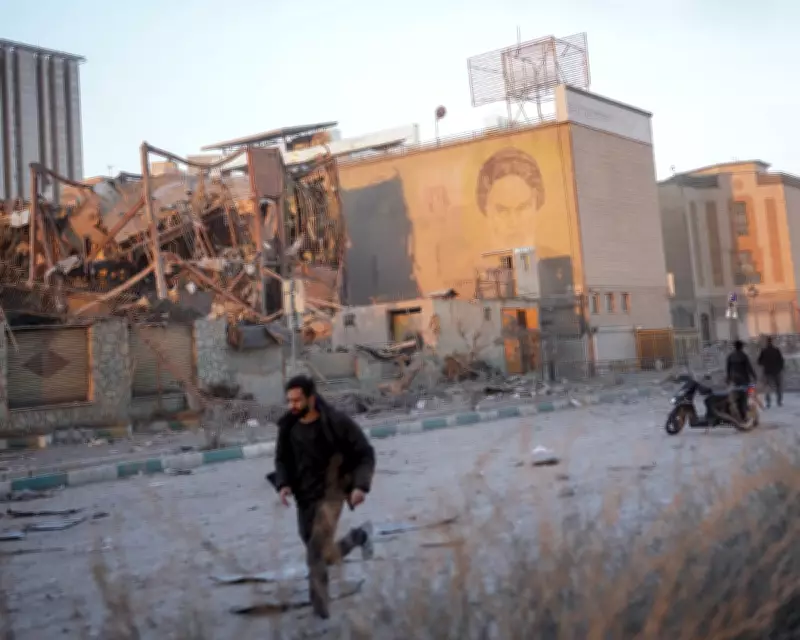
Tehran, a metropolis of approximately 10 million residents, has been ablaze, with civilians enduring the heaviest burdens of the conflict. Iranian photographer Mohammad Mohsenifar has been meticulously documenting the widespread destruction. On Wednesday, a residential complex in south-eastern Tehran was struck, resulting in two apartment blocks being completely obliterated and five others severely damaged.
A distressed resident recounted, "Residents have evacuated their homes," noting that his sister lived nearby. Smoke continues to billow from the ruins as first responders retrieve the deceased and attend to the wounded. Firefighters douse the remnants of structures reduced to twisted skeletons of concrete, brick, and rebar.
Humanitarian Crisis Unfolds
The air grows thick with smoke, making respiration harsh, while the Alborz mountains encircle the city, trapping not only winter smog but also the choking fumes from airstrikes. In south-eastern Tehran, chaos reigns: teenage girls sit roadside with blank expressions as residents sprint past, and a woman hastily loads belongings into a car, including a cage housing her two cockatiel birds.
Others dash back into damaged apartments to salvage documents, electronics, and valuables. Blankets are draped over furniture for protection, yet most possessions are abandoned as families flee to seek refuge with relatives outside the city, towards the mountains of Gilan or the Caspian Sea.
Grim Scenes and Rescue Challenges
Nearby, first responders lift a body into an ambulance, while a dust-covered white stuffed rabbit lies amidst debris alongside books, prayer beads, and shattered glass. Blood, thick strands of hair, and body fragments litter the rubble, collected into plastic bags.
Mohsenifar highlighted the peril of second strikes, explaining, "One of the worst things are the second strikes," which often occur minutes after first responders arrive, increasing casualties and causing rescue teams to hesitate, anticipating further explosions.
Life Amidst the Ruins
Despite the conflict, Tehran has not ground to a complete halt. Schools and universities closed when hostilities began, but many shops, markets, and some restaurants remain open, serving Iftar meals at sunset during Ramadan. An internet blackout, however, has severely hindered communication with family and friends.
On Tuesday, a strike near Azadi Square briefly shut the highway linking the capital to eastern provinces, while a police station was hit near Enghelab Square, an area recently filled with mourners following Khamenei's death. Mohsenifar witnessed injuries and fatalities at Azadi Square, describing chaotic scenes with charred cars, injured individuals, and a collapsed man.

Eerie Silence and Lingering Fear
A green city bus with shattered windows bore a sticker reading "Lovely Tehran," juxtaposed against rising black smoke. Earlier this year, anti-government protests in this area resulted in casualties estimated between 5,000 and 20,000, according to UN special rapporteur Mai Sato.
Residents now venture out cautiously for essentials like bread or to check on relatives, with few cars on the roads. Mohsenifar, a Tehran native, expressed that stopping at red lights feels perilous, yet driving is equally risky, as "there's no safe place in Tehran any more." Explosions echo unpredictably, transforming once vibrant, traffic-jammed streets into eerily quiet pathways of fear.