Comment Are these really Keir Starmer’s final days in office? With access to the EU’s single market in his sights and an antisemitism summit in Downing Street, this is already shaping up to be Keir Starmer’s strangest week yet… and one that could define his entire premiership, says Sean O’Grady
Tuesday 05 May 2026 12:29 BST
Keir Starmer calls for 'whole of society' response to tackling antisemitism

How strange it must be to be Keir Starmer right now. This time next week, after what is expected to be a devastating set of local and devolved election results, it is now widely assumed he will be out of his job. But the exact timing and nature of his departure may well be a defining part of his legacy.
We don’t know exactly how or when Starmer will go, because the British constitution is surprisingly vague about usurping a prime minister. But, thanks to precedence – in the past decade alone, the PM has been replaced five times – various possibilities exist. The cabinet could intervene to say time’s up, as broadly happened in 1990 with Margaret Thatcher. The machinery of government could start disintegrating beneath Starmer’s feet, as happened with Boris Johnson: in a week of crisis leading up to his resignation in July 2022, more than 60 ministers, parliamentary aides and envoys quit, prompting a line in his farewell address: “When the herd moves, it moves.”
Backbenchers could make their lack of confidence known – “Quit, or else” – as Theresa May and Liz Truss discovered. According to reports, a number of Labour MPs are primed to demand Starmer’s resignation this weekend, although housing minister Steve Reed has today warned restless backbenchers that no good will come from “doomscrolling through leaders”.
There might yet be a high-profile resignation or two, to galvanise opposition to Starmer and unite around a new leader. An “anyone but Ange” briefing operation has already started to prevent a takeover of Labour by the left, with health secretary Wes Streeting, a leading right-leaning voice, reported to have secured the support of more than 81 MPs, about a fifth of the Parliamentary Labour Party, if and when the top job becomes vacant.
Friends could advise that, for the sake of the party as well as the country, the prime minister should leave now with dignity. Victoria Starmer might tell her husband that she thinks the game is up; asked about this obliquely last week, Starmer acknowledged her influence on him in such momentous decisions.
Even if he is as stubborn as appears to be, Starmer is not stupid: he is well aware that there are people sitting around his cabinet table, and at least two outside, who think they can do the job better than he can.
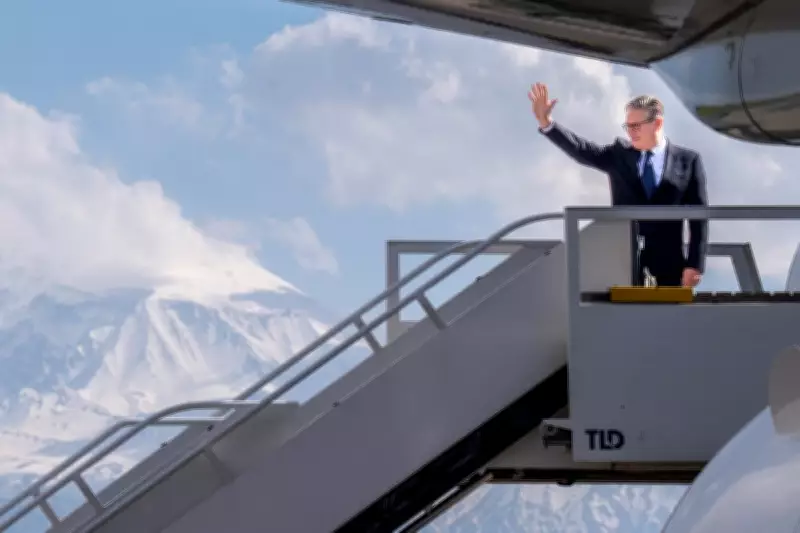
Keir Starmer spent the weekend at the European Political Community summit in Armenia – the first sitting British prime minister to visit since independence (AP)
To my mind, it is a small wonder that someone under such personal pressure can focus on the day-to-day of their premiership so determinedly as Starmer. Yet, for all the noises-off, still he grinds on. He is just back from another European summit – marking the first post-independence visit to Armenia by a British prime minister – and is determined to edge the UK closer to Europe, centimetre by centimetre.
In his remaining time in office, if Starmer could set Britain on a road to closer ties with Europe – the latest idea being that, for a yearly fee of around £1bn, we could have increased access to the single market – his ‘Brexit reset’ would stand as a central tenet of his prime ministerial legacy.

What might be Starmer’s final ‘safe’ week in office is already shaping up to be his strangest yet. Today, he is hosting a Downing Street summit to address growing antisemitism in Britain. He is also busy overseeing contingency plans for the coming economic crisis caused by America’s war in Iran, notably energy and medicine shortages and another rise in cost of living crisis. He might even be considering a reshuffle of his ministers for when the local election results roll in on Friday, albeit at the risk of creating some new dispossessed enemies. For what it’s worth, I don’t happen to think that Starmer is about to be ejected from Downing Street. But so much of what has gone wrong with his premiership so far can be directly attributed to his own misjudgments, notably about personnel, and his own curious incuriosity about what his government, especially the Treasury, is getting up to.
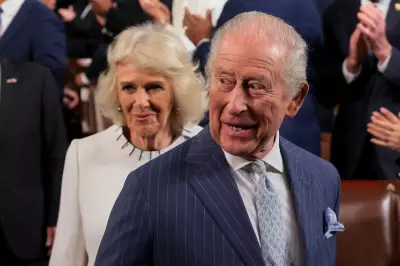
For now, we have a zombie prime minister, oozing political vitality and authority, increasingly attacked by his own side, and unable to get ahead of events and control his own destiny. He has even handed over to King Charles his hard-won status as Donald Trump-whisperer-in-chief.
While there are many potential contenders for the premiership, not one has either the popularity or the necessary qualities to succeed Starmer. That won’t stop any of them trying, or many of his backbenchers plotting to get rid of him. It would also leave any successor to inherit a broken party and government, which would settle nothing and seed further division. If by some miracle, Starmer survives Labour losing a possible 2,000 councillors in England, while being replaced in Wales by either Plaid Cymru or Reform, and slipping out of opposition in Scotland, it will only make his day job harder. Before too long, like some sort of curse of Downing Street, the backbiting and the speculation will crank up again about Starmer’s successor, just as it did when May succeeded David Cameron, Johnson usurped her, Truss replaced him and Rishi Sunak had to take over from her.
“Febrile” is the new normal in Westminster, driven by a national economic and social malaise, and it is making Britain ungovernable. Our political system is becoming inherently unstable, irrespective of party or Commons majority; and “insurgent” parties are adding to the unpredictability and injecting extremism into the mix.
Starmer is just the latest victim of these deeper, disturbing trends – and he will not be the last.