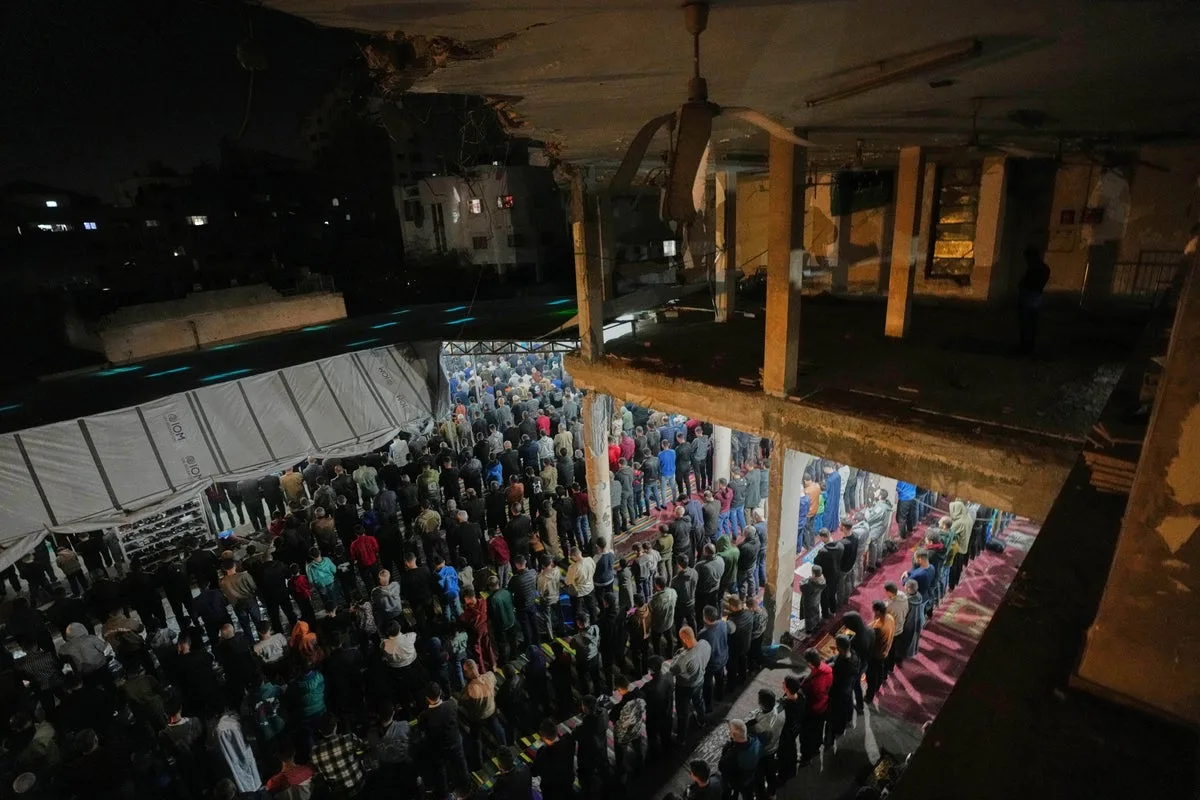
Gaza's Ramadan Begins Under Fragile Ceasefire Amid War's Lingering Shadow
Ramadan in Gaza Under Fragile Ceasefire, Festive Spirit Dimmed

As the Islamic holy month of Ramadan commences in Gaza, Palestinian residents are observing its traditions under the shadow of a fragile ceasefire agreement, with the festive atmosphere that typically defines this period largely absent for many. The challenges of daily life and the profound losses from the prolonged Israel-Hamas conflict have dampened spirits, casting a pall over what is usually a time of joyous family gatherings, increased worship, and charitable acts.

A Sombre Start to the Holy Month

For Gaza City resident Fedaa Ayyad, the arrival of Ramadan brings little comfort. "There is no joy after we lost our family and loved ones," she expressed. "Even if we try to cope with the situation, we can’t truly feel it in our hearts. I am one of those who cannot feel the atmosphere of Ramadan." Her sentiments echo widely across the territory, where the first day of fasting began on Wednesday, yet the circumstances remain far from normal.

The Devastating Toll of Conflict

Israel's military offensive, launched in response to the Hamas-led attack on October 7, 2023, has resulted in catastrophic consequences. According to Gaza's Health Ministry, over 72,000 Palestinians have been killed, with widespread destruction displacing most of the population. The October 2023 assault by militants killed approximately 1,200 people, mostly civilians, and took 251 hostages, triggering a war that has persisted for more than two years.

Despite a U.S.-brokered ceasefire deal initiated on October 10, which aimed to halt the hostilities, violence has not fully ceased. Israeli forces continue almost daily airstrikes and fire on Palestinians near military-held zones, leading to more than 600 Palestinian deaths, as reported by Gaza health officials. While the ministry's casualty records are generally considered reliable by U.N. agencies and independent experts, they do not differentiate between civilians and militants. In response, militants have conducted shooting attacks on Israeli troops, resulting in the deaths of four soldiers.

Economic Hardships Compound the Struggle

The economic fallout from the war has further eroded the Ramadan experience. Waleed Zaqzouq, another Gaza City resident, highlighted the financial strain: "There is no cash among the people. There is no work. It’s true that it is Ramadan, but Ramadan requires money." He urged merchants to consider the widespread financial hardships, noting that before the war, "people lived a dignified life. The situation has completely changed in the war, meaning people have been devastated and worn down."

Grim Living Conditions Persist

Gaza's winter has exacerbated the dire situation, with severe cold causing child deaths and torrential rain flooding displacement camps and collapsing already damaged buildings. Raed Koheel, a Gaza City local, reflected on the stark contrast: "There is much that has changed from this Ramadan to Ramadan before the war. In the past, the atmosphere was more delightful. The streets were lit up with decorations. All streets had decorations. Our children were happy."

Glimmers of Resilience Amid the Ruins

Despite the overwhelming hardships, some in Gaza are striving to reclaim a semblance of Ramadan's festive spirit. In Khan Younis, surrounded by ruins, calligrapher and artist Hani Dahman painted "Welcome, Ramadan" in Arabic as children watched. "We are here in Khan Younis camp, trying to bring happiness to the hearts of children, women, men and entire families," he said. "We are sending a message to the world that we are people who seek life."

Strands of Ramadan decorations were hung among the debris, with Mohammed Taniri observing the efforts. "When they provide such beautiful, simple decorations, it brings joy to the children," he remarked. "Despite all the hardships, they are trying to create a beautiful atmosphere." These small acts of resilience underscore a community's determination to find light in the darkness, even as the ceasefire remains precarious and the scars of war linger.