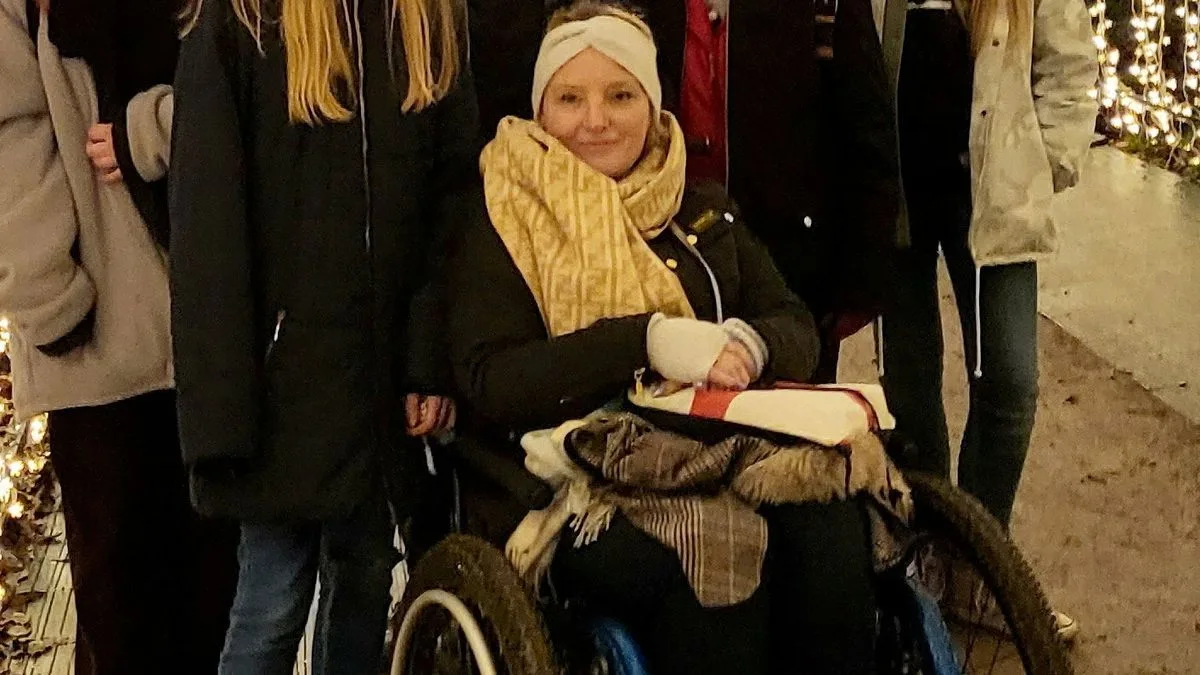
A former headteacher has been left requiring a wheelchair after a pupil with Special Educational Needs (SEN) struck her with a chair at a special needs school in Hampshire. Michelle Stone, 50, suffered serious spinal injuries, broken ribs and a fractured collarbone when the student hit her from behind with a wheeled desk chair in May 2019.
Ms Stone, from Bournemouth, Dorset, says she lives with chronic pain and psychological trauma, and was forced to leave the job she loved. She underwent multiple surgeries and continues to experience anxiety and disrupted sleep. 'There hasn't been a day that I haven't been in pain,' she said. 'The surgeries and medical intervention are to slow down the degeneration rather than help me to recover.'
The attack occurred at a school in Lyndhurst, Hampshire, where the pupil had a known history of extreme and violent behaviour. In the months prior, the same child had seriously injured two other staff members, and managing their behaviour often required four or five adults. Ms Stone said she repeatedly raised urgent concerns with senior leadership from late 2018, warning that the school was not equipped to meet the student's complex needs safely, but no additional support was provided.
Ms Stone had been headteacher at the school for seven years. She described the relationship with the pupil as 'lovely' but noted they were 'in a huge red miss this particular day'. She now believes some parents need to take more responsibility: 'Some parents don't step up to the partnership with schools and they need to step up and be partners.'
Following the incident, Ms Stone instructed workplace assault specialist Joanne Soccard of Thompsons Solicitors through her membership with the school leaders' union NAHT. Her legal team argued that the school failed to act on known risks. Although the school denied liability, it agreed a six-figure settlement shortly before trial, providing funding for ongoing treatment and rehabilitation.
Ms Stone said: 'I loved my job and worked hard to support my students and staff. But I was placed in an impossible situation - one that was preventable. I want to make sure no one else goes through this.'