Galápagos Park Releases 158 Hybrid Tortoises to Restore Floreana's Ecosystem
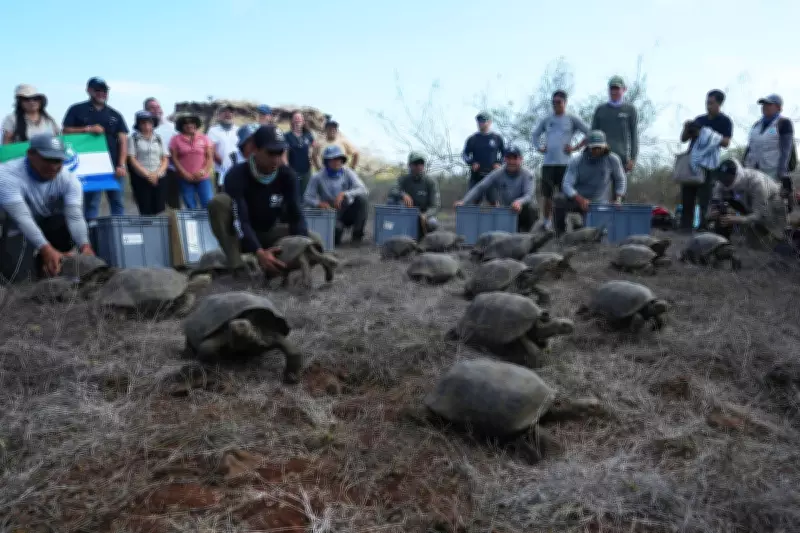
In a landmark conservation effort, Ecuador's Galápagos National Park has released 158 juvenile hybrid giant tortoises on Floreana Island, aiming to restore an ecosystem that has been devoid of these iconic creatures for nearly 150 years. This initiative represents a significant milestone in ecological recovery, timed perfectly with the arrival of the season's first winter rains to aid the tortoises' adaptation.
Historic Return After Centuries of Absence
Floreana Island, once home to an estimated 20,000 giant tortoises, saw its native population driven to extinction due to factors such as whaling, devastating fires, and relentless human exploitation. The release of these juveniles marks the first time giant tortoises have roamed the island in over a century, with the hybrids carrying between 40% and 80% of the genetic makeup of the extinct Chelonoidis niger species.
Fredy Villalba, director of the Galápagos National Park breeding center on Santa Cruz Island, emphasized that the selected specimens are large enough—aged 8 to 13 years—to defend themselves against introduced predators like rats and cats. These 158 tortoises are part of a larger plan to introduce 700 individuals gradually, with the goal of eventually restoring the pure lineage of the original Floreana species.

Genetic Revival and Ecological Impact
Christian Sevilla, director of ecosystems for the Galapagos National Park, explained that the hybrids trace their lineage back to Wolf Volcano on Isabela Island, a discovery that continues to intrigue scientists. By breeding adults with the strongest genetic traits, the program aims to incrementally revive the extinct species, focusing on genetic purity rather than mere population numbers.
Biologist Washington Tapia, a researcher and director of Biodiversa-Consultores, highlighted the importance of this genetic reintroduction, stating that it is vital for restoring a lost lineage and rebalancing the island's ecosystem. The tortoises will play a crucial role in shaping the habitat over the coming years, interacting with native species such as flamingos, iguanas, penguins, sea gulls, and hawks.
Challenges and Community Pride
Despite the optimistic release, the tortoises face challenges from non-native species introduced by human activity, including blackberry and guava plants, as well as animals like rats, cats, pigs, and donkeys. These threats underscore the ongoing need for conservation efforts to protect the island's delicate environment.
Floreana resident Verónica Mora expressed immense pride in the project, describing the release as a dream come true for the community of nearly 200 people who share the island with its diverse wildlife. The Galápagos Islands, designated a Natural World Heritage Site by the United Nations in 1978, are renowned for their unique terrestrial and marine species, making this restoration effort a global priority for biodiversity preservation.
The Associated Press contributed reporting from Quito, Ecuador, underscoring the international significance of this ecological milestone in the Galápagos archipelago.