Myanmar's military leader, Min Aung Hlaing, has pardoned more than 10,000 prisoners in a mass amnesty announced on Monday, but there was no indication that ousted civilian leader Aung San Suu Kyi was among those released. The amnesty came ahead of the reopening of parliament, which is set to convene for the first time in over five years.
State-run MRTV reported that 10,162 prisoners were pardoned on Peasants' Day, a national holiday honouring farmers. Among them, 7,337 were convicted under a counterterrorism law that carries a potential death penalty and has been widely used to arrest political opponents, journalists, and dissenters since the 2021 military coup. A separate statement said 12,487 people being prosecuted under that law or in hiding would receive amnesty and have their cases closed, while ten foreigners would be released and deported.
However, political prisoners, including senior figures from the ousted civilian government, are often excluded from such mass pardons. Aung San Suu Kyi, the 80-year-old Nobel peace prize laureate, has been held virtually incommunicado since the coup and was sentenced to 27 years in prison on multiple charges in closed trials. Her son, Kim Aris, has expressed grave concerns about her health, stating that the military refuses to provide independent proof of her wellbeing.
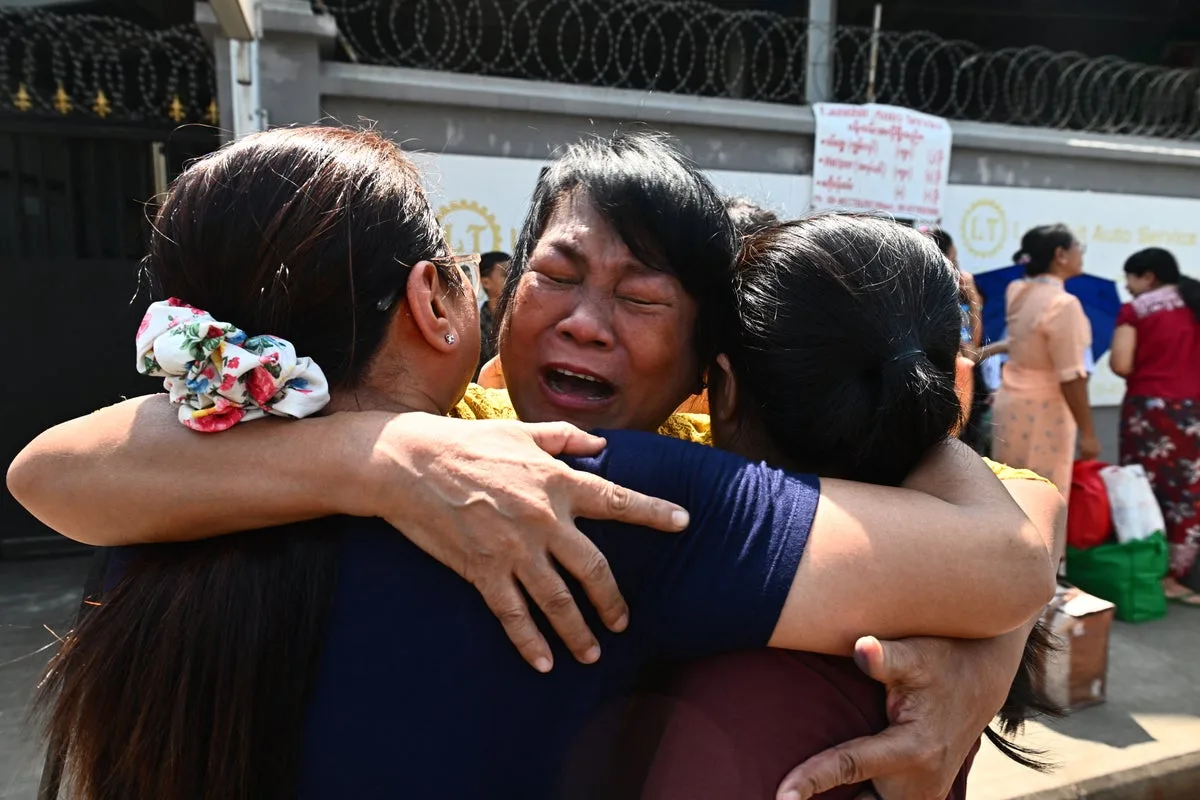
The prisoner releases began on Monday but could take days, and the identities of those freed were not immediately available. According to the Assistance Association for Political Prisoners, more than 22,800 political detainees were in detention as of last Friday. Emotional scenes of reunion were reported outside prisons, with families embracing and celebrating the return of their loved ones.
The amnesty is widely seen as an attempt by the junta to project normalcy and authority amid ongoing political turmoil. The military recently held elections that were condemned as a sham by opposition groups, the UN, and Western governments. The military-backed Union Solidarity and Development Party won, but voting did not take place in large areas controlled by rebel groups. The new parliament is expected to convene in two weeks, with a president due to be elected in early April.