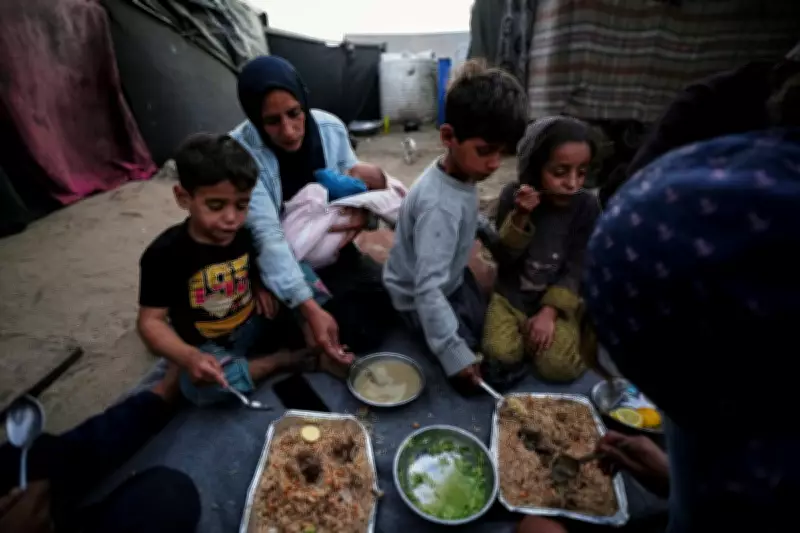
Gaza's Ramadan Under Rubble: Palestinians Observe Holy Month Amid Ruins
Two years of relentless conflict have transformed Gaza into a landscape of devastation, casting a profound shadow over this year's Ramadan observance. As the holy month begins, Palestinians face unprecedented challenges in maintaining their religious traditions amidst widespread destruction and humanitarian crisis.
The Ghosts of Celebrations Past
"Before the war, Ramadan in Gaza had a softness to it," reflects 23-year-old Ibrahim Yaghi from Gaza City. "I remember the warm glow of lanterns hanging in narrow streets, the smell of freshly baked bread before Maghrib prayer, the sound of children laughing after Tarawih." He describes a vibrant community where families gathered in large numbers, doors remained open, and visits were constant throughout the nights that felt truly alive.
Today, that reality has been erased by conflict statistics that paint a grim picture:

- Over 72,000 people killed during two years of bombardment
- More than 11,000 individuals remain missing
- Ninety per cent of homes completely destroyed
- 18,000 Palestinians awaiting urgent medical evacuations
- The entire Strip covered in makeshift tent cities lacking basic amenities
Unprecedented Humanitarian Crisis
The United Nations Development Programme has confirmed that the vast majority of Gazans continue living in rudimentary shelters, with approximately 300,000 additional housing units desperately needed. Following a comprehensive three-day assessment mission to Gaza and the West Bank, UNDP chief Alexander De Croo declared the living conditions "the worst he had ever witnessed" and estimated that removing the accumulated rubble alone could require seven years of continuous effort.
"The atmosphere is different, gatherings are smaller, some faces are missing, some homes are no longer standing," observes Ibrahim Yaghi. "Conversations revolve around safety and loss more than celebration. The streets are quieter, the joy is still there but it carries grief within it. Ramadan has changed... it feels heavier, more intimate."
Empty Chairs at Iftar Tables
For many Gazan families, this Ramadan is marked by profound absence. "For the people in Gaza, it's a sad Ramadan because many still miss a lot of their loved ones," explains Red Cross worker Amani Al Naouq from Deir Al Balah. "They are either killed, missing or detained. There will be empty chairs and tables without their loved ones joining them for Iftar."
The practical challenges of observing Ramadan are equally daunting. While Muslims traditionally fast during daylight hours and share meals before dawn and after sunset, ongoing food supply disruptions and aid limitations create severe obstacles. The World Food Programme reports that families are beginning the holy month with almost no ability to afford basic food items, even when limited supplies appear on shelves.
Humanitarian Response Under Pressure
Current relief efforts include:
- Over 90,000 households receiving payments to purchase necessities and support local market recovery
- WFP community kitchens serving 360,000 hot meals daily
- World Central Kitchen providing over 60 per cent of hot meals across Gaza, delivering one million meals every day
During Ramadan specifically, WCK plans to distribute 100,000 kits containing 70 meals each to help families sustain themselves from suhoor to iftar with dignity. However, these efforts face mounting pressure after Israel banned 37 aid organizations from operating in the Strip, including Médecins Sans Frontières.
"Some NGOs risk losing their registration," notes Wadhah Hubaishi, WCK response director. "It creates this environment where there is more burden on us and that poses a significant challenge."
Fragile Ceasefire and Continuing Dangers
Despite a US-brokered ceasefire implemented last October, violence has continued with reports of at least 600 Palestinian fatalities since the agreement took effect. "Yes it's a ceasefire but still... people can be exposed to death... to many risks, especially when there is shelling, when there is shooting," cautions Red Cross worker Amani Al Naouq.

Religious observance faces particular obstacles as many mosques have been reduced to rubble. "Four hundred and thirty prayer areas have been rebuilt," explains Amir Abu Al-Amrain, director of Gaza City's religious affairs ministry, "some using plastic sheets from greenhouses, some made of wood, and some constructed with plastic sheets from tents."
Resilience Amid Devastation
Despite overwhelming challenges, Palestinians continue finding ways to observe their holiest month. "Ramadan used to arrive like a guest of honour welcomed with lanterns, sweets and long shopping lists," reflects Ibrahim Yaghi. "This year it arrives differently, it comes quietly stepping over rubble, entering homes that have learned to live with absence. This year our tables are modest but our prayers are heavier."
"We break our fast with what is available and we break it with prayer," he concludes. "We still welcome it, not because life is easy but because it remains." This Ramadan in Gaza represents not just religious observance but profound testament to human resilience amidst unimaginable devastation.