In many places around the world, discovering a rat in your garden would barely register a second thought. But in parts of New Zealand, a single rat, possum, or stoat can trigger an urgent response as the country embarks on a world-leading project to eradicate introduced predators by 2050 to save its unique wildlife from further decimation.
Wellington resident Davin Hall knows this firsthand. In March, he noticed large tunnels cutting through the compost bin at his home. Suspecting a rat, he tried for two weeks to catch the pest before calling in the cavalry: a team of pest-catchers who will try all methods possible to hunt down and kill a single rat.
"It's kind of like this idea of Ghostbusters," says James Willcocks, project director at Predator Free Wellington, which hunts down pests in the New Zealand capital. "If we get any intel from the public that might be a suspected rat, then we need to be able to deal with that immediately."

How the Response Works
The team fields roughly five tip-offs a week, each treated with urgency. First, they determine whether there is a rat, says Philip Wisker, Predator Free Wellington's eradication technical officer. Occasionally, people report rat faeces that actually belong to the wētā, an unusual endemic insect. The difference lies in the smell: wētā poo "smells like nutmeg, spicy," while rat poo smells "quite pooey."
A dog detector team then sniffs out signs of rats, followed by a capture team that sets up cameras, traps, and bait. When they find the rat—and they almost always do—it is sent for genomic sequencing to determine if it is local or has traveled into the region.
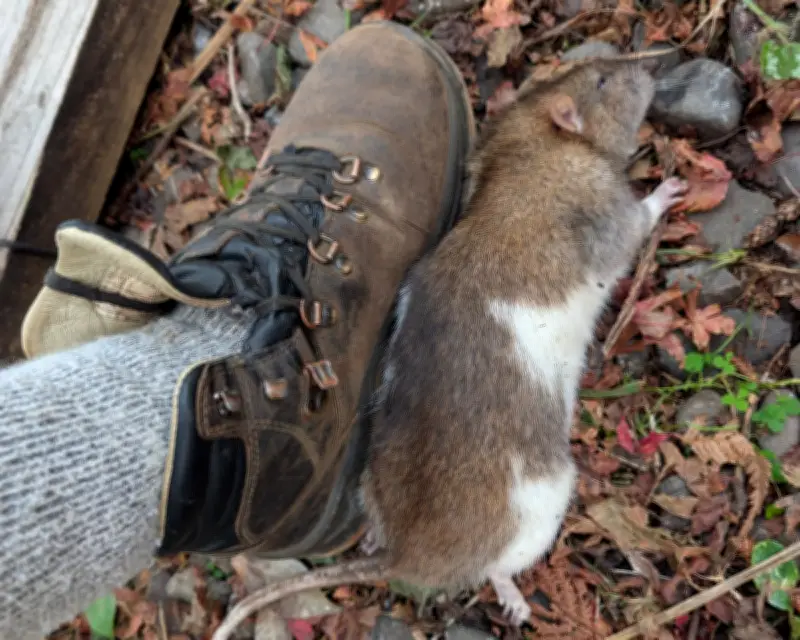
In Hall's case, the intruder was a giant Norway rat, 529 grams heavy and 495mm long, with a meaty tail and piebald coat. It was one of the largest the Wellington team had caught.
Community Involvement
A similar response occurs if a stoat is spotted on Waiheke Island or a possum in Akaroa. In regions where eradication efforts have succeeded, locally run predator-free projects rely on residents to call tip-offs to hotlines when they suspect a predator has returned. "If we can activate those 20,000 sets of eyes and ears that are a community—or the 212,000 eyes and ears living in Wellington city—then we've got the most sensitive detection network anywhere in the world," Willcocks says.
Why It Matters
New Zealand's only endemic mammal species are bats and marine mammals. Its birds evolved in unusual ways, with more species of flightless birds than any other place. Isolation from land-based mammals left birds defenceless against introduced predators. An estimated 25 million native birds are killed annually by rats, stoats, possums, and cats, and 50 bird species have gone extinct.
Predator Free Wellington has, over 10 years, eradicated rats from Miramar peninsula. Now it is eliminating them in nearby suburbs before expanding further into the city. Since the project began, native bird populations on Miramar have increased by 500%, and on Waiheke by 99% since 2020.
Ongoing Vigilance
Rats can breed multiple times a year, so catching a single interloper early can stop it re-establishing a population. Expert dog handler Sally Bain scours the Miramar coastline with her dogs, Kimi and Rapu, who lead with their noses to the air. She says, "Humans weren't the only ones who suffered when we turned up here. It's about what you save, not what you kill."
For Wellington residents like Hall, these efforts and community buy-in have been remarkably successful. "We've got kererū pooping on people's cars and sitting on powerlines, a family of kākā who live in the area and chase each other around. All these native birds have come back, and getting rid of the rats means they get to stay."