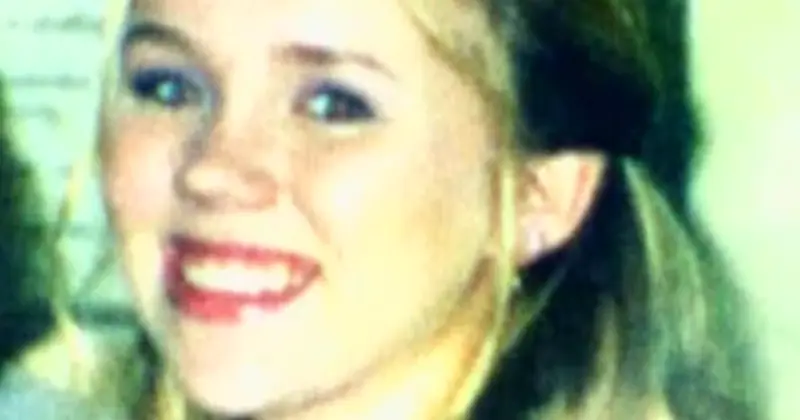
A teenage girl was abducted from her friend's garden by a serial killer and prolific rapist, then forced into a plastic container in the back of his car. However, one crucial decision enabled her to flee and identify her captor.
The Abduction
Kara Robinson was only 15 years old when, on June 24, 2002, she was approached by Richard Evonitz, a murderer responsible for the deaths of at least three teenage girls in Virginia, as well as Kara's kidnapping in Lexington County, South Carolina. Kara was at her best friend's house, where she had stayed the night before. The girls had planned to visit the lake to see another friend for a fun, relaxing day.
While her friend showered, Kara offered to water the plants in the front garden. Reflecting on her ordeal in 2024, Kara said: "That was a decision that forever changed my life." She spotted a car driving around the neighborhood and "took note of it," so when it circled round and returned, she recognized it was the same vehicle.

As it was "broad daylight" and there were "houses all around," Kara "felt safe." So when an "average looking white male" emerged and approached her, it did not "set off any alarms." He was carrying a folder and informed her he was distributing magazines and pamphlets. She said: "During this whole interchange, he maintained a respectable distance from me. There's no red flags going off at any point during this conversation."
But as he moved closer to pass her the magazines, "things changed." Kara said: "I immediately felt what I somehow knew to be a weapon pressed to my neck. It was a small caliber handgun and he pressed it in and he said, 'come with me.'"
The Captivity
Kara "immediately went into fight or flight" and resisted, yet he "had his right arm around" her neck and forced her to comply. Due to the handgun being so small, "it could not be seen by an outside observer." Kara walked alongside Evonitz to his vehicle. The killer instructed her to climb into a plastic box on the back seat. He "loosely put the lid on" and drove away.
Kara explained: "I was lucky. My survival mechanism was to completely dissociate and stay calm. I inherently knew that I was going to survive." Straight away, she embarked on a "fact-gathering mission" to help identify her abductor, mentally recording as much detail as possible, "from the type of cigarettes he was smoking, the music on the radio, to the serial number" on the interior of the box in which she was trapped.
Following 15 minutes of driving, Evonitz stopped at the roadside, where he bound Kara's wrists, placed a ball gag in her mouth, sealed the box completely, and continued his journey to his flat. Kara said: "For the next 18 hours, I was his captive. I was sexually assaulted multiple times. I was told that we were going to watch the news to see if anyone missed me. I was told that he was going to let me go whenever he was done with me. He was going to take me somewhere where I wouldn't know where I was and he was going to let me go, and it was my decision if I went to the police or not and if I was always known as the girl who was raped."
The Escape
Rather than waiting to be released by Evonitz, Kara was determined to make her own escape. She said: "That was a decision that saved my life." When bedtime arrived, Kara was given a valium and bound to the bed frame, where she eventually drifted off to sleep. She awoke in the early hours to find Evonitz still sleeping — and recognized this as her "best case to escape." Kara managed to free herself from her restraints while her attacker lay beside her. Moving "as quietly and quickly" as she could, she got the front door open and ran.
Once outside, she flagged down a passing car carrying two men, who drove her straight to the police station. There, she was able to relay all the information she had gathered — from the number of animals Evonitz owned, to the name of his dentist, and more. Evonitz subsequently took his own life during a police chase.
Today, Kara works as a keynote speaker, activist, executive producer, and host.