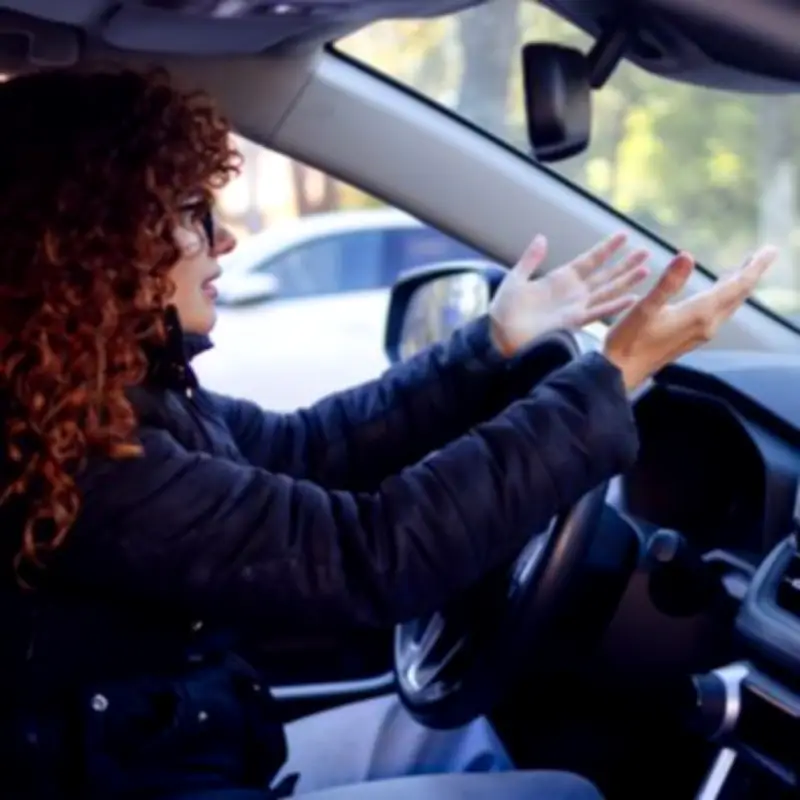
Road rage is a common experience for many UK drivers, but experts warn that reacting in the heat of the moment could lead to severe consequences, including fines of up to £1,000. New research from Saga Car Insurance reveals that millions of motorists admit to losing their temper behind the wheel, with some confessing to behaviours that could result in significant penalties.
Survey Reveals Widespread Aggressive Driving
The insurer commissioned a survey of 1,000 UK adults, which found that swearing, aggressive horn use, tailgating, and even running red lights are more common than many drivers may think. According to the survey, 46 per cent of respondents admitted swearing at other road users, while 30 per cent said they had made inappropriate gestures. Additionally, 21 per cent confessed to flashing their headlights in frustration.
The survey also found that 19 per cent had aggressively sounded their horn, and the same proportion admitted speeding due to frustration. More concerningly, 9 per cent said they had tailgated another vehicle, 8 per cent admitted brake-checking, and 6 per cent confessed to running a red light.

Legal Penalties for Road Rage Behaviours
Many of these actions can result in serious penalties under UK motoring laws. According to guidance published by the UK Government, speeding offences and failing to comply with traffic signals can both attract fines of up to £1,000, depending on the circumstances and court outcome. Tailgating and aggressive driving can also lead to penalty points and fines.
Expert Advice: Pause and Breathe
Experts are now urging drivers to pause before reacting when tensions begin to rise. Ali Ingram-Seal, motoring expert at Saga Car Insurance, advises taking a moment to think to prevent costly mistakes. "If something annoys you, take a moment to breathe and think before responding. If you react straight away, you may do something you regret later," he said. "Everyone makes mistakes on the road. Ask yourself if it's worth getting upset. Most of the time, it's not, so just let it go."
NHS Breathing Technique to Calm Down
One technique recommended by the NHS may help drivers calm down before frustration escalates. NHS advice on managing stress and anxiety suggests breathing in gently through the nose and out through the mouth while counting steadily from one to five on each inhale and exhale, repeating the process for at least five minutes. Controlled breathing is said to help reduce feelings of stress, anxiety, and panic. Experts believe using this technique while stationary in traffic could prevent emotional reactions from escalating into dangerous behaviour.
Understanding the Psychology of Road Rage
Lisa Murphy, a registered therapist specialising in anger, anxiety, and stress management, explained how road rage is often driven by stress and a perceived loss of control. She warned that delays, unexpected hold-ups, and pressure to reach a destination can all increase the likelihood of drivers reacting emotionally. "Road rage is a stress-related state that drivers can suffer, in which they become extremely angry and lose the ability to regulate their emotions," she said. "Anger on the roads can start with mounting frustration with other drivers or unexpected delays, and can lead to sounding the horn, shouting, gesticulating, tailgating, and other behaviour designed to intimidate other road users."