The government's decision to proscribe Palestine Action as a terror organisation is lawful, the Court of Appeal has ruled.
Background of the Case
Then-Home Secretary Yvette Cooper announced that the pro-Palestine group would be proscribed in June last year, after two planes on an RAF base in Oxfordshire were damaged with red paint. But following a legal challenge from the group's co-founder Huda Ammori, the High Court ruled in February that the decision was unlawful.
Today's ruling from the Court of Appeal overrules the High Court ruling, with the five judges saying the government 'struck a fair balance' with its action.

Judgment Details
Lady Chief Justice Baroness Carr said: 'We recognise the proscription of an organisation like Palestine Action is highly controversial. We recognise too that Palestine Action is supported by many otherwise lawful citizens. But it is a fundamental mistake to overlook the fact that Palestine Action overtly promotes unlawful violence amounting to terrorism.'
She added: 'It is not – as claimed – a direct action civil disobedience protest group like the suffragettes, operating transparently in the open. It is a covert organisation which operates with secret cells to avoid the detection and prosecution of those using violence to destroy property and cause injury.'
Reactions
Ms Ammori said she plans to take the case to the UK Supreme Court and European Court of Human Rights if necessary. Speaking after the judgment, she said: 'We are confident we will ultimately succeed because criminalising peaceful political protest in this way is a flagrant violation of our fundamental rights and freedoms in Britain, protected in the Human Rights Act, which enshrines the European Convention of Human Rights.'
Home Secretary Shabana Mahmood, who took over from Cooper in the role last September, said Palestine Action is 'not an ordinary protest or civil disobedience group, and its actions are not consistent with democratic values and the rule of law'.
She continued: 'This decision does not affect lawful protest in support of the Palestinian cause, which remains a fundamental democratic right. There is a difference between supporting Palestine and supporting a proscribed terrorist group. We will always take the strongest possible action to protect our national security and keep the public safe.'
Related Developments
The Court of Appeal decision comes days after four activists from the group were jailed for carrying out a raid on the Elbit defence firm's factory in Bristol which caused £1.2 million of damage. Mr Justice Johnson said the raid amounted to an 'act of terrorism' as it tried to influence the government and intimidate the public.
Samuel Corner, who left a police officer with a fractured spine after striking her on the back with a sledgehammer, was jailed for eight years and eight months. Charlotte Head and Leona Kamio were sentenced to six years, while Fatema Rajwani for five years and eight months. It is thought to be the first time a UK court had connected convictions for criminal damage to terrorism.
Implications
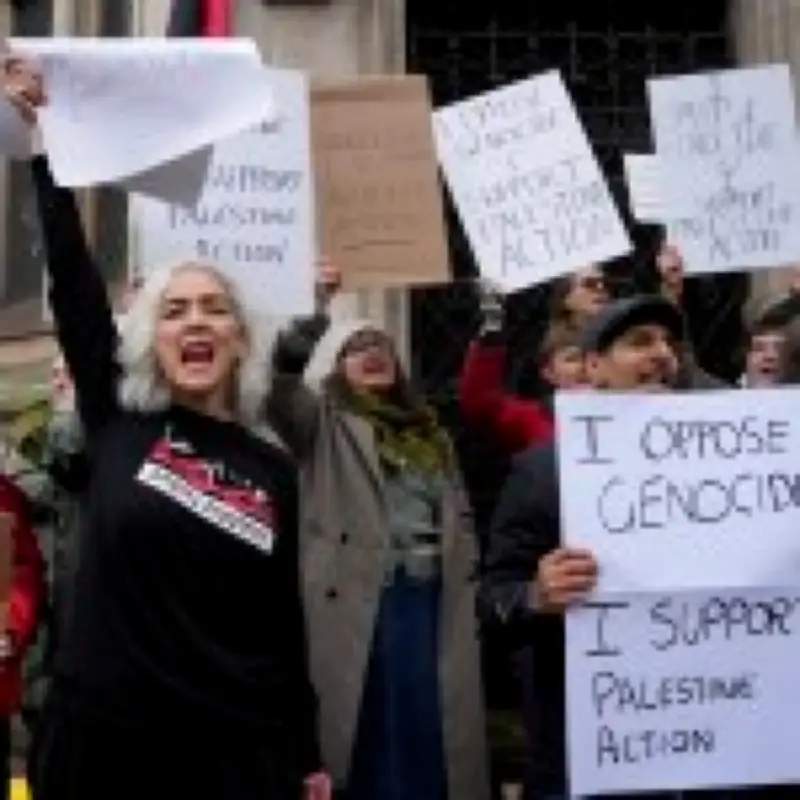
The proscription of the group means those who join it or support it are committing a criminal offence which can result in up to 14 years in prison. Thousands of people have been arrested at demonstrations supporting Palestine Action in the past year, many for silently holding signs.