
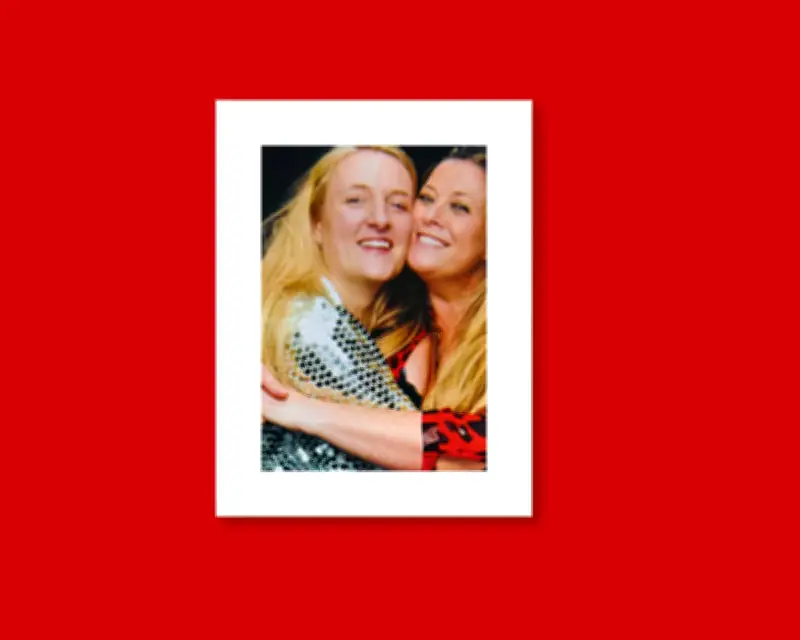
Catherine Milne's best friend Annabel Rook was stabbed to death by her partner in June 2025, after which he caused a gas explosion that destroyed their home. The pair had co-founded MamaSuze, a London-based grassroots organisation supporting women survivors of gender-based violence and displacement. Milne describes the killing as 'an attack from within' that shattered their safe space and left her reeling.
The Murder and Its Aftermath
On a Monday evening, after a weekend away, Annabel's partner returned home. They argued about the house; she had asked him to move out. He punched her repeatedly, tried to strangle her, then fetched a knife from the kitchen. Neighbours heard her screams. Police found her dead on the sitting room floor hours later. He attempted suicide and then sparked a gas explosion, blowing out the bay windows and waking the entire street. Annabel's children had run to a friend's house nearby.
Milne visited the devastated home days later. 'A massive lump formed in my throat that I could feel for six weeks afterwards,' she writes. She drove home anguished, screaming and weeping. The trial at Snaresbrook Crown Court ended with a life sentence and a minimum term of 23 years. Milne notes, 'That would have been much longer had he killed her in the street.'
A Lifelong Friendship
Milne and Rook met at age eight at a small private primary school in north London. They were both dyslexic, creative, and tentative. They ice-skated in ballet leotards and later developed a Dirty Dancing-style routine. In their mid-20s, they worked together at the Buduburam refugee settlement in Ghana, supporting 42,000 people displaced by the Liberian war. That experience shaped their commitment to meaningful, unselfish lives.
Years later, they co-founded MamaSuze, offering expert-led, trauma-informed creative workshops to marginalised women, with childcare and travel money. 'We were unique,' Milne says. 'Women who lived in extreme deprivation in asylum hotels could join every week.'
The Warning Signs
Milne had shared her fear that Annabel's partner could physically harm her. 'I know that, Mori,' Annabel had said, tense. Milne recalls: 'She said her guts were twisted with worry. I now think her body knew what her mind refused to accept: she was in danger.' The only real argument between them was about him in 2013, when Milne bluntly questioned the relationship. After their first baby, Annabel expressed doubts about his inability to love and parent.
Milne found an unsent letter from Annabel to him, 'so kind, so measured, so resigned, yet so forgiving.' She writes: 'Her nature was exploited and she was destroyed for it.'
The Impact on MamaSuze
Annabel's death retraumatised the women in the group, many already survivors of male violence. 'How could I continue providing a supportive space when I could barely stand upright myself?' Milne asks. The continuity of coming together became an act of resistance. 'We sing, we dance, we laugh, we do clowning workshops. Our joy is visceral and resides alongside our tears.'
One woman from Afghanistan told Milne she was used to such stories from her homeland but never imagined it could happen in London. Milne reflects: 'We are facing the reality that there are no safe spaces.'
Femicide in the UK
In the month of Annabel's death, 11 other women were killed by men in the UK. A total of 113 women were killed by men in 2025. 'Where is the collective outrage?' Milne demands. 'Violence against women and girls is now accelerating.' She calls for men to question sexism and misogyny in everyday moments. Annabel's brother-in-law started a men's group; her little brother sings in a choir for men affected by her death.
Milne concludes: 'Energy persists. Nothing is lost, only transformed.' She remembers a Camden Town moment when a Rasta called Annabel 'Moon Lady' and Milne 'Earth Girl'. 'Now, years later, perhaps it makes sense.'




