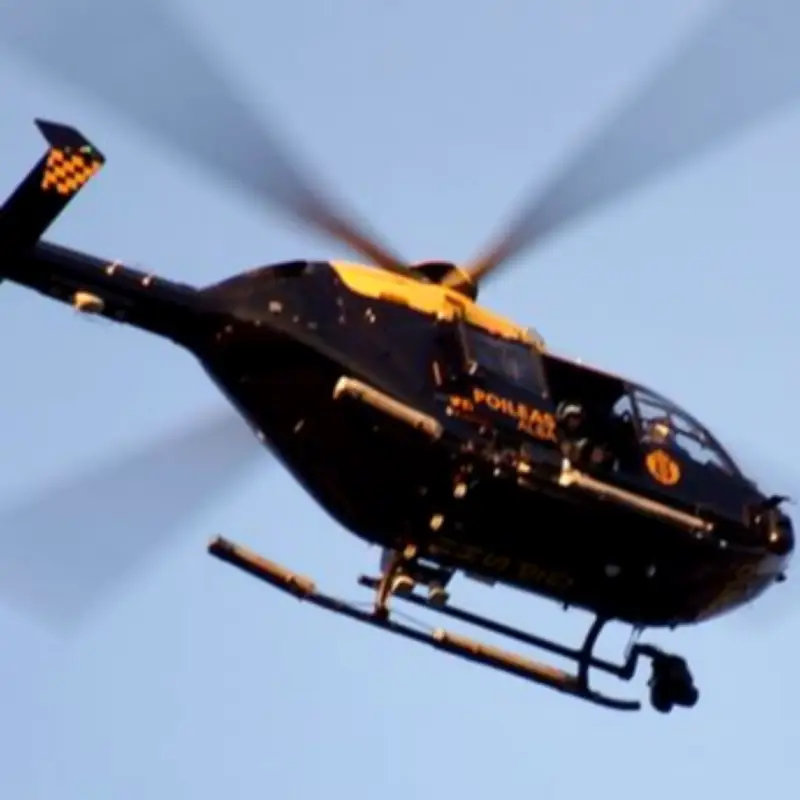
Police Scotland's helicopter has seen a 27% increase in flying hours over the past three years, highlighting its crucial role in combating gang violence and underworld crime across the country.
Helicopter unit history and operations
When Police Scotland was formed in 2013, it inherited the force helicopter from the former Strathclyde Police, which had been operating a helicopter unit since the late 1980s. The aircraft is stationed at the Glasgow City Heliport on the River Clyde in Glasgow. Flights operate with one civilian pilot and two trained police officers. One officer sits up front with the pilot, another in the rear, and there is a spare seat for a passenger if needed. Aerospace firm Babcock supplies the pilot and the helicopter.
The pilots are in overall command, and any decision to halt a flight and return to base rests with the pilot. Police officers undergo a rigorous four-week training course, including helicopter underwater escape training. Helicopter crews also work alongside the fire service, the Coastguard, and both police and civilian mountain rescue teams.
Primary missions and equipment
Missing persons cases make up the majority of the air support unit's work, followed by vehicle pursuits and suspect searches. The helicopter, an Airbus H135-T3, is also used for monitoring crowds on major football match days and large public demonstrations. It is equipped with digital cameras and a searchlight, primarily used to illuminate large areas for ground officers during searches or pursuits. Crew members also have night vision goggles for rural searches in the dark and a tracker device for tracing stolen vehicles.
Historical incident
In November 2013, a police helicopter crashed into The Clutha, a pub in Glasgow city centre, killing all three crew members and seven patrons, with 31 others injured. The subsequent Fatal Accident Inquiry attributed the crash to fuel starvation, which caused engine malfunction.