The International Committee of the Red Cross has warned that the risk of thousands of Palestinians buried beneath Gaza's rubble never being identified is increasing daily, as recovery efforts remain slow and many victims have yet to be retrieved.
Red Cross Concerns Over Identification
Pat Griffiths, the ICRC spokesperson in Jerusalem, stated: "There is no doubt that these bodies could soon become difficult to identify. The longer it takes for human remains to be recovered, the more difficult it can be to identify them. The longer the deceased lie beneath the rubble, the more likely they will be in advanced stages of decomposition – even skeletonised – when eventually recovered." He added that forensic experts lose access to circumstantial evidence that can be used to corroborate identity.
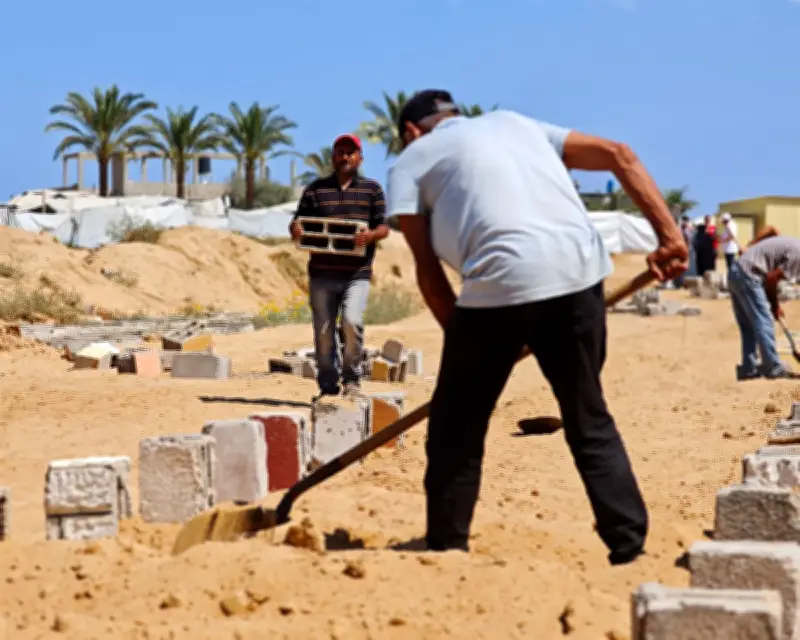
Since the US-brokered ceasefire in October, Palestinians have begun digging through an estimated 61 million tonnes of debris, about 20 times the combined amount generated by conflicts worldwide since 2008. At least 10,000 people are thought to be buried beneath the rubble, according to Gaza health officials, with some experts estimating up to 14,000.

Recovery Efforts Hampered
Rescue teams have been forced to rely on rudimentary tools such as shovels, pickaxes, wheelbarrows, rakes, hoes, and their bare hands. Requests for Israel to allow entry of excavators and heavy machinery have gone unanswered. Griffiths said: "Search and recovery teams need access to all sites where human remains are thought to be located. We know that much of this machinery and equipment remains almost impossible to bring into Gaza right now."
Time as the Enemy
Dr Cristina Cattaneo, a forensic pathology professor at the University of Milan, said: "Time, ultimately, is the greatest enemy of identification. When it comes to identification, the more time passes, the slimmer the chances of success." Forensic experts rely on age, sex, height, fingerprints, dental records, and personal belongings, but the ICRC says longer recovery times increase the risk of losing such evidence.
Dr Ahmed Dahir, Gaza's forensic medicine director, noted: "In some cases, we were surprised to find that a person reported missing for only two weeks had turned into bones bearing signs of animal scavenging. Under normal conditions, reaching this stage usually takes between six months and one year."
Concerns Over Body Displacement
Witnesses have raised concerns that Israeli military bulldozers may be moving bodies still buried under rubble, complicating recovery. The ICRC said heavy machinery must be used with caution to preserve dignity and identification evidence.
A cemetery in Deir al-Balah now holds over 650 unidentified bodies, each numbered and documented in hopes of future identification. Ziad Obeid, director of the cemeteries department in Gaza, said: "Today, we are approaching three years since the beginning of the war, and some bodies have now been buried for more than two years."
DNA Testing Challenges
Hospitals in Gaza lack DNA testing equipment, and Israel does not allow DNA testing materials to enter. Cattaneo warned: "The passage of time also affects DNA, increasing the risk of degradation and making identification progressively more difficult."
Psychological Impact
Psychologists describe the unresolved grief of relatives as "ambiguous loss," contributing to depression, trauma, and identity confusion. Saed al-Yazji, whose brother Sameh disappeared on 7 October 2023, said: "His disappearance has devastated the family. His wife suffers repeated psychological breakdowns. We wait every day for news that might finally bring peace to our hearts."
Wael Radwan lost his father and brother in December 2024. He said: "Without death certificates, my brother's children are denied assistance for orphans because there is no official proof of their father's death."
Israeli officials said there was no approval to bring body recovery equipment into Gaza. Griffiths concluded: "Thousands of families are still seeking answers. That's what at stake: their right to know the fate of those they love."