
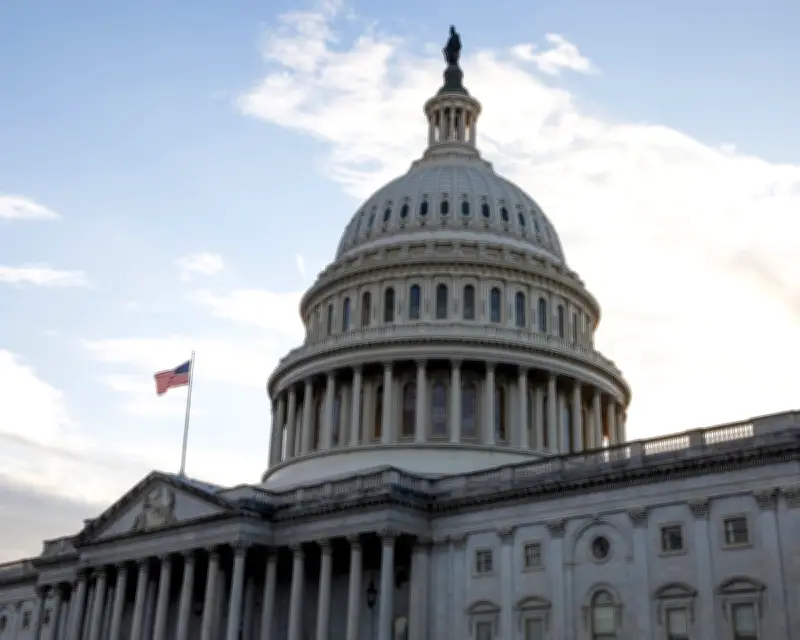
President Donald Trump suffered a significant setback last week when the House of Representatives passed a measure under the 1973 War Powers Resolution, directing the White House to remove all US forces from hostilities against Iran. The vote, which occurred several weeks after the Senate voted 50-47 to advance its own version of the bill, saw four Republican lawmakers break ranks and support the measure alongside Democrats.
Trump's Response and Previous Tactics
Trump was predictably irate, posting on Truth Social: 'Yesterday, in a meaningless vote, the House voted, 4 bad Republicans and all of the Dumocrats, to limit my War Powers, right in the middle of my final negotiations to end the War with the Islamic Republic of Iran. Who would do such an unpatriotic thing.' This is not the first time Trump has excoriated party rebels on foreign policy; when five Republican senators voted in January to limit his authority on Venezuela, he named them publicly and declared they should never be elected again. That pressure worked, with two flipping, but his intimidation tactics may not succeed this time.
The War's Toll and Public Opinion
The Iran war has been an 'own goal of epic proportions.' Though initial military strikes caused damage, Iran retaliated by attacking US bases and allies in the Gulf and closing the Strait of Hormuz, through which at least a fifth of global oil and gas flows. Thirteen American troops have been killed, and Iran has emerged emboldened with even more hardline leadership. Energy and commodity prices have soared, with the IMF warning of a global recession if the war drags on. A June 4 Economist/YouGov poll found 68% of Americans want a deal to end the fighting quickly.
Lawmakers have taken notice, fearing a backlash in November midterms if they are seen as failing to restrain Trump. Even war supporters complain about the administration's lack of transparency and depletion of munitions and air defense systems that will take years to replace.
Legal and Political Significance
The House vote is a 'concurrent resolution' lacking the force of law, meaning it won't limit Trump's freedom of action. However, its political significance is profound. Congressional Republicans breaking with Trump over Iran—four in the House—signal growing discontent driven by the war's unpopularity and Trump's plummeting poll numbers. If the Senate passes its version, more Republican defections are likely.
Trump claims public disapproval doesn't bother him, but he knows prolonged war and Republican losses in midterms will erode his power. That prospect forces him to seek an exit, but Tehran, understanding his predicament, won't make big concessions. The change in Trump's political fortunes and Tehran's advantage are more significant than the military consequences of the resolution.
The irony is hard to miss: President Trump, who campaigned on ending 'forever wars,' now faces opposition across the country and in Congress for blundering into the kind of Middle East quagmire he once railed against.




