
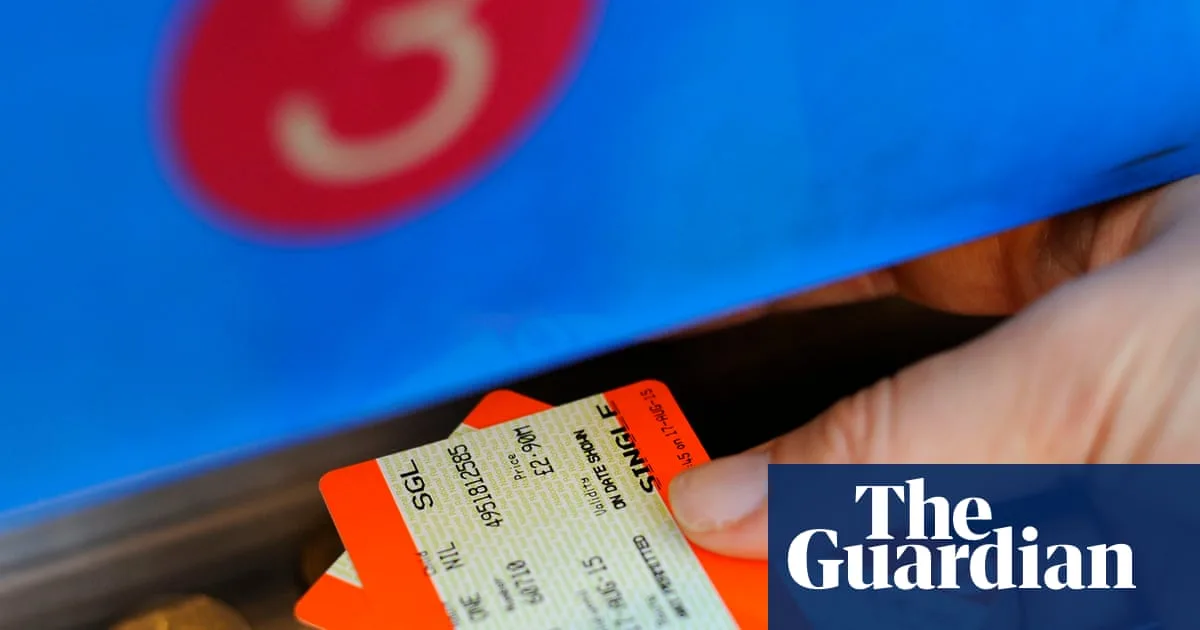
Rail passengers will be able to claim compensation for delayed trains directly from the website where they bought their ticket, the government has announced, as part of a shake-up to simplify rail travel. The changes, set to begin in April 2026, will merge compensation claim systems for individual train operators into a single service under Great British Railways (GBR), the new nationalised rail body.
Currently, passengers who use third-party retailers such as Trainline must submit refund applications to the relevant train operator. Under the new system, the GBR site will process refunds for customers using private ticketing websites, if the retailer and passenger opt in to share their purchase details. The Department for Transport (DfT) said passengers currently “have to contend with a complex system across 14 different train companies, which creates confusion and frustration”.
The latest figures from the Office of Rail and Road show train operators paid out £138m in 2023-24 for delayed journeys. While some operators and ticket types offer automated “delay repay”, particularly for advance e-tickets and season tickets, other claims can be more complicated. DfT research from 2023 found that 47% of passengers whose journeys were sufficiently delayed now receive compensation, but more than half do not bother to apply.
Transport Secretary Heidi Alexander said: “Using the railway will be simpler and more reliable under Great British Railways. When services are delayed, passengers should be able to easily claim the compensation they’re owed. These necessary changes will ensure people can claim delay repay compensation more quickly and the industry can invest taxpayers’ money in the things that really matter for passengers; freezing fares and delivering train and station upgrades, rather than losing out to fare dodgers and fraud.”
The DfT will also introduce changes to railcard and ticketing terms to cut revenue lost to fraud. Passengers buying discounted tickets using railcards will need to pass additional checks, with a “simple validation” process trialled later this year. This follows a decision to tighten refund rules for flexible tickets, which from April will only be refundable before travel is due, aiming to tackle fraudulent claims that cost the railway £40m annually.




