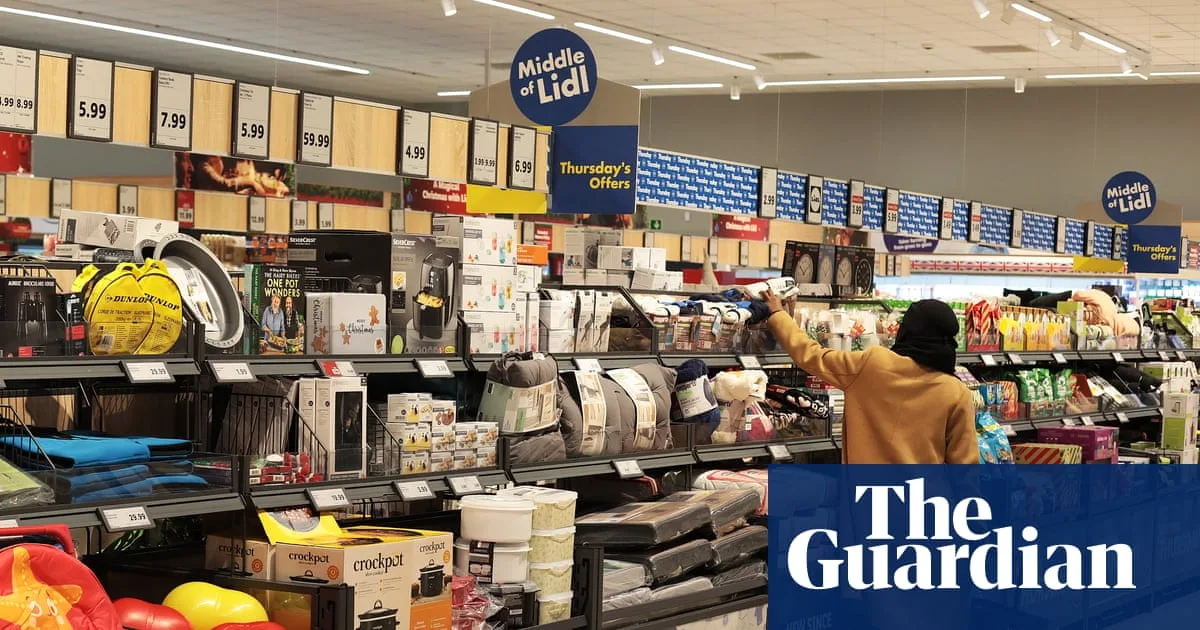
Lidl has overtaken Morrisons to become the fifth largest grocer in Great Britain, according to market analysts Worldpanel by Numerator. The German-owned discounter saw sales rise 8.8% year on year, achieving a record market share of 8.6% in the 12 weeks to 17 May. In contrast, Morrisons' share fell to 8.3% as its sales grew only 1.3%.
Twenty-five years ago, Lidl held just 1.4% of the grocery market, trailing behind now-defunct chains such as Safeway and Somerfield. Since then, it has expanded rapidly, reaching 1,000 stores and 13 distribution centres across England, Scotland and Wales. In the year to February 2025, Lidl GB's sales rose 8.3% to £11.7bn, while profits more than doubled to £156.8m.
Lidl now sits behind fellow German discounter Aldi, which is the UK's fourth largest supermarket. Aldi is less than one percentage point behind Asda, where sales continue to decline. Both discounters have benefited from the struggles of Asda and Morrisons since their debt-fuelled private equity takeovers.
Ryan McDonnell, chief executive of Lidl GB, said: 'Becoming Great Britain's fifth largest supermarket is a significant milestone and a clear indication of the momentum we have built.' He added that households are seeking value without compromising on quality.
Morrisons disputed the figures, arguing that Worldpanel excludes sales from its convenience stores, of which it has hundreds, while Lidl has none. A Morrisons spokesperson said: 'Our Worldpanel market share has been stable since the beginning of 2025 and Morrisons continues to serve over 10 million customers a week.'
The rise of discounters comes as households seek to offset inflation on food and energy bills. Worldpanel reported that like-for-like grocery prices rose 3.1% in the four weeks to 17 May, the slowest pace since December 2024, as supermarkets offered promotions. Spending on promoted items rose 9.5% year on year, while full-price spending grew just 0.1%.