
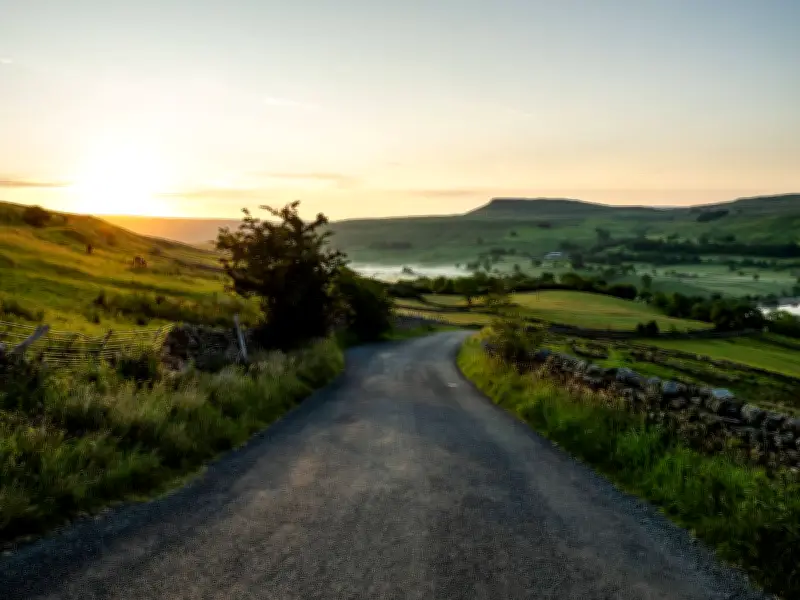
A UK driver was left baffled after spotting a 60mph speed limit sign on a narrow country lane, but a highways engineer who sets speed limits for a living shed light on the reason behind it.
A Reddit user admitted his confusion over narrow country roads allowing drivers to travel at 60mph. In a post online, he asked: "Genuinely, why are many country roads in the UK set at the national speed limit?" He shared a photograph of a typical example on the CasualUK subreddit and added: "Why would anyone in their right mind even consider going anywhere near 60mph when these roads are winding, narrow and have such poor visibility? I might just be being ignorant but I don't understand it."
Another Redditor clarified: "It doesn't mean that you can safely barrel along at 60 - you may need to slow down to an absolute crawl on a tight bend on a country road in case there is oncoming traffic - but then if there's a long straight you can do 60. A blanket 30 or 40 on all country roads would significantly impact the lives of rural communities."
Numerous others criticised the dangers on Britain's roads, but explained the sign in question signifies the "end of a previous restriction" rather than a new one being imposed. "The sign is a black strikeout of a speed sign, because it marks the end of speed limit restrictions," a second person added. "National speed limit then kicks in by default."
While a third pointed out: "Outside of urban areas, many roads haven't all been graded for speed, so you can drive at whatever speed is safe to do so according to conditions, but not exceeding the national speed limit for your class of vehicle. Remember, it's a speed limit, not a target."
Why is 60mph the speed limit for narrow country lanes?
A professional working in speed limit implementation offered his expert perspective: "Setting speed limits is my job, I am a highways engineer. I haven't seen the proper answer yet so here is my go! It's a very roundabout way to do things but drivers generally don't follow the signs on the road apart from a few select circumstances. We have to take this in mind when it comes to setting a speed limit."
He went on: "Upon changing a speed limit with signs alone, average speeds drop by only 1mph. If people traverse a national speed limit road at 58mph and we make it 40 or 50, the average speed would then be 57mph. The criteria for a 40mph limit is substantial development, bends and accesses (but not enough to warrant a 30mph limit). A 50mph criteria is similar but less strict."
"If a road meets the 40 or 50 criteria, the speeds need to already be in the enforcement criteria (10% + 2 above the limit). If they aren't already there, changing the speed limit won't achieve that. If there is a desire to lower the speed on that road for safety reasons, we have to first engineer the speeds down with physical measures."
"Where it gets really weird is when average speeds are already below the target limit. For example we've been asked to make a road 40 from national, but average speeds are 30. The speeds would likely increase as there is now a target to hit."
Earlier this week, the government issued an update for motorists regarding plans for compulsory tests being considered for drivers aged over 70. Fresh figures have been published which revealed the alarming impact of people getting behind the wheel without adequate vision. In the most recent 12-month period for which data is available, there was a 40% rise in collisions in the UK where the contributing factor was recorded as 'driver or rider had uncorrected or defective eyesight'. The government has just concluded a consultation on proposals to make eye tests mandatory every three years for all drivers over 70, with licences potentially being revoked in certain circumstances.




