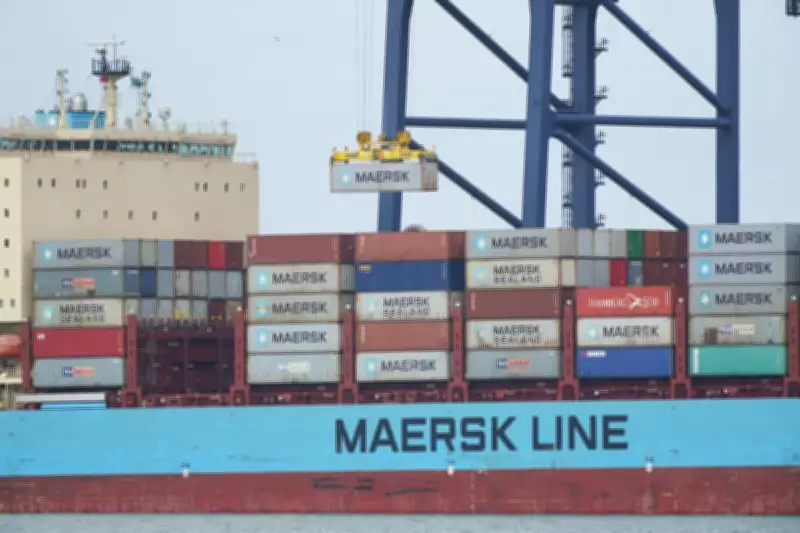
Shipping container giant Maersk has revealed it is facing a 500 million US dollar (£367 million) hit each month from disruption caused by the Iran war and is passing on costs to customers through higher freight rates.
Financial Impact and Cost Pass-Through
The Danish group, which carries around one in five of the world's seaborne containers, said costs will surge in the current quarter and next, but it is so far fully offsetting this through price rises. Chief executive Vincent Clerc said the closure of the Strait of Hormuz could start impacting global trade and consumer demand.
He told Bloomberg TV: "There is a lot of uncertainty if we look further into the year with respect to what are going to be the secondary impacts of this war – inflation, possibly a reduction in demand. There are some question marks about how this is eventually going to flow through the economy."

First Quarter Results
The group reported better-than-expected first quarter results as it said the Middle East conflict had a limited effect on the period, though it posted a steep drop in pre-tax profits to 292 million US dollars (£214 million), down from 1.43 billion dollars (£1.04 billion) a year earlier. Revenues fell 2.6% to 12.97 billion dollars (£9.52 billion).
Outlook and Risks
Maersk kept its guidance unchanged for 2% to 4% growth in the global container market, but said the outlook was "highly uncertain". The group added that it was on track with full-year expectations for between an operating loss of 1.5 billion dollars (£1.1 billion) and operating profits of 1 billion dollars (£730 million).
It said: "Higher energy prices and constraints on trade in the Upper Gulf region, which in 2025 accounted for around 6% of global container trade, pose downside risks to the growth momentum. Assuming oil prices remain in the 90-100 US dollars a barrel range through 2026, and the conflict is resolved soon, global container demand is expected to still grow between 2% and 4%, supported by strong exports out of Far East Asia. The balance of risks, however, is on the downside and more adverse outcomes cannot be ruled out."
Mr Clerc added: "We are able to confirm our guidance, despite the fact that we are faced with what is probably the most comprehensive energy shock, at least in our lifetimes. What is really important is that we stay actually close to our customers, engage with them, because they are faced with significant amount of disruptions in their supply chain."