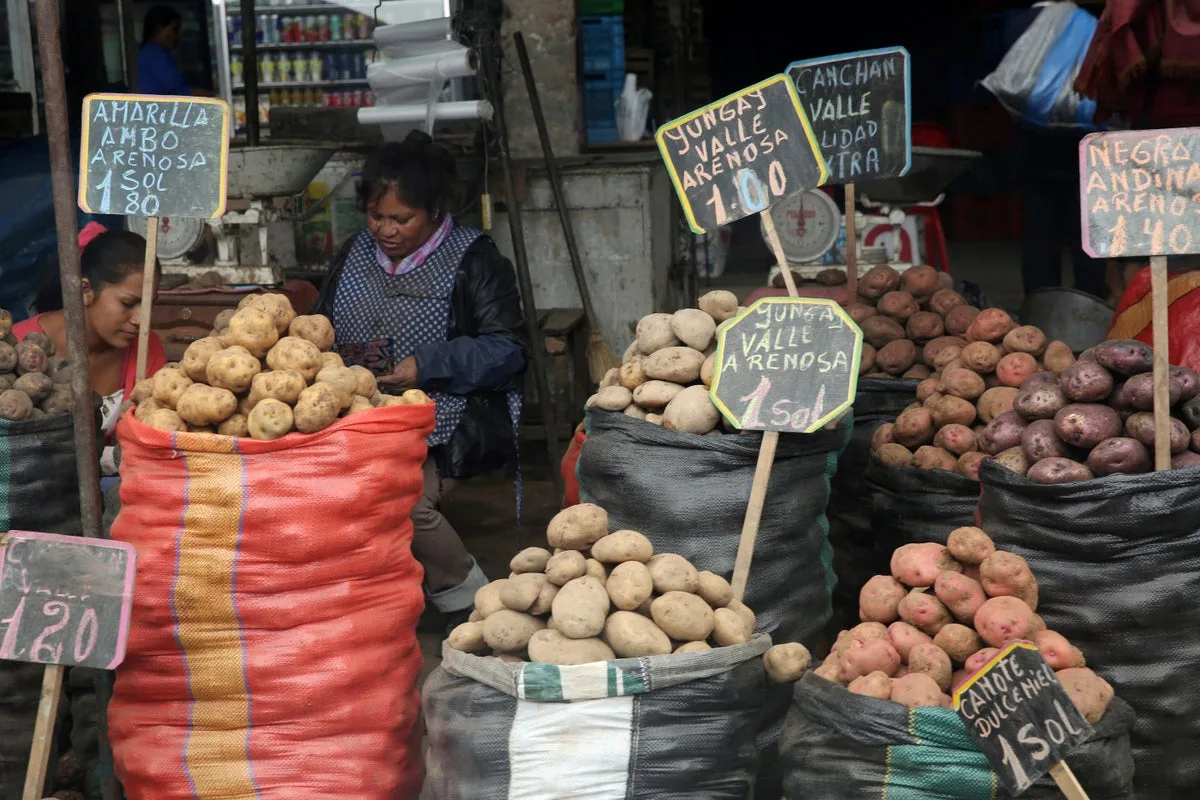
Indigenous communities in the Andes domesticated the potato between 6,000 and 10,000 years ago, making this starch, vitamin, mineral, and fibre-rich tuber a central part of their diet. This long-standing dietary reliance led to genetic adaptations, still observed in their Peruvian descendants.
Genetic Adaptation to Starch-Rich Diet
New genomic research now documents how these descendants, speakers of the Quechua language from the historic Inca Empire, underwent fortification involving the AMY1 gene, which is crucial for starch digestion – a function highly beneficial for a potato-centric diet.
The study found these individuals possess an average of 10 AMY1 copies – two to four more than most people, and a number unmatched globally. Significantly, the onset of these genetic changes in this population coincided precisely with the advent of potato domestication.
"It is a wonderful case of culture shaping biology," said evolutionary and anthropological geneticist Omer Gokcumen of the University at Buffalo, one of the senior authors of the research published this week in the journal Nature Communications.
"This highlights the importance of dietary adaptation in human evolutionary history, with implications for metabolism, health and the impact of domestication events on human biology," said UCLA anthropological geneticist Abigail Bigham, also one of the study's senior authors.
Molecular Mechanism of AMY1
At the molecular level, AMY1 governs an enzyme called amylase that is present in saliva and is responsible for breaking down starch in the mouth when a person eats starchy foods. A person with more copies of the gene may produce more of the enzyme.
This greater dosage, the researchers said, may facilitate better metabolism of high-starch diets. Amylase may also be involved in regulating the microbiome - the body's natural collection of microbes - which can shift with dietary change.
Lactose tolerance is another example of diet-driven evolutionary adaptation, involving a gene related to an enzyme that breaks down lactose in milk.
Study Methodology and Findings
In the new study, the researchers analyzed genomic data spanning more than 3,700 people across 85 populations in the Americas, Europe, Africa and Asia, including 81 native Quechua speakers of Andean ancestry in Peru.
The researchers said it appears that over time evolutionary forces favored extra copies of AMY1 in the ancient Andeans. In order to become widespread, a genetic variant may provide some advantage.
"Therefore, one hypothesis is that people with more copies of AMY1 may have been better able to process starch-rich foods, including potatoes," University at Buffalo doctoral student and study co-lead author Luane Landau said.
"Individuals who were born with the higher copies of AMY1 may have had an advantage as compared to individuals who did not have it, and left more descendants over generations. Over time, this could explain why the genetic version linked to high AMY1 copy number became more common in Andean populations today," Landau said.
Historical and Cultural Context
Potatoes represented a reliable food source - a crop that thrived at the high altitudes these people inhabited. "They were one of the main sources for calories in the ancient Andean diet," University at Buffalo doctoral student and study co-lead author Kendra Scheer said.
Potatoes were at the heart of the Inca food supply. They were brought to Europe and the rest of the world following the Spanish conquest of the Inca Empire in the 16th century. "Their global culinary spread is a testament to their broad likeability," Bigham said.
At markets in the Andean highlands and elsewhere in Peru, Quechua speakers sell a wide variety of potatoes, with flesh of various colors including purple, blue, red, gold, white and even black.
"In Peru, there are about 3,000 to 4,000 different kinds of potato, but the majority of the world has access to only a select few strains. Therefore, there is a whole world of different types of french fries that are possible," Scheer said.