
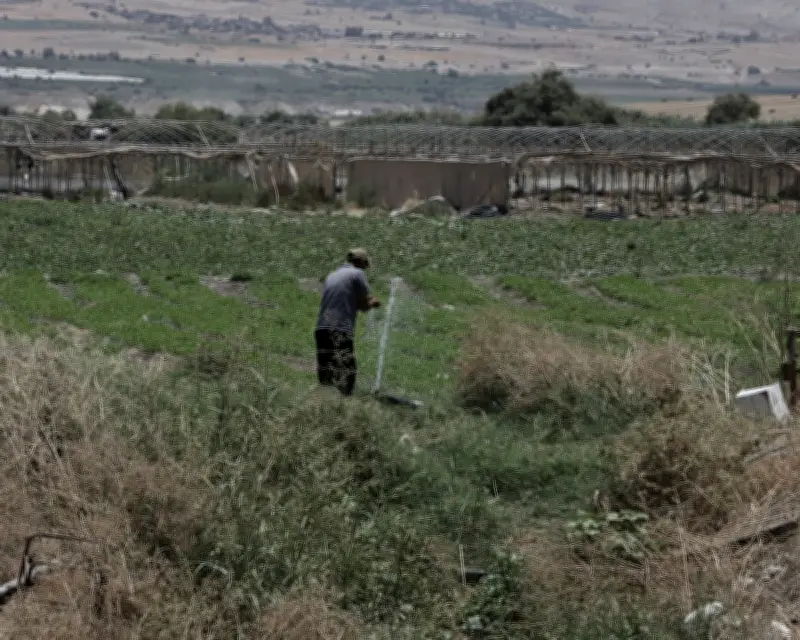
Israeli exporters to Europe routinely mislabel agricultural products grown in occupied Palestinian territories and the Syrian Golan Heights as Israeli-grown, according to a new investigation by the legal non-profit Global Echo. The practice allows settlement goods to benefit from unlawful tax breaks under a 1995 EU-Israel free trade agreement, which excludes products from occupied territories.
Systematic Mislabelling Exposed
Global Echo analyzed over 30,000 export documents for thousands of Israeli shipments to the UK and EU over eight years. One in six shipments contained produce from illegal settlements, with at least 42% mislabelled as Israeli. The group estimates the mislabelled goods were worth €13 million (£11.2 million) during the period studied.
"This isn't an aberration and it's not accidental," said Emily Schaeffer Omer-Man, executive director of Global Echo. "This is a system that the UK and the EU have perpetuated and agreed to." The group is demanding the UK government review controls on Israeli imports and has threatened legal action against HMRC.
Three Main Techniques
The report identifies three methods used to conceal settlement origins:
- Hiding in plain sight: Producers provide accurate settlement addresses but label produce as Israeli, exploiting a 2005 technical agreement between Israel and the EU.
- Sham addresses: Settlement firms use false addresses to indicate production within Israel's recognized borders.
- Mingling: Settlement goods are mixed with Israeli products in packing facilities and labelled as "grown in Israel."
These practices undermine EU trade rules and shift the burden of detection to European border officials.
Impact on Palestinian Farmers
Palestinian farmers in the Jordan Valley suffer from water confiscation, movement restrictions, and violent attacks by settlers. Mohamed Faiz Daraaq, a farmer from Ein al-Beida, said: "The spring near our land... has been taken from us. The settlers turned the area into a recreational site for themselves."
Amer Abu Khader, 35, has never accessed three family plots near Mehola settlement, seized after the 1967 war. Global Echo documents show one plot is now used by a major Israeli exporter supplying the UK market.
European Complicity
The EU has long deemed settlements illegal, reinforced by the International Court of Justice's 2024 ruling. However, Europe has not used its economic leverage to enforce consequences. Michael Lynk, former UN special rapporteur, called the findings a "gap between European principle and conduct."
Israeli subsidies compensate exporters when they lose tariff benefits, blunting the impact of EU rules. The scale of settlement exports remains hidden, with only an unverified 2009 World Bank estimate suggesting 2.23% of Israeli exports to Europe originate from settlements.
Growing Settlement Economy
The settler population in the West Bank has increased by over 50% since 2009. Israeli Finance Minister Bezalel Smotrich stated in 2024: "We are erasing the Green Line through agriculture in Judea and Samaria." Settlement agriculture benefits from subsidies for water, transport, and other resources, while Palestinian farmers face escalating attacks and restrictions since the October 7, 2023, Hamas-led attacks.
Global Echo's report demands immediate action to enforce trade rules and end the subsidization of illegal settlement agriculture by European consumers and governments.




