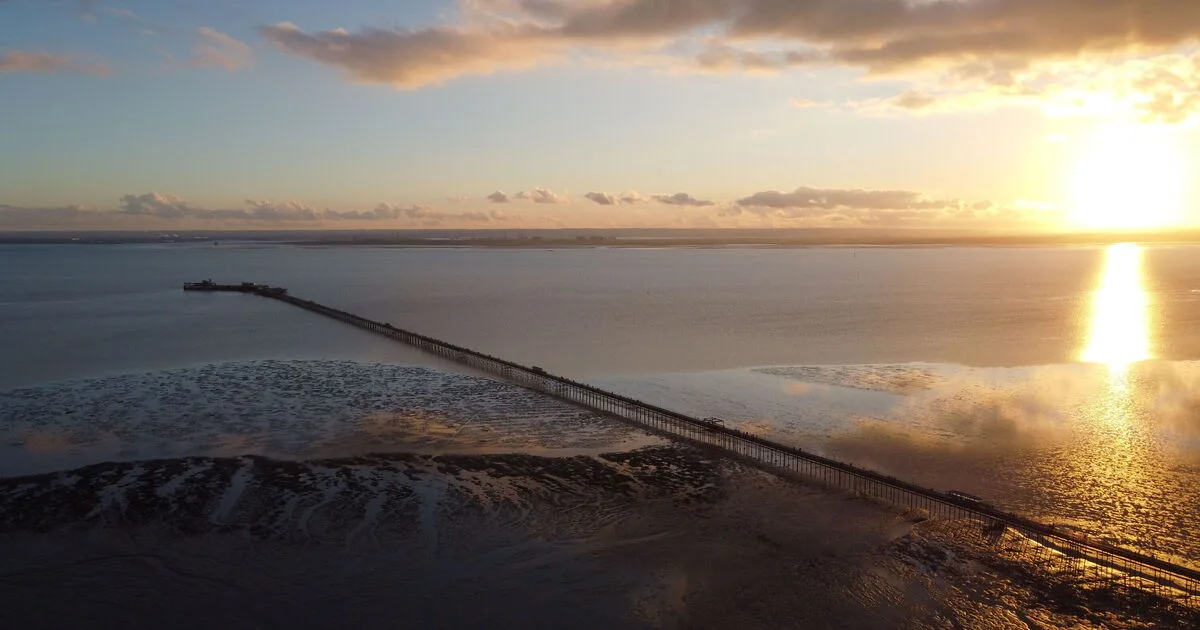
Southend Pier, stretching 1.34 miles into the Thames Estuary, is the world's longest pleasure pier and a defining symbol of the British seaside. Despite surviving four major fires—in 1959, 1976, 1995 and 2005—it remains one of the UK's most recognisable attractions.
The most devastating blaze occurred in October 2005, destroying much of the pier head, including shops, cafes and historic buildings. Images of the flames made headlines worldwide, but the landmark was rebuilt and reopened.
The pier's history began in 1829, when work started on a wooden structure to solve the problem of exceptionally shallow waters that prevented boats from reaching the shoreline at low tide. When it opened in 1830, visitors paid a penny to walk along it, earning it the nickname 'the penny pier'.

As Southend grew into a popular Victorian holiday destination, the pier expanded. The original wooden structure was replaced by an iron pier, which opened in 1889 at a cost of £68,920—equivalent to about £10.8 million to £11.5 million today. One of its most unusual features is its railway, introduced in 1890, which remains one of the few operating pier railways in the world.
The pier has played a role in military history, used by armed forces during both World Wars, and has attracted celebrities such as Jamie Oliver, who filmed parts of his Channel 4 series from a temporary restaurant at the pier head. Walking from one end to the other and back covers almost three miles.
Today, Southend Pier welcomes hundreds of thousands of visitors each year. Having survived fires, storms and changing fortunes over nearly two centuries, it continues to stand as a remarkable engineering and tourism landmark.