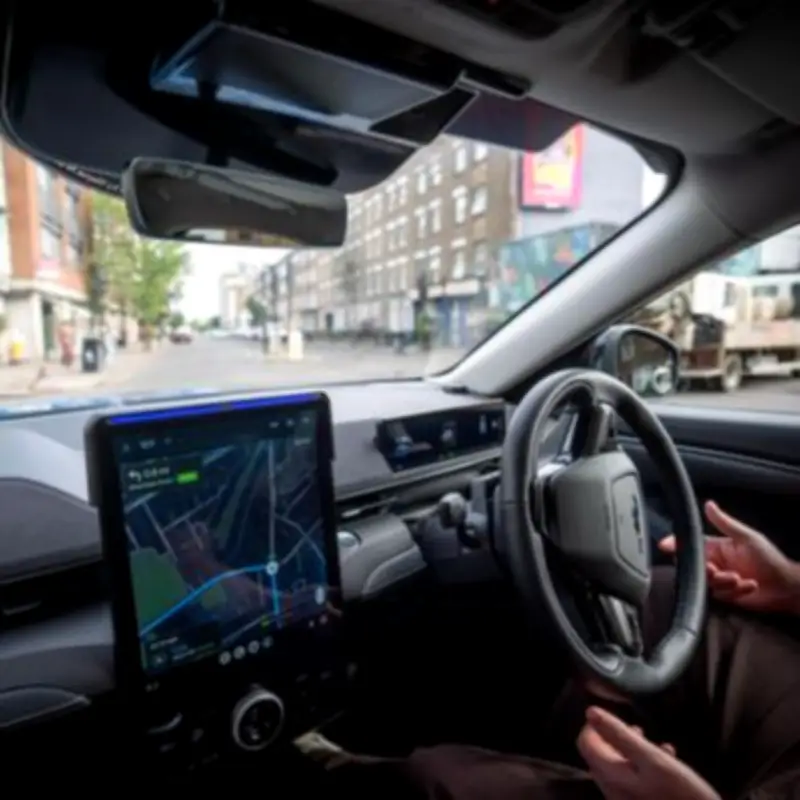
Self-driving taxis are set to start carrying paying passengers on UK roads for the first time this summer. Ride-hailing giant Uber is partnering with British technology firm Wayve to launch a commercial 'robotaxi' service in the capital within the next two months. While autonomous ride-hailing services are already operational in US cities like Atlanta and Austin, London will be the first global market to deploy Wayve's AI-powered systems.
Initial rollout details
The service will initially launch with a small fleet of modified Ford Mustang Mach-E SUVs. A human driver will initially sit behind the wheel ready to take control during journeys while the technology is demonstrated to be safe. Kaity Fischer, head of Wayve's 'robotaxi' business, stated the company is 'ready to go' and described the capital's historic infrastructure as the 'ultimate testing ground' for the initial rollout.
She said that compared with San Francisco in the US – which is a common location for rolling out 'robotaxis' – London has 20 times more roadworks and 10 times more vulnerable road users, such as pedestrians and cyclists. Combining that with London's '2,000-year-old streets', which are not in a grid layout and have 'potholes and cobblestone paths', creates an 'incredible proving ground', Ms Fischer added.
Demonstration success
During a recent 15-minute demonstration from Wayve's north London headquarters, the vehicle successfully navigated hazards - including pedestrians and oncoming traffic - without human intervention, strictly adhering to the city's 20mph speed limit. Each car is equipped with six cameras, a radar system, and an AI computer housed in the boot. Autonomous rides will be integrated into Uber's X, Comfort, and Electric options.
Passengers opting into the service will be charged the same fare as standard minicabs. Uber opened registration on Monday (8 June), allowing London users to sign up for early access to the autonomous fleet.
Addressing concerns
The announcement arrives amid friction with local labour groups, as some Uber drivers have already staged small-scale protests against the introduction of autonomous vehicles. Addressing concerns over automation replacing human workers, Annie Duvnjak, Uber's head of global mobility autonomous operations, stated that the company expects both driver numbers and autonomous fleets to expand simultaneously to meet rising urban transit demand.
Asked how she expects passengers in the capital to react, she replied: 'What we've seen in other markets is it's really magical. When you first get in, you look around and all of a sudden the car is driving and it feels normal.' She added: 'You forget that you're in an autonomous vehicle (AV), and that's the beauty of it.' Duvnjak noted that human drivers remain essential for handling severe weather conditions and complex routes that autonomous systems cannot yet navigate.
Government backing
The initiative has received strong backing from the UK government. Transport Secretary Heidi Alexander praised the partnership, calling Wayve a 'British success story' with the potential to reduce road hazards while generating high-skilled employment across the UK. Founded in 2017 by two University of Cambridge PhD students, Wayve plans to expand the partnership to 10 additional global cities later this year. The firm is also collaborating with major automakers Nissan and Stellantis to integrate its autonomous systems into private consumer vehicles.