Could Turo Car Rental Be Your Passive Income Dream?

One of the strangest, most ill-considered actions by both Keir Starmer's government and Sadiq Khan's London administration has been their lukewarm, almost negligent, approach to car-sharing. The Greater London Assembly (GLA) did nothing last year to prevent Zipcar, the by-the-hour car and van rental service, from collapsing when the congestion charge was extended to include shared electric vehicles. This neglect of a key environmentally beneficial feature of life in the capital severely disrupted the lives of some 650,000 community-minded city dwellers, including me, as I wrote in December.

Britain Falling Behind in Vehicle-Sharing

At a national level, as an article in the current Private Eye argues, Britain has lagged pathetically behind Germany and France in encouraging vehicle-sharing. The magazine wrote: 'So terrified are Labour ministers of being thought of as 'anti-car' that their belated acknowledgment that sharing transport is a good idea was buried in a blink-and-you-miss-it 'strategy' document.' I suspect this stems from sheer ignorance by the progressive political classes, who live in fashionable central London areas well served by public transport and cycle lanes, and are thus unaware of how important and beneficial Zipcar was as an alternative to urban car ownership.

Ironically, one of the few squeaks of protest from politicians about Zipcar's demise came from the Greens' leader in the London Assembly, Caroline Russell, who explained that she depended on the convenient shared car service to visit her elderly mother. The closure of Zipcar was 'grim news,' she said – a sentiment shared by hundreds of thousands of people.

Wide Pickt banner — collaborative shopping lists app for Telegram, phone mockup with grocery list

The Problem with Car Ownership

I'm anti-car in the same way that I'm anti-cream cakes. I do like them, and in the past have had as many as three at the same time – at one stage, two classics, mostly unreliable, plus a modern car that actually started. But, as with chocolate eclairs, I know too many cars are bad for us. There are clearly far too many cars, both conventional and electric, on British roads. Their sheer number, enabled by easy finance, combined with their ever more bloated size, means near-identical metal boxes now visually dominate cities and towns. It's horrible.

The added ludicrousness, which Zipcar so cleverly addressed, is that almost all of Britain's 36 million private cars – which would require a car park four times the size of Birmingham if clumped together – sit unused for 95 to 99 per cent of the time. At £30,000-plus per car, we allow perhaps a trillion pounds' worth of sophisticated machinery to clutter up our streets doing nothing. It's insane.

Enter Turo: The Airbnb of Cars

So, with Zipcar gone and its tiny competitors insignificant, what can those of us who are highly reluctant to return to car ownership do? Well, I have discovered an alternative – different, not quite as convenient as Zipcar, but often cheaper – and it offers a really interesting and environmentally helpful option when you delve into it. Turo, an American idea like Zipcar, describes itself as the Airbnb of cars. People all over the country list their underused cars on the Turo app. Locals in need of a vehicle, usually for a minimum of two days, rent it, paying for various levels of insurance on top, plus VAT. It's not cheap, but not outrageous – and there's none of the palaver and enormous security deposits required by traditional car hire. So you get a normal-looking car with Turo, and aren't driving around, as Zipcar required, in a car garishly emblazoned with company logos.

My Turo Experiences

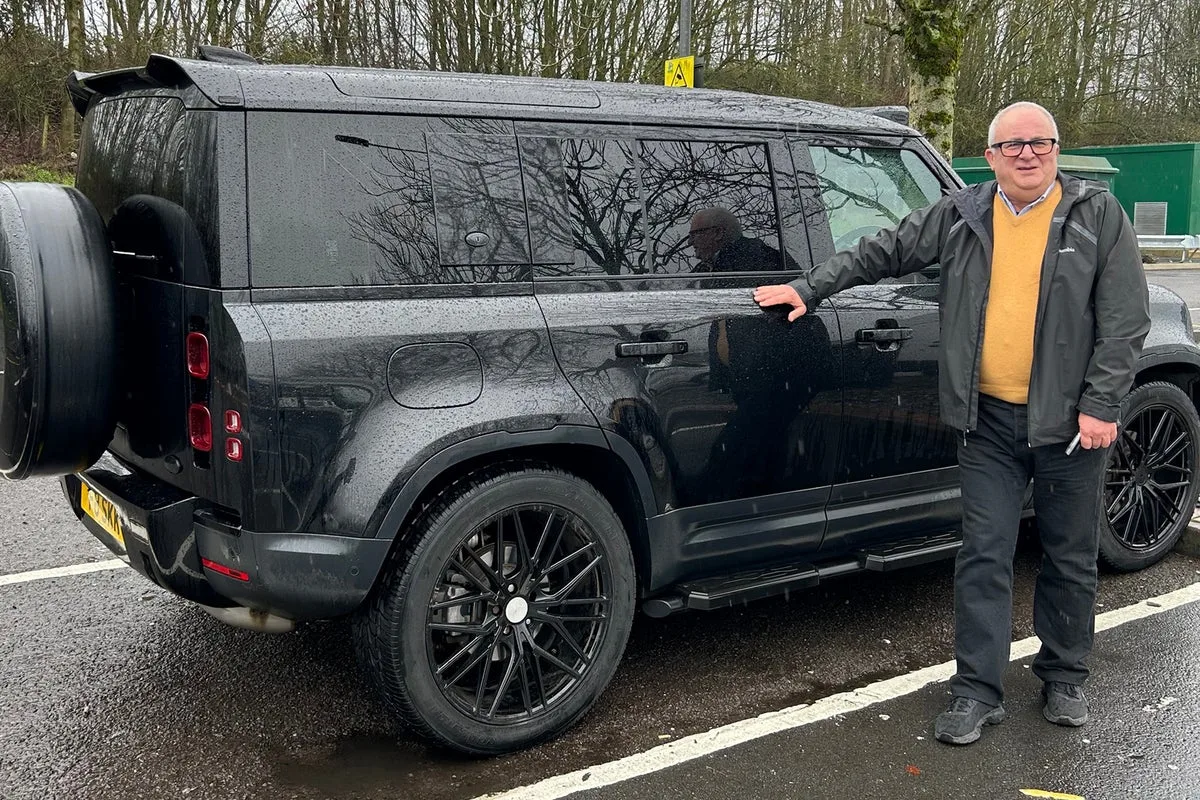
I have done three Turo rentals, one paid for as a media demo by the company. The first I tried was a gigantic Land Rover Defender for a three-day trip to Gloucestershire. A monstrous, gleaming black block of luxury, it was the last car I'd ever consider buying, even if I could afford it. But it was a fun, frictionless experience, and the hirer even delivered the car and picked it up. The bill, all included, was £1,043, including a lot of excess mileage, the top level of insurance, and VAT. A vast amount, yet to hire such a vehicle from a prestige car rental company wouldn't cost a lot less – and you'd also have to leave a deposit in the thousands.

Pickt after-article banner — collaborative shopping lists app with family illustration

On my own account, I then rented a Fiat 500 from a neighbour for two days, for a total of £120. And then a Mini for two days, total £181. All the cars were in perfect condition, clean and mechanically perfect, even though none were near-new, as most rental companies would supply. The Turo owners all left nice personal touches, like a good Airbnb. The Fiat came with a car deodorant (yuck), biscuits, bottles of water, and a pack of tissues.

Apart from being delighted to discover a car hire alternative, at least for weekends away (although not for the times we would rent a Zipcar for an hour or two), the Turo experiences give you a chance to try out cars you might not otherwise have ever driven. The Land Rover was particularly hilarious. At some level, I imagined it would be a way of blending in with local life in Gloucestershire. Driving a massive SUV in London marks you out as a bit of an idiot, but in Stroud and the surrounding areas, it also seemed to trigger people. One purple-faced man with whom I had to do a nifty pas de deux in a narrow lane – or rather, him bullying me into almost sliding down a ravine – was actually screaming at me about bloody Londoners. I later noticed the Land Rover had URBAN plastered across the front. Bit of a giveaway, that. The Fiat, I liked a lot, and thought I was a convert to the hugely popular revived Italian brand. But the surprise was the Mini. I loved the original Minis, but never liked the look of the 21st-century, inflated ones. This, though, I absolutely loved, and decided that if we ever did buy a car, it would definitely be a Mini. It was 10 years old and had done 120,000 miles, but was incredibly sprightly and enjoyable to drive.

Could Turo Generate Passive Income?

So why would I even be thinking of buying a car, now that I've discovered Turo? Well, here's why. If I bought a good, say, 10-year-old Mini Cooper for, maybe, £5,000, and sent it out to work as a Turo rental, perhaps it could pay for itself – and justify its existence as a community asset rather than a blot on the urban landscape. The answer is, up to a point. Turo takes 40 per cent of the money renters pay. Moh, the neighbour whose Fiat I rented, showed me on his phone that he received £33.60 of the £120 I had paid on the app; half of the £120 had been insurance and VAT. Moh was satisfied with what he received, he said. With the car out a maximum of four or five days a week, but not every week, Turo earnings cover his own insurance, tax, and maintenance. As he said, it's not a get-rich-quick scheme, but if you had three or four cars and the space to store them, you could have a moderately profitable little business.

And speaking with other Turo 'hosts', I discovered that many do have a small fleet as a side hustle. Salman, the Land Rover owner, has four other past-their-prime, but immaculate, Land Rovers and runs the business much of the time from Dubai, where he owns some shops. Like Moh, he explained it didn't make a fortune, but enough to employ a young man to run things, deliver the cars and clean them, and turn a profit. I spoke with two young professional women in London, too, who are Turo hosts. One had just her own Fulham-based VW and was covering its expenses. Another, in southeast London, hadn't planned to, but was growing a little fleet bit by bit.

The Spirit of Zipcar Lives On

So Zipcar may be dead. But the spirit of Zipcar lives on, through Turo. And I might yet become a host – even though it would require me to keep the car clean and tidy, something I have never been able to do.