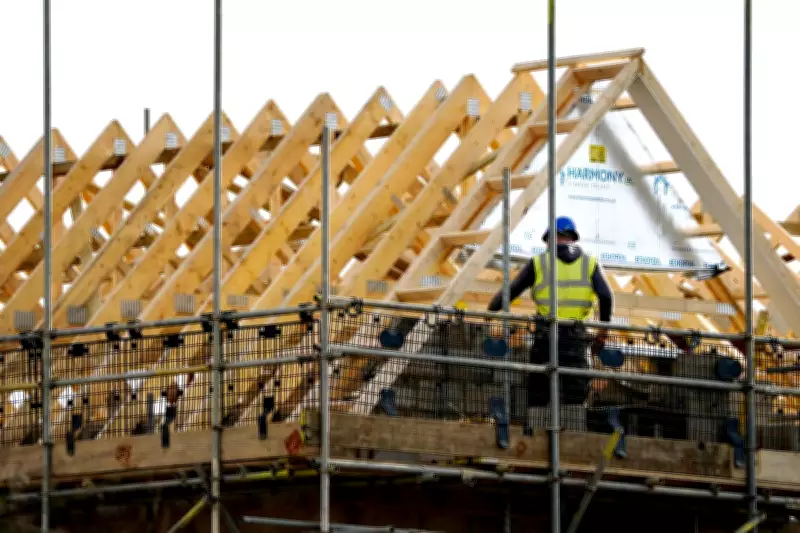
UK builders experienced a significant decline in business activity last month as they grappled with rapidly rising costs, according to a new survey. The S&P Global UK construction purchasing managers' index (PMI) registered 39.7 in April, down from 45.6 in March, indicating a steep contraction in overall activity. A reading above 50 signifies growth, while below 50 denotes contraction.
Output Decline Since Early 2025
Output has been falling since the start of 2025, and the latest figure represents the weakest performance in five months. The downturn was driven largely by a sharp drop in civil engineering, with residential house building and commercial work also continuing to decline. The survey highlighted that higher fuel prices contributed to a rapid increase in purchasing costs for builders, as suppliers passed on elevated transportation expenses. This led to cost inflation accelerating at the fastest pace since 2022.
Impact of Middle East Conflict
Firms widely reported that business clients, facing uncertainty from the Middle East conflict, were delaying spending decisions, resulting in fewer work opportunities. Tim Moore, economics director at S&P Global Market Intelligence, said: "A rapid acceleration of input cost inflation was seen across the UK construction sector in April. Aside from the post-pandemic surge in input prices from early 2021 to mid-2022, the latest rise in purchasing costs was the steepest in three decades of data collection. Around two-thirds of the survey panel reported higher cost burdens in April, which was overwhelmingly linked to fuel surcharges and subsequent rises in raw material prices."

Supply Chain Challenges
Moore added: "Adding to supply chain challenges, the latest data also indicated longer wait times for the delivery of construction items due to international shipping delays." Atul Kariya, head of real estate and construction at accountancy firm MHA, commented: "Today's construction PMI underlines a sector still being heavily squeezed by weak demand and renewed cost inflation, with rising energy prices due to the conflict in the Middle East adding fresh pressure to an already fragile situation. Higher build costs, tighter viability and interest rate uncertainty are making land buying, tendering and project timing harder to judge. As a result, there is a growing risk that decisions will be postponed until pricing and borrowing costs stabilise."