China's Youth Flee Megacities for Early Retirement in Cheap Remote Towns
As China's economic growth decelerates and its property market faces unprecedented challenges, a remarkable trend is emerging among the nation's younger generation. Burned-out professionals in their twenties and thirties are abandoning high-pressure careers in bustling megacities to pursue early retirement lifestyles in remote towns where housing costs have collapsed to astonishingly low levels.
The 'Life in Venice' Phenomenon
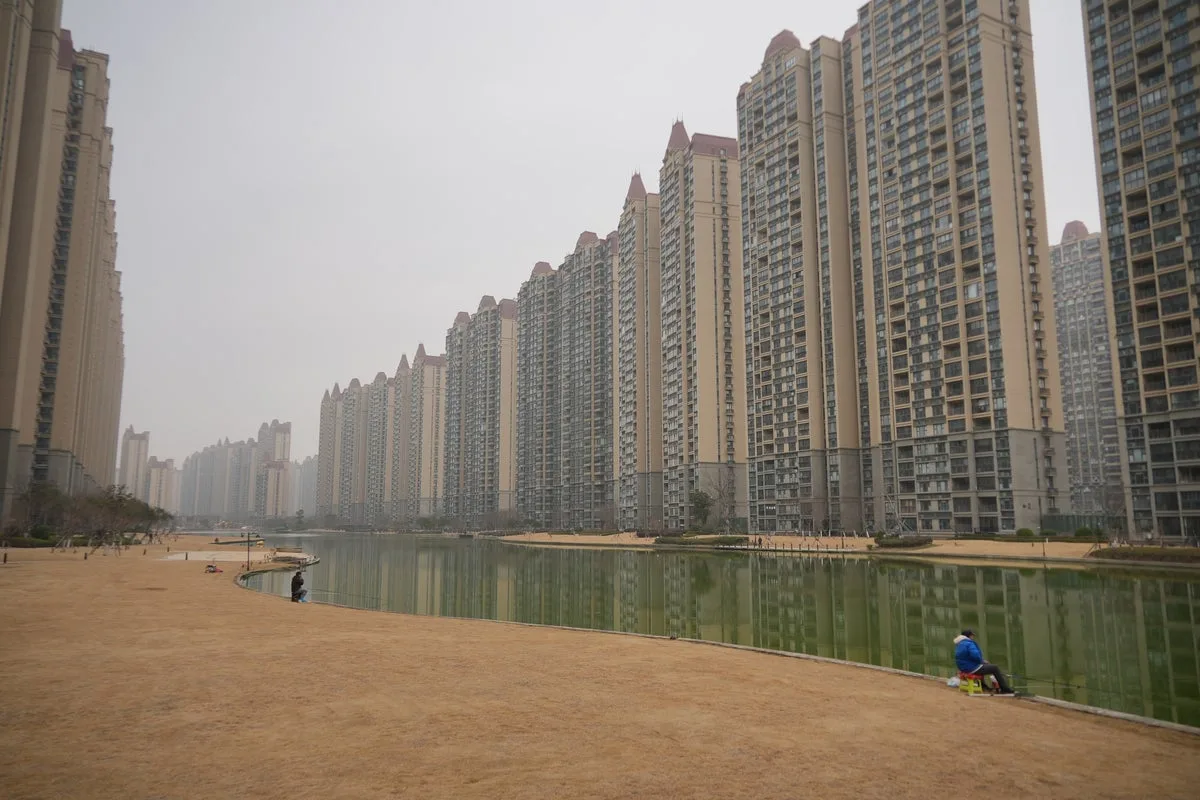
The "Life in Venice" development, a multibillion-dollar replica of the Italian city on China's eastern coast, stands as a powerful symbol of this transformation. Originally conceived as a luxury weekend retreat for wealthy Shanghai residents, the vast complex now contains thousands of mostly empty concrete shells. Yet this ghost town has become an unlikely haven for young people like Sasa Chen, a 28-year-old former finance professional who recently left her high-earning Shanghai job.
"I have all the time in the world, the freedom of doing whatever I want," said Chen, who pays just 1,200 RMB (approximately $168) monthly for her apartment with sea views. "I am living the life that I want." Chen represents a growing cohort of young Chinese who have accumulated savings from urban careers and now seek affordable sanctuaries where they can escape the relentless pressure of corporate life.
Rejecting the '996' Culture
This migration marks a stark reversal from previous generations that prized upward mobility and flocked to booming cities. Today's young professionals face intense competition, dwindling opportunities, and grueling work schedules known as the "996" culture—working from 9 a.m. to 9 p.m., six days weekly. Under this pressure, many have embraced the "lying flat" movement, rejecting traditional career paths and capitalist ambitions in favor of what they term a "low-desire life."
Some are pursuing a Chinese adaptation of the Western FIRE movement (Financial Independence, Retire Early), finding it more achievable due to dramatically lower living costs in certain regions. Home prices at developments like "Life in Venice" have more than halved since China's property market downturn, while meals in local restaurants cost under three dollars.
Demographic Shifts and Economic Realities
While comprehensive data on workforce departures remains unavailable, significant demographic shifts are evident. From 2019 to 2024, Beijing lost approximately 1.6 million residents in their twenties and early thirties—equivalent to the entire population of Philadelphia—according to the capital's statistical office.
"People are quitting this competition, this very clear, linear, upward career track," observed Xiang Biao, director of the Max Planck Institute for Social Anthropology in Germany. "It's a broader trend."
China's economy grew just 5% in 2025—still outpacing many developed nations but far below the double-digit expansion of previous decades. Youth unemployment remains concerning, with 16.5% of 16-24 year-olds not in education unemployed as of December.
Alternative Lifestyles Across China
The phenomenon extends beyond coastal developments to various regions offering ultra-affordable living. In Hegang, a remote northeastern coal-mining city where resources have dwindled and young people have departed, apartments now cost less than cars. Real estate agent Yang Xuewei has sold over 100 bargain-priced properties to clients nationwide and even some foreigners, with one-bedroom units available for $3,000 and spacious four-bedroom homes for $13,000.
"I don't know about big cities, I never lived in one," Yang remarked. "I can only say that living in Hegang is easy."
Meanwhile, in China's southwestern Yunnan province, 29-year-old Ban Zhao relocated from a bustling coastal city to a small town renowned for clean air and healing hot springs. For just 800 yuan monthly ($110), she rents a three-bedroom apartment, converting one room into a yoga studio. She and her boyfriend work fewer than 20 hours weekly offering online yoga classes.
"I can do whatever I want and not do whatever I don't want," Ban said. "I live in heaven."
Broader Implications
Chen Zhiwu, a finance professor at the University of Hong Kong, noted that rising living costs and diminishing job prospects in major cities are naturally driving this migration to more affordable areas.
"It's natural," Chen explained. "Young people are facing reality and thinking hard about their futures."
This trend represents more than individual lifestyle choices—it reflects fundamental shifts in how China's younger generation perceives success, work-life balance, and personal fulfillment amid changing economic circumstances. As property values continue to adjust and remote areas offer increasingly viable alternatives, this migration from pressure-cooker cities to affordable tranquility appears poised to continue reshaping China's social and economic landscape.