

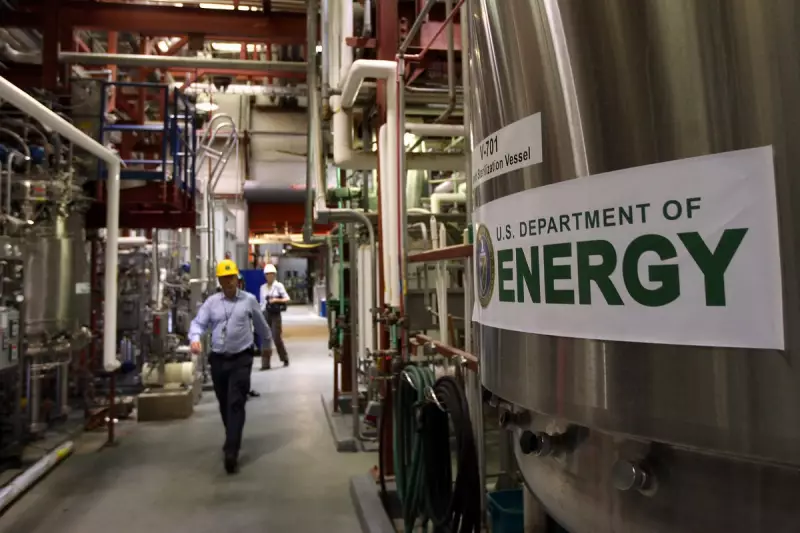
The Trump administration has overseen a significant symbolic shift in US energy policy, stripping the words "renewable energy" from the title of a leading federal research institution. The National Renewable Energy Laboratory (NREL) will now be known as the National Laboratory of the Rockies, the Department of Energy (DOE) announced on Monday, 2 December 2025.
A New Name for a New Energy Era
The decades-old laboratory, headquartered in Golden, Colorado, has served as the federal government's primary hub for developing and improving energy technologies. Established in the wake of the 1973 oil crisis to address shortages, it was first called the Solar Energy Research Institute before being renamed NREL under President George H.W. Bush. Historically, its work has largely concentrated on renewables like solar and wind power.
Announcing the change, Assistant Secretary of Energy Audrey Robertson stated the current energy crisis differed from the one that created the lab. "We are no longer picking and choosing energy sources," she said in a news release. "Our highest priority is to invest in the scientific capabilities that will restore American manufacturing, drive down costs, and help this country meet its soaring energy demand."

Context of a Broader Policy Shift
The rebranding aligns with a clear policy direction from the Trump White House, which has signalled a renewed focus on fossil fuels alongside renewables. Shortly after returning to office in January 2025, President Donald Trump signed an executive order aimed at cutting energy costs by reducing regulations. The same month, he began the process of withdrawing the US from the Paris Climate Accords and declared a national energy emergency to boost production.
Trump has personally expressed scepticism towards some clean energy forms, notably earlier this year urging the UK government to "stop with the costly and unsightly windmills" and prioritise offshore oil drilling. The DOE, led by Secretary Chris Wright, also oversaw the firing of over 100 employees at the Colorado lab in May 2025, according to Colorado Public Radio.
Reactions and the Road Ahead
The name change has drawn criticism from environmental groups and some politicians. Michael Hiatt, deputy managing attorney for Earthjustice in the Rocky Mountains, told The Colorado Sun that clean energy remains the cheapest resource in the state. "Changing NREL’s name will not change that fact," he said, adding that attacks on clean energy were increasing costs for Americans.
In a post on X, Colorado Democratic Senator Michael Bennet called for the newly named institution to uphold its original mission: "Under its new name, the Lab must continue its groundbreaking work to achieve an affordable, net-zero economy and meet our nation’s complex energy challenges."
Laboratory Director Jud Virden sought to frame the change positively, stating in the DOE release that the new name "embraces a broader applied energy mission entrusted to us by the Department of Energy to deliver a more affordable and secure energy future for all." The lab's past work includes research in the 2010s to reduce ethanol costs and improve solar cell efficiency, and the 2021 launch of a cybersecurity office for renewable energy tech.
The move marks a definitive step in the administration's efforts to reframe the national conversation around energy, moving away from a specific emphasis on renewables towards a broader, technology-agnostic approach focused on affordability and security.






