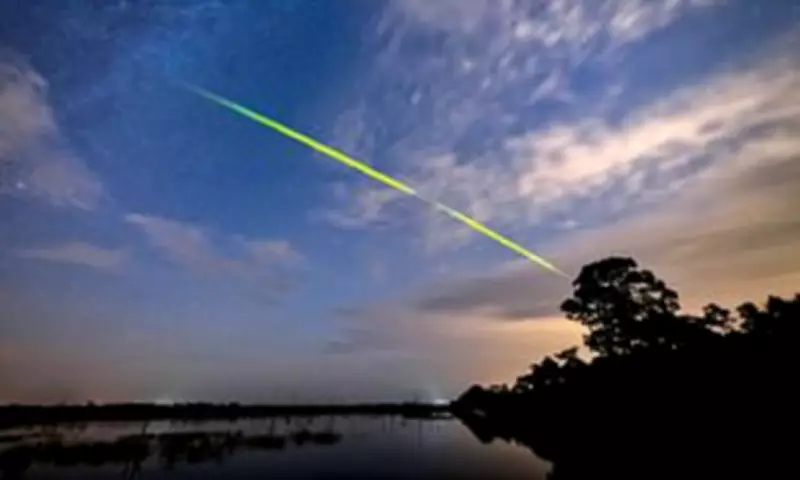
Keen skygazers are in for a spectacular treat this week as the Eta Aquariid meteor shower reaches its dazzling peak, bringing up to 40 shooting stars per hour. The display will be at its absolute best on Wednesday night into the early hours of Thursday morning, though viewers will need to stay up late, with optimal viewing between midnight and the pre-dawn hours.
Unfortunately, the waning gibbous moon, over 80 per cent illuminated, will obscure many fainter shooting stars. However, the meteor shower remains active until May 28, offering plenty of opportunities even after the peak, especially during the new moon next week.
What Are the Eta Aquariids?
All yearly meteor showers are caused by clouds of rock and dust floating along Earth's orbit. As the planet sweeps through these patches of space debris, tiny particles fall into the atmosphere and burn up with a flash. The Eta Aquariids are produced by debris left by the famous Halley's Comet, scientifically known as Comet 1P/Halley. This periodic comet returns to the inner solar system once every 76 years, and its sightings date back to at least 240 BC. As the comet moves through the inner solar system, heat from the sun causes its icy surface to break up, creating a trail of debris that Earth passes through each year.

How to See the Eta Aquariids
The Eta Aquariids appear to emerge from a point in the Aquarius constellation, near the star Eta Aquarii. However, shooting stars can appear anywhere in the sky, so you don't need to look directly at the radiant. The shower favours the Southern Hemisphere but should be visible at northern latitudes low on the eastern horizon. For the best view, wait until just before dawn when the radiant rises higher, bringing more meteors into view. You can also see the shower from around midnight onward.
To maximise your chances, find a dark location away from city lights. Dr Shyam Balaji of King's College London advises: "Go somewhere dark: Avoid city lights if you can. Let your eyes adjust: It can take about 20 to 30 minutes for your eyes to fully adapt to the dark." Avoid using torches or checking your phone during this time. No telescopes or binoculars are needed; your eyes are the best tool. Lie back, get comfortable, and be patient, as meteor showers come in bursts.
The weather on Wednesday night may not be ideal, with Scotland, Northern Ireland, Wales, and southwest England expecting heavy cloud cover. However, southern and northeast England should have some clear skies. After the Eta Aquariids, the next meteor shower, the Alpha Capricornids, will appear on July 30.