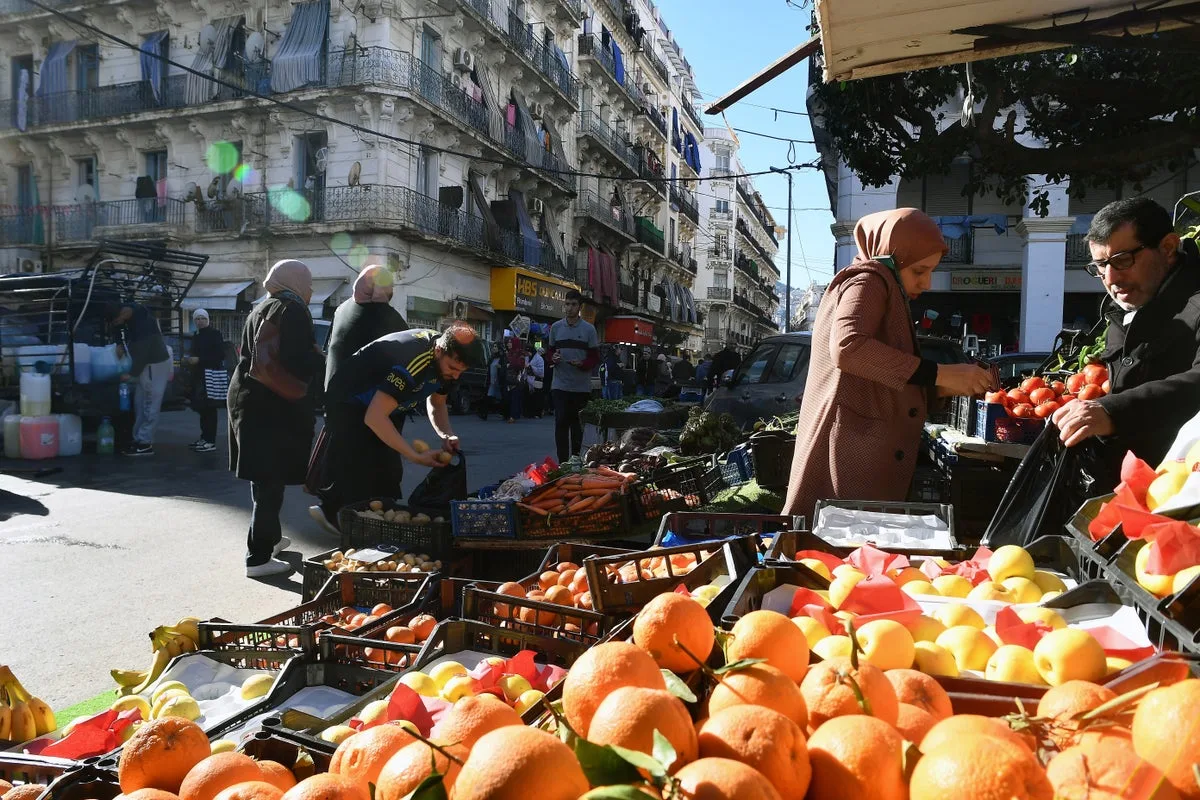
Algerians Face Ramadan Feast Crisis as Soaring Prices Defy Government Aid
As Algerians observe Ramadan through fasting, prayer, and communal gatherings, a pressing concern shadows the holy month: the escalating difficulty of affording traditional holiday feasts. This period, deeply significant for Muslims worldwide, typically features lavish meals after sunset prayers, but economic strains are rendering these celebrations inaccessible for many.
Economic Strain Amidst Natural Wealth
Despite Algeria's abundant gas and oil resources, the purchasing power of its citizens has sharply declined in recent years, pushing increasing numbers below the poverty line. Food prices have surged dramatically, leading to occasional violent outbreaks in marketplaces. Following nationwide protests in 2019, the government has expressed concerns about potential social unrest and pledged economic assistance.
Ahmed Messai, a retired railway worker, shared his perspective at the Clauzel market in central Algiers, reminiscing about more affordable times. "In the 1970s, we earned modestly but could still stock up for Ramadan with fresh meat, fruit, and vegetables," he told The Associated Press.
Market Realities and Price Hikes
The Clauzel market, a bustling hub in Algiers, showcases well-stocked stalls with artistically displayed produce. However, as Ramadan approached, prices climbed steeply. One elderly woman, draped in a traditional white haik, expressed frustration as onion prices jumped from 45 to 100 dinars per kilo in just two days. She directed insults at a vendor discussing profit margins, while her shopping basket remained empty.
Other staples have become prohibitively expensive:
- Carrots: 150 dinars per kilo
- Peppers: 200 dinars per kilo
- Green beans: 550 dinars per kilo
Even locally sourced specialties, such as mutton from the High Plateaus and young cattle from the Kabyle mountains, are now out of reach for middle-income professionals.
Government Response and Its Limitations
The Algerian government has attempted to curb speculation during Ramadan, with limited success. In a special Cabinet meeting focused on food supplies, President Abdelmadjid Tebboune emphasized the need for conditions that allow citizens to observe the holy month "in perfect peace and without worry."
Key promises included importing 144,000 sheep and 46,000 cattle to improve meat accessibility. Additionally, Tebboune announced plans to raise the minimum wage from 20,000 to 24,000 dinars, increase retirement pensions by 5-10%, and boost unemployment benefits for university graduates from 15,000 to 18,000 dinars.
However, with the average salary at 42,800 dinars—approximately $330 officially or less than $235 on the informal market—these measures may fall short. Professor Redouane Boudjema of the Institute of Journalism in Algiers noted that such aid aims to ensure "social peace" and mitigate political anger from restrictions on civil freedoms.
Rising Dependence on Charity
Civil society has stepped in to support struggling families during Ramadan. Restaurant owners are converting their establishments into "mercy restaurants" or soup kitchens offering free meals. Hocine Zairar, an academic, described this as "a good mechanism for solidarity and civic awareness," but warned that its proliferation signals deepening poverty in Algeria.
The Algerian Red Crescent operates one of the largest mercy restaurant networks in Algiers, serving up to 800 meals daily in a central square tent. Organizer Nour el-Houda Remdani highlighted the family-friendly atmosphere, noting that these eateries, once frequented mainly by singles or travelers, now attract entire families.
A Decimated Middle Class
President Tebboune acknowledged significant economic shifts in a recent television interview, stating, "The middle class, once the pride of Algeria, is now being decimated by the crisis." This admission underscores the broader challenges facing the nation as it grapples with inflation and social inequality during a time of spiritual reflection.