
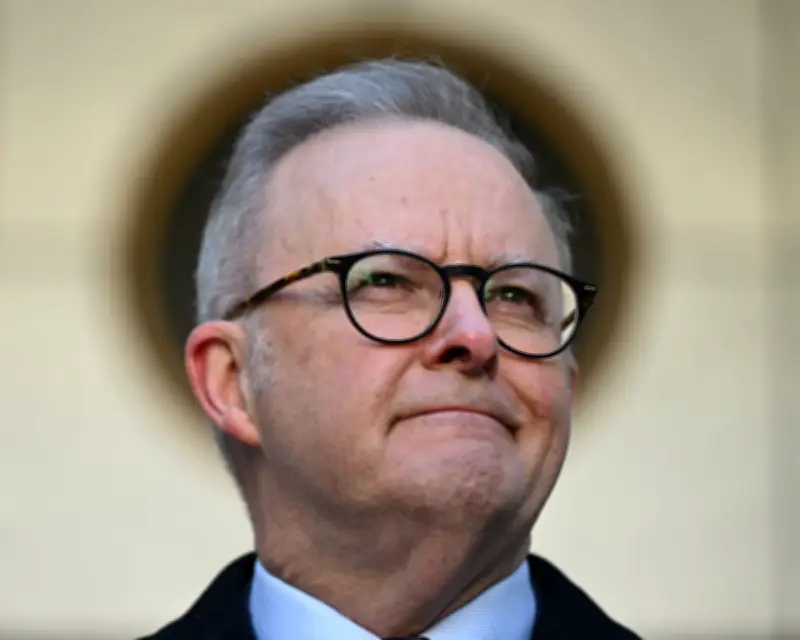
The Australian government has for weeks downplayed the prospect of extending the three-month cut to the fuel excise, but Prime Minister Anthony Albanese left the door open to a possible extension on Monday, signaling an announcement in the coming week after deliberations of cabinet’s expenditure review committee.
Albanese Signals Fuel Excise Cut May Be Extended
Anthony Albanese has indicated the federal government is open to extending the temporary cut to the fuel excise to help cushion motorists from the prolonged economic effects of the Middle East conflict. The prime minister also welcomed the announcement of a peace deal between the US and Iran to end the war and reopen the Strait of Hormuz.
However, Albanese cautioned that it would take at least “many months” for global oil trade to return to normal even after the effective blockade of the strait is lifted. “We know that the end of the conflict doesn’t mean that we’re back to business as usual,” he told reporters in Canberra.
Government's Stance on Fuel Excise Cut
The government has for weeks been downplaying the prospect of extending the three-month cut to the fuel excise and pause on the heavy vehicle road user charge, which has cost the budget $2.55 billion. Energy Minister Chris Bowen stressed on Saturday that the measure was always intended to be temporary and “remains the plan” for it to end on 30 June.
But Albanese left the door open to a possible extension, saying, “We’ll make an assessment over the coming period, and we’ll make an appropriate announcement. One of the things that my government has been concerned about is what practical measures we can take on cost-of-living measures.”
Peace Deal and Economic Implications
The reopening of the Strait of Hormuz – a shipping lane vital to global oil trade – is contingent on the official signing of the peace deal, which mediator Pakistan said would take place in Geneva on Friday. Australia was among the first countries to endorse the US and Israel’s strikes on Iran in late February as a means of preventing Tehran from acquiring nuclear weapons.
As the war expanded into regional conflict and the oil crisis worsened, the Albanese government began to urge de-escalation and questioned Donald Trump’s long-term strategy in the Middle East. The announcement of a peace deal means Australia is likely to avert Treasury’s worst-case scenario for an extended war, which forecast that inflation could surpass 7% in the year through December.
Albanese acknowledged there would still be economic disruptions: “Whilst we want to see the conflict end, and we hope that that has occurred, we also want to be very conscious of the fact that that doesn’t mean that everything returns to normal in just a day or indeed a week or even a month, it will be at a minimum many months before things return to normal.”
Market Reactions and Political Responses
On Monday, the price of Brent crude dropped below US$84 a barrel shortly after the agreement was announced, taking oil prices to their lowest levels since early March. If crude prices continue to decline, inflationary pressures should ease, reducing the likelihood of further rate hikes in Australia. However, the issue is complicated by depleting petroleum reserves around the world, with analysts warning that it will take months to replenish inventories, keeping prices elevated.
Opposition leader Angus Taylor was noncommittal when asked if the fuel excise cut should be extended: “Well, let’s see what happens to the fuel price over the next little while. It’s come down … the crude oil price, at least, has come down overnight, and we’d expect that to flow through to the bowser, but let’s see if it’s sustained.” Taylor and shadow foreign minister Ted O’Brien welcomed the peace deal, stating that “the Strait of Hormuz must be reopened as soon as possible and freedom of navigation must be restored. This is a vital trade route for the global supply of energy, fertilisers and other essential commodities. While trade through the Strait is under threat, Australian families and businesses will continue to pay the price through higher fuel costs, higher energy costs and more pressure on an already painful cost of living crisis.”




