
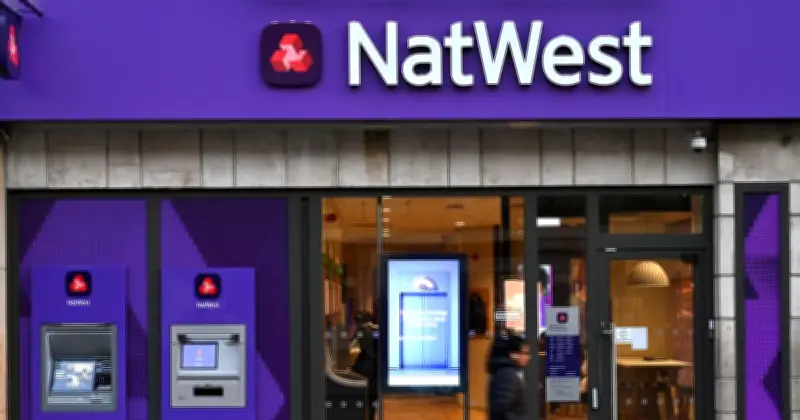
UK Towns Hit Hardest by Bank Closures Since 2022
New data has revealed the UK towns that have lost the most banks since 2022, with over 2,160 branches shutting down during this period. The figures have sparked concerns among experts about the long-term impact on elderly and vulnerable individuals across Britain.
According to exclusive data from the Daily Express, Torquay in Devon has lost seven branches since 2022, including NatWest, Lloyds, Halifax, Santander, and Barclays. Falmouth in Cornwall, Herne Bay in Kent, Wilmslow in Cheshire, and Whitley Bay in Tyne and Wear have each lost six branches.
While banks cite plummeting footfall and a shift towards digital services as the main reasons behind the closures, experts have raised concerns about financial exclusion for older and less tech-savvy customers.
Impact on Vulnerable Groups
Data shows that over 70% of adults in the UK use online banking to check balances, transfer funds, and pay bills. This change in consumer behaviour, combined with the escalating costs of maintaining a physical presence on the British high street, means many traditional branches are no longer economically viable.
Christopher Brooks, head of policy at Age UK, warns that older people are "at high risk of being cut adrift" if more branches shut. He describes mass bank closures as a "really serious problem" that has "deep ramifications on British society."
"The banks need to take this seriously and need to make sure that people can still access services to manage their money," he told the Daily Express. "People still need to pay for essential goods and services, as well as take part in leisure activities."
As well as elderly people, a shift towards online banking excludes those with learning difficulties, those on low incomes, and domestic abuse survivors who rely on in-person services to manage their cash. Mr Brooks believes more needs to be done to support the minority groups who cannot bank online.
"Helping more people get online is definitely part of the solution. There has to be more training and support available to people," he says. "It's an enormous leap to expect people who have never used the internet before to all of a sudden be able to use these online services. It's also difficult to train up people in something as risky as managing money. If you click the wrong button, you could lose everything. It's important to have ongoing support in place for people so that there is somewhere trustworthy for them to contact. That could be through the bank, telephone services that run alongside online banking, or through a charity or even a local authority."
Dennis Reed, the director of Silver Voices, says the closure of banks is "destroying" the British high street. He is calling on more to be done to support pensioners and low-income families.
"Bank branch closures are destroying our high streets, making it more difficult to get access to cash and isolating pensioners and low income families," he said. "The closures are being exacerbated by the surge in businesses and public services insisting on app- and online-only payments. The Government is sitting on its hands while our cash economy is destroyed, setting up yet another review. Urgent action and legislation is required to save cash."
Bank Responses and Solutions
There are currently around 300 banking hubs across the UK, with more set to be rolled out in the near future. Banks view them as a way to mitigate the impact of branch closures. These shared high street spaces, where different banks work together, are designed to bring face-to-face services back to communities that have lost their branches. They allow people to sit down and speak with a "community banker" to withdraw cash, deposit cheques, and pay bills.
Barclays, which has not closed a branch in two years, is present in 214 banking hubs across the UK. The bank has also extended its branch opening hours, adding around 33,500 hours of availability every year.
A Lloyds Banking Group spokesperson said: "With access to one of the biggest branch networks in the UK, alongside local banking options like our community bankers, the Post Office, PayPoint, plus our leading apps and 24/7 messaging service, we offer our customers more choice and convenience than ever before."
Solange Chamberlain, CEO, Retail Banking, NatWest Group said: "This is an important moment for our customers and the communities we serve. We are investing to offer customers a seamless mix of ways to bank with us, including over the phone, digitally, or via our free to use ATM network — while continuing to support those who prefer face-to-face banking in branches and community banking hubs. We will not announce any further branch closures until at least 2029 and are expanding more flexible and accessible ways to bank, with enhanced support to help customers act with confidence and achieve their financial goals. We understand the impact these changes can have for our colleagues and customers, and we will engage personally with all those affected by today's closure announcement."
Each bank has also reminded customers there is still a variety of ways to access services, including on mobile applications, over the phone, and physical branch appointments. Customers can also withdraw cash or deposit cheques at the Post Office.
On the banking hubs, Mr Brooks of Age UK said: "There are now around 300 banking hubs which are being rolled out across the country. They're probably the best solution for the medium to long term in order to secure the provision of banking services in our communities that have lost branches."
Towns with Most Bank Closures Since 2022
Torquay
- Barclays, 39/40 Fleet Street: Closed March 2023.
- NatWest, 128 Newton Road: Closed May 2023.
- TSB, 221 St Marychurch Road: Closed October 2024.
- Lloyds, 51/52 Fleet Street: Closed November 2024.
- Santander, 41 Fleet Street: Closed June 2025.
- Halifax, 3/4 Union House: Closed July 2026.
- NatWest, 108 Union Street: Closure date TBC.
Falmouth
- NatWest, 29/30 Market Street: Closed August 2022.
- Halifax, 8 Killigrew Street: Closed September 2022.
- HSBC, 46 Market Street: Closed October 2022.
- Barclays, 6 Killigrew Street: Closed September 2023.
- Santander, 13 Market Street: Closed July 2025.
- Lloyds, 11-12 Killigrew Street: Closed May 2026.
Herne Bay
- Barclays, 130 Mortimer Street: Closed September 2022.
- HSBC, 129 High Street: Closed October 2022.
- Halifax, 149/151 Mortimer Street: Closed April 2024.
- Lloyds, 144/146 High Street: Closed May 2025.
- Santander, 135 Mortimer Street: Closed July 2025.
- NatWest, 140 High Street: Closed February 2027.
Wilmslow
- RBS, 27 Water Lane: Closed June 2022.
- HSBC, Bank Square: Closed May 2023.
- Barclays, 59 Grove Street: Closed August 2023.
- NatWest, 4 Grove Street: Closed May 2025.
- Halifax, 20/22 Grove Street: Closed May 2025.
- Santander, 39 Grove Street: Closure date TBC.
Whitley Bay
- HSBC, 279 Whitley Road: Closed May 2023.
- Halifax, 22/24 Park View: Closed June 2023.
- NatWest, 18 Park View: Closed July 2023.
- Barclays, 86 Park View: Closed December 2023.
- Lloyds, 257 Whitley Road: Closed March 2025.
- Santander, 269 Whitley Road: Closed August 2025.




