
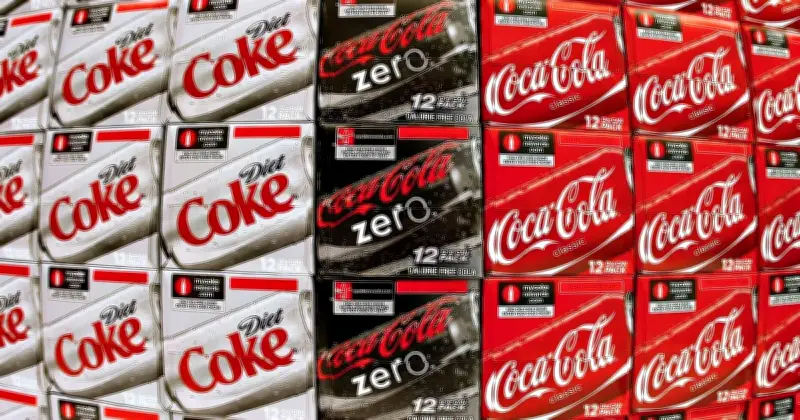
If you have ever found yourself confused over the difference between Diet Coke and Coke Zero, you are not alone. Many people struggle to explain the distinction between these two popular sugar-free beverages. Internet forums are filled with debates and personal opinions on the topic.
What Are Diet Coke and Coke Zero?
Diet Coke and Coke Zero are both among the world's best-selling soft drinks. According to the Coca-Cola Company's official results, sales of Coke Zero grew by 14% in 2025, while Diet Coke sales remained flat compared to the previous year. For a company that generated $47.9 billion in revenue in 2025, that translates to billions of bottles and cans sold worldwide.
Diet Coke was the company's first sugar-free cola, launched in 1983. Coca-Cola Zero followed in 2006 and was later replaced by Coca-Cola Zero Sugar in 2016.
Do Diet Sodas Help with Weight Loss?
Both drinks contain 0g of fat, 0g of carbohydrates, and 0g of sugar. In contrast, a 330ml can of Coca-Cola Original Taste contains 10.6g of sugar. The Coca-Cola Company states that both drinks are sugar-free and calorie-free, leading many consumers to believe they do not contribute to weight gain. However, the reality may be more complex.
Robert H. Shmerling of Harvard Medical School notes that research suggests artificially sweetened diet sodas may not aid weight loss and could even lead to weight gain. One concern is that they might create cravings for sweet, high-calorie foods. Rodent studies have shown that aspartame, an artificial sweetener, can damage a part of the brain that signals when to stop eating. However, other studies indicate that low-calorie sweetened beverages can help with weight loss, and reverse causation may complicate findings.
Are Diet Coke and Coke Zero Bad for You?
Despite containing no sugar or calories, both drinks include chemically created ingredients. The Zoe Science and Nutrition website emphasizes that zero calories does not automatically mean healthy. Ingredients include:
- Colour (Caramel E150d)
- Sweeteners (Aspartame, Acesulfame K, Enzymatically Produced Steviol Glycosides)
- Natural Flavourings
- Caffeine Flavouring
There is growing concern among scientists about the health impacts of ultra-processed foods and drinks. Dr. William Li, a physician and author, stated that high soda consumption is associated with metabolic disease, cardiovascular disease, and cancer risk. However, both Zoe and Harvard acknowledge that the long-term health effects are still being studied.
Key Differences Between Coke Zero and Diet Coke
The Coca-Cola Company states that the primary difference is taste. Coke Zero Sugar is designed to taste more like original Coca-Cola, while Diet Coke has a lighter, distinct flavor. Ingredient lists also show slight variations:
- Diet Coke: Carbonated Water, Colour (Caramel E150d), Sweeteners (Aspartame, Acesulfame K), Natural Flavourings, Caffeine Flavouring, Acids (Phosphoric Acid, Citric Acid).
- Coca-Cola Zero Sugar: Carbonated Water, Colour (E150d), Acid (Phosphoric Acid), Sweeteners (Aspartame, Acesulfame-K, Enzymatically Produced Steviol Glycosides), Natural Flavourings, Caffeine Flavouring, Acidity Regulator (Sodium Citrates).
Online opinions reflect these differences. One Reddit user noted, "Flavour wise, Coke Zero is supposed to be closer to regular Coke while Diet Coke is much more distinct." Another added, "I'm a life-long Diet Coke drinker and I can definitely taste the difference. Zero is too sweet."




