A special court could be established to handle dozens of criminal cases related to the Grenfell Tower fire, the House of Commons has been informed. During a parliamentary debate ahead of the ninth anniversary of the tragedy on Sunday, Kensington and Bayswater MP Joe Powell stated that this proposal is currently under consideration.
Up to 57 individuals are facing charges, including manslaughter, in connection with the 2017 blaze in west London that resulted in 72 deaths. An additional 20 organisations may also face prosecution. Offences investigated by the Metropolitan Police include corporate and gross negligence manslaughter, fraud, misconduct in public office, and health and safety crimes. However, trials may not commence before 2029, a full 12 years after the fire.
Labour MP Joe Powell emphasised the complexity of the potential trials, stating: "If those trials take place, which I obviously hope they will, they will be some of the most complex ever held in the UK. I therefore hope that consideration is also given to a special court or a Nightingale-style court. I know that is being looked at." He added: "Corporate manslaughter convictions are incredibly rare, so it is essential that those responsible face the full force of the law."
A full-size replica of a section of Grenfell Tower is being constructed at a cost of £2 million to assist with the court cases. Brent East MP Dawn Butler, chair of the Labour group of London MPs, called for the criminal cases to be "fast-tracked," stressing that "justice delayed is justice denied." Grenfell United, the group representing bereaved families and survivors, has described the wait for justice as "unbearable."
Responding in the Commons, Mr Powell said: "I hope that once the CPS (Crown Prosecution Service) has made its decisions, we will do everything we can to ensure that the court capacity is in place to deliver the trials as soon as possible." Grenfell survivor Edward Daffarn noted that while the police update was "encouraging," the continued "wait for justice is tortuous, and it’s an old expression, but justice delayed is justice denied."
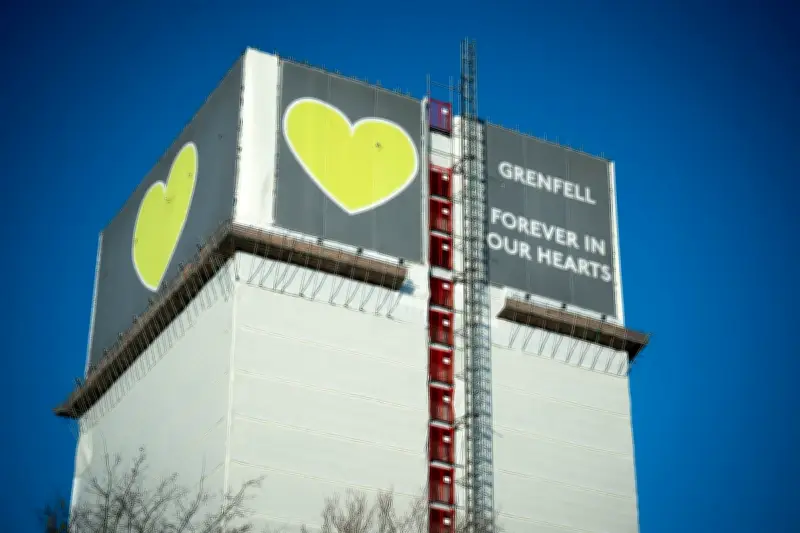
On Sunday evening, the annual silent walk will take place in west London, followed by the reading of the names of the 72 deceased and speeches by campaigners. Grenfell United has urged people to join the walk "in solidarity to remember those we lost, and demand justice," noting that it is "the last anniversary with any part of Grenfell Tower remaining" as it is being dismantled. In Parliament, Samantha Dixon, minister for building safety, fire, and democracy, stressed that the Government recognises delivering justice as a "central concern" for the Grenfell community. She added: "It is one of the largest and most legally complex investigations the Met has ever conducted, with around 220 officers and staff dedicated to the investigation. Those responsible must be held to account, and we fully support the Met in its important work, which must remain independent."
She emphasised that across Government there is a focus on "ensuring that justice is served" over the Grenfell disaster. Currently, 57 individuals are suspects for a range of possible criminal offences linked to the blaze, and 20 organisations are under scrutiny. Charging files are expected to be submitted to the CPS for most of them by September, with a decision on charges anticipated before the 10th anniversary of the blaze next summer, according to police. The Met has investigated the roles of 15,000 individuals and 700 organisations relevant to the Grenfell inquiry. Some 165 million electronic files have been gathered and examined for evidence, while 14,400 statements have been taken in an investigation that has so far cost approximately £150 million.
A public inquiry into the blaze concluded in September 2024 that the tower in North Kensington was turned into a death trap by "dishonest" construction firms, architects, and negligent politicians who ignored fire safety for decades. Chaired by Sir Martin Moore-Bick, the inquiry revealed that a refurbishment of the tower before the fire left the block coated in cheap and highly flammable materials. Grenfell residents had attempted to raise alarms about dangers in the building, but their warnings were disregarded.