When the heat gets truly relentless, I understand the urge to pile into the car and make a beeline for the Welsh coast. The problem is, when a heatwave arrives, it seems like all of Wales has the same stroke of genius, resulting in beaches so packed you can barely find a patch of sand to call your own.
On the most recent scorching bank holiday, South Wales hot spot Barry Island drew enormous crowds, resulting in packed beaches, traffic, busy attractions, and queues for food and drinks.
Don’t get me wrong, we have some magnificent beaches here, and it seems like a waste of a sunny day if you don’t head immediately for the seaside. However, as I’ve written about before, I prefer visiting our scenic shorelines in the off-season when it’s quieter, and you can bag deals on accommodation, including my favourite budget stay.
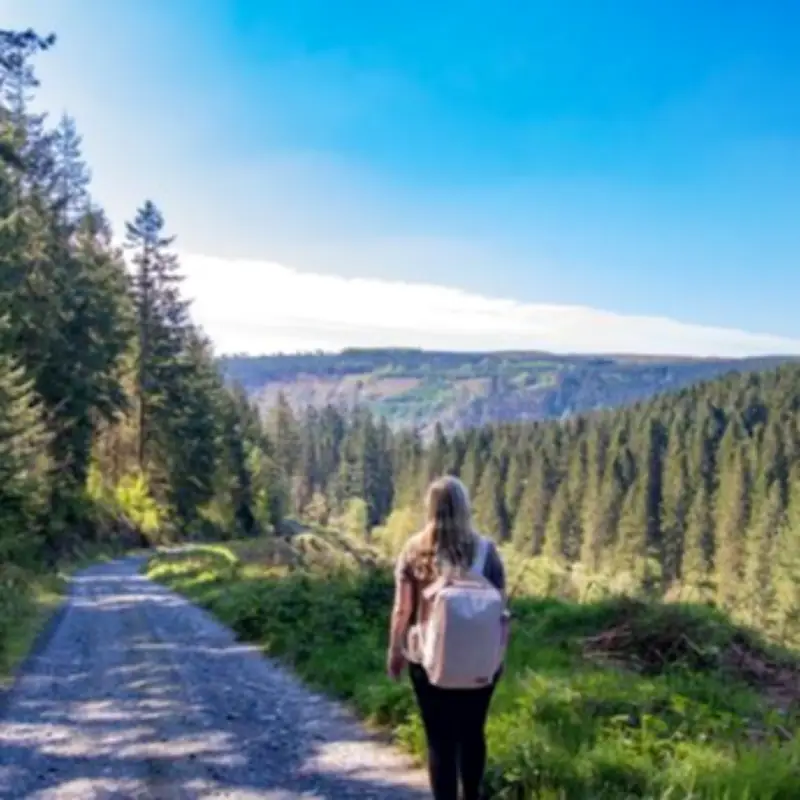
So, where do you go when there is a sunny spell, and you are avoiding the beach? Luckily, we have lots of places to choose from in Wales if you don’t want to hit the beach but still want to enjoy the good weather. Here are some things you can do this summer if you don't fancy baking on a beach when the next heatwave hits.
Ponty Lido, Pontypridd
This bookable community pool is an ideal spot to cool down and manages crowds well, as only visitors with swim/spectator tickets are allowed poolside. Located in Ynysangharad War Memorial Park, it’s the perfect place to try out this wellness craze, with three outdoor pools that cater to families, cold-water fanatics, and serious swimmers.
The facilities are top-notch, too, with indoor and outdoor showers and changing rooms. The Lido has quite the comeback story. Once a thriving hub, it closed in 1991 for much-needed restoration work. After years of waiting, it re-emerged in 2015 with a royal fanfare, officially reopened by The Prince of Wales and The Duchess of Cornwall.
They’ve kept the charming 1920s turnstiles and wooden cubicles but added all the modern touches you actually need. For just £3.50 for adults (kids go free), you can take a supervised swim with life guards on hand and on-site changing facilities– a bargain considering how a coffee can easily top £4 these days.
Skomer Island, Pembrokeshire
With the largest puffin colony in southern Britain and slightly greener than your average Med island, Skomer Island in Pembrokeshire is a wildlife haven that will capture your imagination. Puffin season has kicked off for 2026, and the wildlife-rich island is bursting with thousands of puffins.
Featured in the BBC1 natural history series, Wild Isles, presented by Sir David Attenborough, Skomer is located in Jack Sound, less than a mile off the coast of Pembrokeshire. It's an excellent destination for a sunny family adventure, just 20 minutes from the mainland by boat.
If you book a visit via Pembrokeshire Islands Boat Trips, you'll be able to see the brilliant puffin colony along with Guillemots, Razorbills and Manx Shearwaters, all appearing at certain times of the year. According to the Wildlife Trust of South and West Wales, “Puffins start arriving in mid-April. They are present from May-July. The first ones start leaving in mid-July, and all Puffins are gone by the end of July”, so you had better be fast. Fortunate visitors may even glimpse dolphins slicing through the surrounding waters or seal pups being born on the rugged cliffs around the remote island, which is less than 3 km².
Spring Valley Lakes, Neath
I’m always a fan of a lake for a cool down when the weather is scorching, and one of my favourites is less than an hour from Cardiff. Spring Valley Lakes is an 80-acre eco-friendly campsite and activity centre in the Glyn-Neath Valley (just off the A465) in south Wales, and is hugely underrated.
Here you’ll find a family-friendly campsite with grass pitches, glamping pods, wild swimming and lake activities operated by the Clear Water Activity Centre. The most striking thing when you arrive is the two vast lakes set in a natural, wooded valley that look like they were straight out of a Swiss postcard. This forest-hugged lake spot is as picturesque as any I’ve seen in Europe.
These freshwater lakes in the centre were man-made and quarried over 26 years ago for the sand and stone used to build the dual carriageway. The site is bordered by the Neath River on one side and the old canal system on the other. They now offer glamping pods, camping, on-site facilities and various activities, making it a fabulous spot for a family escape. On a hot day, you can paddleboard, kayak and also dip in the clear lakes and have a leisurely swim with the whole family. Thanks to the spring-fed waters, the clarity is perfect for both swimming and water sports.
St Dogmaels, Cardigan Bay
Cardigan Bay is chronically underrated, considering it’s bursting with wildlife. If you don’t want to hit the busy beaches, why not board a boat to try and spot marine animals in the choppy waters? This is the best place in Europe to spot dolphins, especially if you're skimming over the waves on a fast-paced RIB ride through the bay’s choppy waters.
When the weather is decent, book a budget-friendly Bay Explorer boat trip with local pros, A Bay to Remember. Departing from nearby St Dogmaels, this hour-long trip wizzes you around the shore on high-speed RHIBs, where your knowledgeable skipper will keep their eyes peeled for wildlife. This is one of my favourite wildlife tours, and I got loads of lush snaps of seals and seabirds when I went.
Bouncing over the waves, you'll likely spot herring gulls and razorbills swooping through the air and landing on rocky outcrops. Your vessel will also speed past Mwnt, a sandy bay that's one of the best places in Ceredigion to spot dolphins, so keep a good lookout for those distinctive dorsal fins slicing through the water. These zippy boat trips also visit secluded, pebbled bays where Atlantic grey seals lounge lazily on the rocks. These resident seals are easy to recognise thanks to their distinctive heads. Their scientific name even translates to “sea pig with a hooked nose.” Adorbs or what?
Garth Mountain, Cardiff
If you want a peaceful stroll in the sunshine, the Garth Mountain walk is a roughly six-kilometre trail that takes you to the summit of Garth Mountain, at 1007 feet. More of a hill than a mountain, it’s the site where Hugh Grant’s 1995 picture, The Englishman Who Went Up A Hill But Came Down A Mountain, was filmed.
This strenuous hill walk has several starting points, and many walkers start from Taffs Well or Gwaelod-y-garth Village. It’s one of the more challenging day walks in Cardiff, so you’ll need decent hiking gear, a map, or the super handy OS app. If you start from Gwaelod-y-Garth, you can walk through Garth Wood and experience the stillness of an ethereal pine forest. The Garth Mountain trails are waymarked, but I recommend taking an OS Map with you or using the Outdoor Active app if you are new to walking. You can follow the peaceful trails to the summit or opt for a loop around the ridgeway.
Wentwood Forest, Newport
I always recommend a shady forest walk when the temperatures soar, and if you can find a quieter spot, even better. Wentwood Forest, sandwiched between Newport and Chepstow, isn’t as busy as some of the other woodlands I’ve visited and is a gorgeous place for a stroll.
This 353 hectares of woodland is owned by the Woodland Trust and is part of the wider forest block managed by Natural Resources Wales, which spans 1,000 glorious hectares. According to Welsh Gov, it's an example of "good-quality, well-managed woodland and exemplifies a large-scale restoration from a plantation site to a Semi-Natural Ancient Woodland. This restoration work showcases the successful collaboration between the Woodland Trust and Natural Resources Wales."
You can find a walking trail on the handy AllTrails app; alternatives include the Ordnance Survey app or Komoot route-planning apps, and set off under a canopy of trees. Load up a hiking app, and you'll see that the woodland has an extensive network of roads, tracks, footpaths and bridleways, waymarked throughout, providing many walking routes. I recommend Wentwood Forest Circular, a family-friendly 4.7 km circular trail that takes you through the forest on a craggy woodland trail.
The Great Orme, Llandudno
Swap the busy Llandudno beachfront for a jaunt up the Great Orme. Slater on the sunscream and explore a limestone headland soaring above the Welsh coastline, offering jaw-dropping views and a whole host of activities to make your day unforgettable.
If you're looking for a day out with a twist, there's no better way to experience this iconic landmark than by hopping aboard Britain’s only cable-hauled street Tramway. The Great Orme Tramway first opened in 1902 and is Britain’s only cable-hauled public road tramway. The Tramway climbs a mile high up the Great Orme Country Park and Nature Reserve. The unique journey begins at Victoria Station and ends at the Halfway Station exhibition. You can change trams there and continue your journey to the summit of the Great Orme.
This striking limestone headland has a prehistoric story buried beneath its heather-clad slopes. In the 12th century, the Welsh poet Gwalchmai ap Meilyr referred to it as Cyngreawdr Fynydd. Its English name, Great Orme, comes from the Old Norse word for sea serpent and is likely inspired by the headland’s curving serpentine shape as it juts into the sea. It's famously home to the Great Orme Kashmiri goats, whose ancestors once roamed the mountains of Northern India, Ladakh, Kashmir, the Iranian plateau, or the Afghan highlands.
While the two-mile-long Great Orme is also best known for its vintage tram and spectacular views from the 679ft (207m) summit, it has a hidden history you might not be aware of. This nature reserve is home to miles of underground copper mines, estimated to have produced enough copper to make nearly 2,000 tons of bronze. More than five miles of explored tunnels and passageways are here. In 2005, the Guinness World Records team awarded them the title of The Largest Prehistoric Copper Mines in the World. Today, these copper mines are an unusual but fascinating tourist attraction. While some sections of this historic mine are closed to the public, one section is open for self-guided tours, part of the Bronze Age mining experience that the kids will love.
Llanerch Vineyard, Hensol
Who doesn’t want a lovely wine in the sunshine? Vino lovers should head to Llanerch, the UK’s first vineyard hotel, where you can swill wine in a beautiful leafy setting. This extraordinary Welsh retreat offers everything you could dream of for a sun-drenched escape, all set against the stunning backdrop of lush vineyards.
One of the absolute highlights of staying at Llanerch is the chance to experience wine tasting in a fun and informative way. During this 1-hour experience, you’ll be guided through the fascinating process of how Llanerch’s signature wines, including the renowned Llanerch Estate and Cariad wines, are made. You’ll learn all about the art of grape growing, the delicate balance required in winemaking, and how the unique Welsh terroir adds a distinctive touch to each bottle.
You and your group will have the chance to sample a selection of these exceptional wines, each one offering its own unique character influenced by the local environment. And if that wasn't enough to make you swoon, the Llanerch Estate also had an award-winning restaurant serving a delicious selection of dishes perfectly paired with their exquisite wines. You can book a stay at the Vineyard Hotel to make your stay even more special. Wake up to lovely views of the rolling vineyards, stroll through the estate, and experience a quiet moment among the vines.
Dylan Thomas Trail, Laugharne
Have a stroll following in the footsteps of one of Wales’ literature icons - Dylan Thomas on ‘Dylan’s walk’. Begin your journey in Laugharne, where you’ll spot a “brown as owls” castle beloved of Dylan Thomas - Laugharne Castle. This is where Thomas wrote Portrait of the Artist as a Young Dog in the castle summerhouse.
From here, follow the trail to another highlight, the boathouse. Dylan Thomas lived at his beloved boathouse in Laugharne in Carmarthenshire for the last four years of his life, and you and your fave can come and see where the iconic Welsh poet resided. On the path to it lies the writing shed overlooking the Taf Estuary. Here, Thomas is said to have written his famous radio drama ‘Under Milk Wood’.
It’s been left as though he had popped out for some sea air and has yet to return. As if he had, against his own advice, wandered gently into that good night. The boathouse is one of the most beautiful literary locations on the Celtic Routes of Wales and Ireland. It is a lovely place to visit in the sunshine to learn more about poetry and have coffee and a cake by the sea.
Llanishen Reservoir, Cardiff
Another favourite of mine, this reservoir is a lush spot to cool down with a supervised swim in the Welsh capital. Built in the late 19th century, Lisvane and Llanishen Reservoirs are Victorian landmarks covering 110 acres of green and blue space, home to a wealth of flora and fauna, and offering a peaceful oasis in Cardiff.
Opened in 2023, the redeveloped site underwent a substantial revamp, creating a hub for health, wellbeing, and recreation while protecting and enhancing the site's biodiversity. The centre includes an activity hub for water activities on the wildlife-rich reservoir, including open-water swimming, canoeing, paddleboarding, and sailing. I’m a huge fan of swimming and cold-water dipping here – especially on a lovely sunny morning. For just £4, you can take a supervised cold-water dip in the reservoir, and the unobtrusive supervision is reassuring. Friendly, vigilant guides keep an eye on everyone, whether you’re a hardened open-water addict or a first-timer.
The Mawddach Trail, Dolgellau
If you don’t mind biking in the heat, this scenic cycle route takes you along the old Ruabon to Barmouth railway line from Dolgellau's historic town to Barmouth's popular seaside town. You'll be utterly wowed by the picturesque views of the Mawddach estuary and the towering Cadair Idris.
This trail starts in the heart of Dolgellau's charming grey-stone town, which is located below the magnificent mountain of Cadair Idris. The area is also a haven for wildlife—it’s abundant in birdlife, and if you are lucky, you may even spot a seal. There is an RSPB reserve at Penmaenpool, where the old signal box is used as an observation centre. You can stop off at the quaint George III Hotel at Penmaenpool for refreshments and to take in the epic views of the National Park.
Continuing along the trail, you cross the famous Barmouth Bridge, stretching over half a mile across the mouth of the beautiful River Mawddach. The old Victorian town of Barmouth, with its bustling promenade, is an ideal place to rest and enjoy the views of Cardigan Bay in the sunshine.
Fforest Farm, Cardiff
Cardiff locals love Forest Farm, located on the banks of the River Taff, just south of the busy M4 motorway. Here, you’ll stumble upon remnants of the old Glamorganshire Canal and wander through a patchwork of habitats including woodland, wild meadows, ponds, and marshes. Keep your eyes peeled for a storybook castle peeking through the ancient beech woods of Fforest Fawr.
The 55-mile-long Taff Trail also runs through the site, leading to longer walks out of the city and towards Brecon via riverside paths, railway paths and forest roads. This area was once a hub of industrial activity as the Glamorganshire canal linked the ironworks of Merthyr Tydfil to the sea at Cardiff. They were extensively used in industry, trade, and coal transport in south Wales. Despite its industrial heritage, the area became a protected haven for plant and animal life and is a favourite place for Cardiff residents to visit.
Though it’s a local favourite, the woods stretch farther than you’d expect, and newcomers might find themselves delightfully lost. Thankfully, Friends of Forest Farm has mapped out a guided walk to help you explore with confidence. If you want to extend your walk, there's also a guided route around Fforest Fawr on the handy AllTrails app. Starting at Castell Coch, the trail winds through the ancient woodland of Fforest Fawr along scenic paths where you can watch for wildlife and see vivid bluebells in spring. The main route around Forest Farm is approximately three miles long and starts at the small car park in Forest Farm Road. You can walk to the car park from the Taff Trail, take the bus to Whitchurch village, or take the train to Coryton station and walk to Forest Farm Road to start the walk.