Chaos erupted on one of Tenerife's most treacherous roads as a bout of heavy rainfall dislodged massive boulders, sending them hurtling onto vehicles in a terrifying incident that has sparked urgent safety concerns. Shocking images from the scene reveal the devastating aftermath on the TF-82 route, which connects Tamaimo and Santiago del Teide on the popular Spanish island.
Narrow Escape for Drivers Amidst Destruction
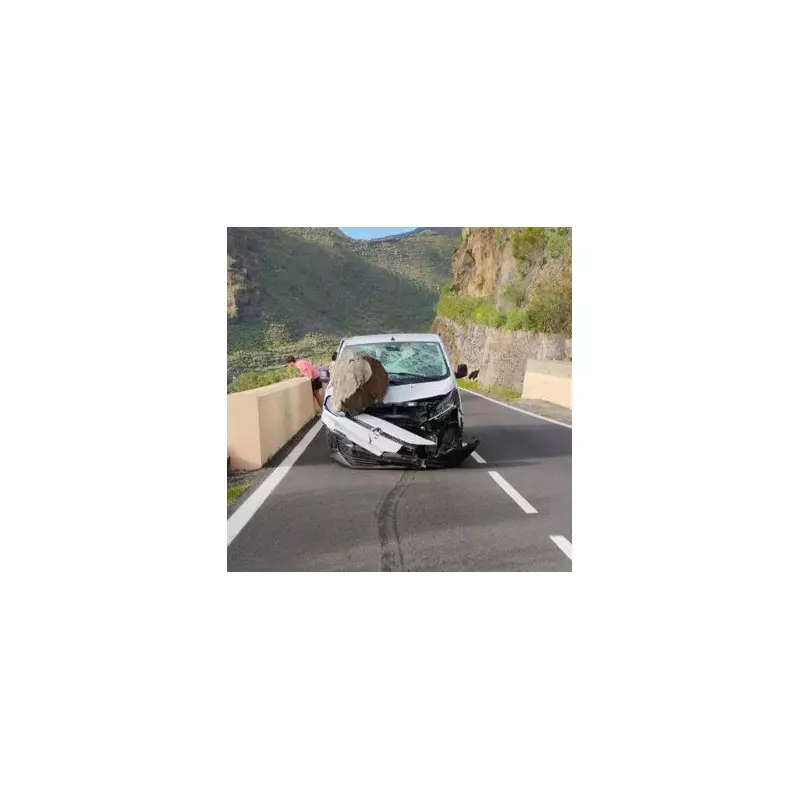
Photographs circulated by local authorities show two cars lying decimated by the impact of falling rocks, with the rear of a red vehicle completely crushed and a white car sustaining significant bonnet damage from a boulder that remained perched above its right headlight. Remarkably, both drivers involved in this frightening crash escaped unharmed, reportedly coming within mere centimetres of disaster.
A third image reveals rubble strewn across a substantial stretch of carriageway, rendering the road impassable and providing stark visual evidence of the rocks' considerable size through comparison with two individuals visible in the distance.

Mayor's Fury Over Repeated Warnings
The incident has prompted an angry response from Emilio Navarro, Mayor of Santiago del Teide, who took to social media to share the photographs and express frustration about ignored safety concerns. "We have been warning for years about the danger on the TF-82, with formal requests to the Tenerife Cabildo," Navarro stated emphatically. "Today we have yet another rockfall. The question is simple: what more has to happen before action is taken?"
This dangerous route, bordered by sheer rock faces that present ongoing hazards to motorists, has experienced similar incidents previously. The TF-82 was forced to close just one month earlier following a comparable rockfall event, highlighting what local officials describe as a persistent safety issue requiring immediate attention.
Emergency Response and Clean-Up Operation
Following the incident, police and maintenance crews from the Tenerife Cabildo (Island Council) attended the scene to conduct clean-up operations and assess the damage. Motorists travelling the route encountered heightened danger as authorities worked to clear the debris and make the roadway safe for passage once again.
The World Health Organization defines landslides as occurring "when large masses of soil, rocks or debris move down a slope due to a natural phenomenon or human activity," with mudslides and debris flows representing common types of fast-moving landslides that can pose serious threats to infrastructure and public safety.
Pattern of Geological Instability in Tenerife
This recent incident follows another significant geological event that affected Tenerife last April, when fifteen local residents required evacuation following a landslide in the island's north-eastern region. Spanish media reported that a large rock crashed onto a property in La Laguna along the TF-13 road between Bajamar and Punta del Hidalgo during that earlier incident.
Police and multiple agencies attended that scene as well, with local councils warning residents about traffic delays during investigation and clearance operations. These repeated incidents highlight the geological challenges facing infrastructure on the volcanic island, particularly during periods of heavy rainfall that can destabilise rock formations.
Tourism Implications for Popular Destination
As an immensely popular holiday destination for British tourists, safety incidents on Tenerife's roads carry significant implications for the island's tourism industry. According to reports from Canarian Weekly, the Canary Islands attracted nearly 18 million visitors in 2024, comprising both international and domestic tourists.
British holidaymakers represent the largest proportion of visitors to the Canaries, accounting for more than 40 percent of all international arrivals with approximately 6.3 million UK tourists visiting annually. Tenerife itself proved the most sought-after destination within the archipelago, attracting more than 6.2 million international visitors alongside over 900,000 domestic holidaymakers in recent years.

The combination of geological hazards, heavy tourist traffic, and infrastructure challenges creates complex safety considerations for authorities managing Tenerife's road network, particularly on routes like the TF-82 that traverse difficult terrain while serving both local communities and visitors to the island.