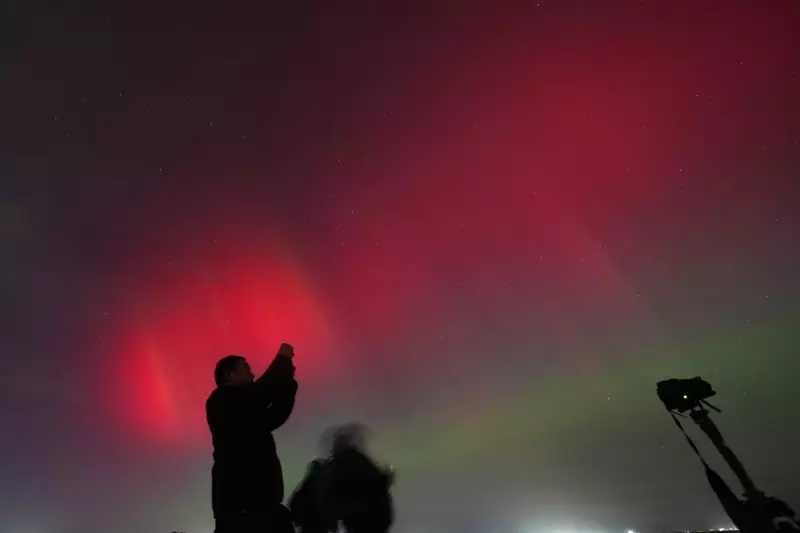
A spectacular celestial display is set to grace British skies tonight, as a powerful solar storm heads directly for Earth. The Met Office has issued an extreme space weather alert, forecasting that the aurora borealis, or Northern Lights, could be visible across many parts of the country.
Solar Fury Sparks Geomagnetic Storm
The cause of this potential light show is a colossal eruption from the Sun. On Sunday 18 January 2026, a significant solar flare launched a vast cloud of magnetised particles, known as a Coronal Mass Ejection (CME), into space. This CME is now on a collision course with our planet and is expected to arrive late on Monday 19 January or in the early hours of Tuesday 20 January.
When it hits Earth's magnetic field, the interaction is predicted to trigger strong geomagnetic storm conditions. This disturbance is what pushes the auroral oval—the ring of light normally centred over the polar regions—much further south than usual, bringing the possibility of the Northern Lights to UK latitudes.

When and Where to Look for the Aurora
The key to witnessing this natural phenomenon hinges on two critical factors: the precise timing of the CME's impact and local weather conditions. The Met Office notes that patchy cloud cover is forecast for much of the UK on Monday evening, which could obscure the view in some areas.
For the best chance of success, astronomers and aurora hunters recommend the following steps:
- Find a location with minimal light pollution—away from streetlights and towns.
- Allow your eyes at least 15-20 minutes to fully adjust to the darkness.
- The optimal viewing window is likely to be within an hour or two of midnight, once the sky is fully dark.
- Look towards the northern horizon, though during strong storms, the lights can appear directly overhead.
A Stellar Opportunity for Stargazers
The event has already captured attention beyond our atmosphere. An astronaut aboard the International Space Station (ISS) recently captured a stunning time-lapse of the aurora borealis, showcasing the vibrant green and red hues from orbit.
While sightings are never guaranteed, tonight presents a rare opportunity for residents across the UK to potentially witness one of nature's most breathtaking displays without leaving the country. With clear patches in the cloud and the storm arriving as predicted, the stage is set for a memorable night of skywatching.