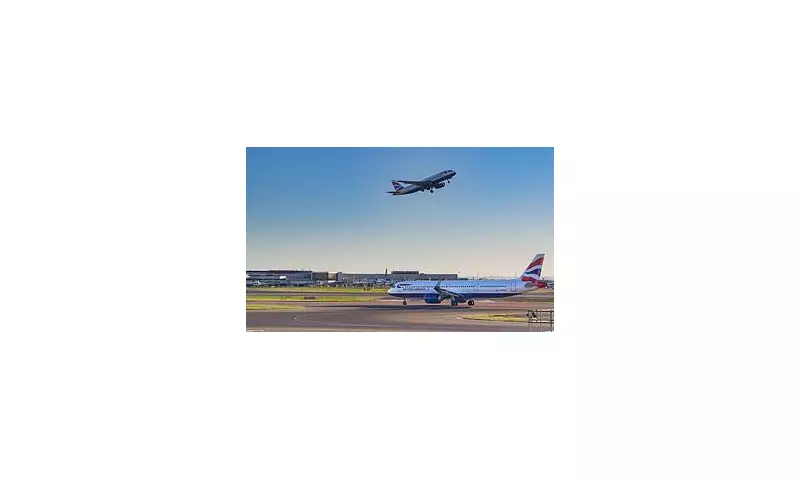
A travel expert has issued a stark warning to all holidaymakers after a distressing incident at London Heathrow Airport, where two siblings were refused boarding for their connecting flight and missed a family wedding in Thailand. The case highlights critical pitfalls in multi-airline itineraries and insufficient transfer times at major hubs.
The Costly Heathrow Connection Failure
Siblings Katie and Richard had eagerly anticipated attending a family wedding in Chiang Mai, Thailand. They booked their journey through the holiday agent TravelUp, which arranged flights from Glasgow to Chiang Mai with connections at Heathrow and Beijing. Their travel involved flying with British Airways from Glasgow to Heathrow, then switching to Air China for the onward legs to Beijing and finally Chiang Mai.
A 90-Minute Window That Wasn't Enough
According to their father, Kevin Duffy, who spoke to The Times, the itinerary provided by TravelUp allocated just 90 minutes for the connection between Terminal 5 and Terminal 2 at Heathrow. When Katie and Richard arrived at their gate for the Air China flight, they were refused boarding and informed that it had already closed. Consequently, Air China treated them as no-shows and cancelled the remainder of their itinerary.

This left the siblings in a desperate situation. Stranded at Heathrow and unable to reach TravelUp for assistance, they were forced to purchase new flights at a cost exceeding £4,000. To add to their woes, their baggage was left behind at the airport, compounding the travel disruption.
Expert Advice and Airline Minimums
Julia Brookes, the Travel Doctor at The Times, responded to Kevin Duffy's account by urging travellers connecting at Heathrow to allow at least two hours for transfers to proceed smoothly. She emphasised that passengers should factor in this additional time even if airlines or agents suggest shorter connections.
Air China later clarified that the 90-minute transfer time given by TravelUp was insufficient, stating that a minimum of two hours should be accounted for such connections. This revelation underscores the importance of verifying transfer requirements directly with airlines, especially when journeys involve multiple carriers without codeshare agreements.
TravelUp's Response and Refund Process
Thankfully, Julia Brookes was able to intervene and secure a refund for Katie and Richard. TravelUp apologised for the incident, acknowledging that the itinerary featuring both British Airways and Air China without a codeshare agreement may have contributed to how the connection was handled.
A spokesperson for TravelUp told The Times: We have been in close contact with the airline and they have confirmed that the minimum connection time at London Heathrow is 90 minutes. As a gesture of goodwill, the airline has agreed to refund both tickets in full, despite the tickets originally being non-refundable. Once the refund has been settled back into our account by the airline, we will process the full refund to the passengers without delay.
However, regarding the additional flights Katie and Richard booked to resolve the immediate crisis, Julia Brookes noted that they must approach Air China directly for any refund. TravelUp also maintained that the route should have been viable, as they only sell journeys that airlines themselves offer.
Key Takeaways for Future Travellers
This incident serves as a cautionary tale for anyone booking complex multi-airline trips. Key lessons include:
- Always verify minimum connection times with airlines, especially at busy hubs like Heathrow.
- Be wary of itineraries that combine airlines without codeshare agreements, as coordination can be problematic.
- Allow extra buffer time beyond the minimum suggested to account for terminal transfers, security, and unexpected delays.
- Ensure you have direct contact details for your travel agent and airlines in case of issues.
The Daily Mail has approached TravelUp for further comment on this case, which highlights ongoing challenges in the travel industry regarding itinerary management and passenger protection.