A powerful surge of frigid Arctic air has triggered a severe winter crisis across Asia, bringing historic snowfall, paralysing transport networks, and leaving thousands of travellers stranded. The intense cold snap, which scientists link to disturbances in the polar vortex, has resulted in the heaviest snow in decades for Russia's Far East, blanketed Shanghai in a rare white covering, and forced widespread flight cancellations in Japan.
Record Snowfall and 'Snow Apocalypse' in Russia
Russia's Far East is reeling from its most significant snowfall in sixty years. On the Kamchatka Peninsula, weather stations recorded staggering totals, with over two metres (6.5 feet) of snow falling in the first half of January alone, following 3.7 metres in December. The port city of Petropavlovsk-Kamchatsky, located 6,800 km east of Moscow, has been buried under mammoth drifts several metres high.
Cars have been almost completely submerged, and residents have been forced to dig narrow tunnels through the snow to reach their apartment buildings. Local blogger Polina Tuichieva described the surreal scene, comparing the vast snowbanks to sand dunes. Social media footage showed locals walking on top of snowbanks beside traffic lights and even jumping from the high drifts for fun.

Rare Snow Spreads South, Disrupting China
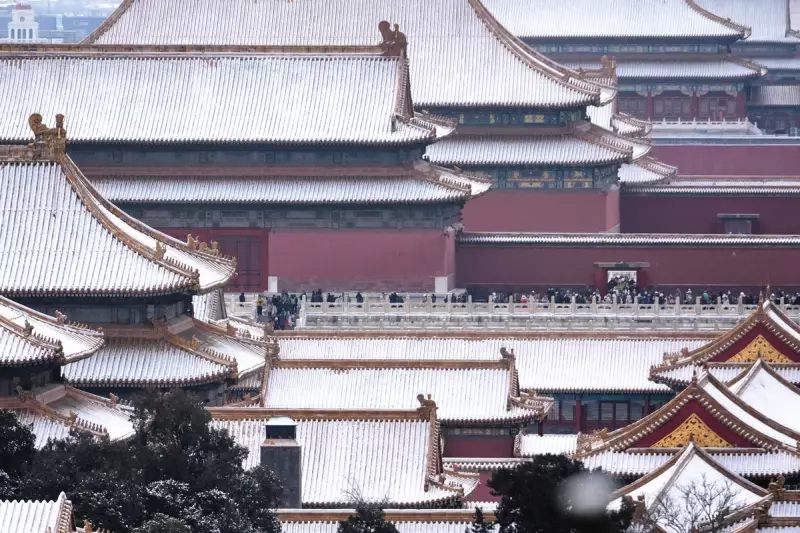
The same weather system swept southwards into China, bringing a sharp temperature drop and rare snowfall to the financial hub of Shanghai on Sunday, 18 January 2026. Authorities warned the frigid conditions could persist for at least three days. For many residents, it was a startling sight; the city last experienced heavy snowfall in January 2018.
"It was the first time I have seen such heavy snowfall in Shanghai," said 23-year-old student Li Meng. The wintry scenes marked a dramatic reversal from the previous week, when Shanghai enjoyed unseasonably warm temperatures of 20°C (68°F). The sudden shift left 30-year-old resident Yu Xin remarking on the "strange" and significant temperature fluctuations.
The disruption was widespread. Chinese state media reported that sections of major highways across 12 provinces, including Shanxi, Inner Mongolia, and Heilongjiang, were closed due to snow and ice. Sharp temperature drops were also recorded in provinces south of the Yangtze and Huai rivers, such as Jiangxi and Guizhou.
Scientific Explanation and Wider Travel Disruption
Climate scientists attribute this intense cold snap to powerful waves of frigid air originating from the Arctic. Theodore Keeping, an extreme weather researcher for World Weather Attribution at Imperial College London, explained the phenomenon. "You've got these two simultaneous bursts of cool air coming down from the Arctic due to a waviness in the jet stream," he said.
He further detailed that a relatively weak Arctic polar vortex—the mass of cold air circulating the Arctic—results in a less intense jet stream. This weakness allows waves of cold air to spill southwards, impacting Eastern Russia and Asia.
The fallout has been severe for travel. In Japan, strong winds and heavy snow along the northwestern coast grounded dozens of flights at the height of the winter season. ANA Holdings cancelled 56 flights, affecting approximately 3,900 passengers, while Japan Airlines scrapped 37 flights, disrupting 2,213 travellers. Most cancellations were concentrated at New Chitose Airport near Sapporo in Hokkaido. The Japan Meteorological Agency has issued warnings for more heavy snow between 21 and 25 January, urging people to avoid non-essential travel.
This continent-wide weather event underscores the significant disruption that can be caused by extreme winter conditions linked to broader atmospheric patterns, leaving transport authorities and residents grappling with the consequences of a historic Arctic blast.