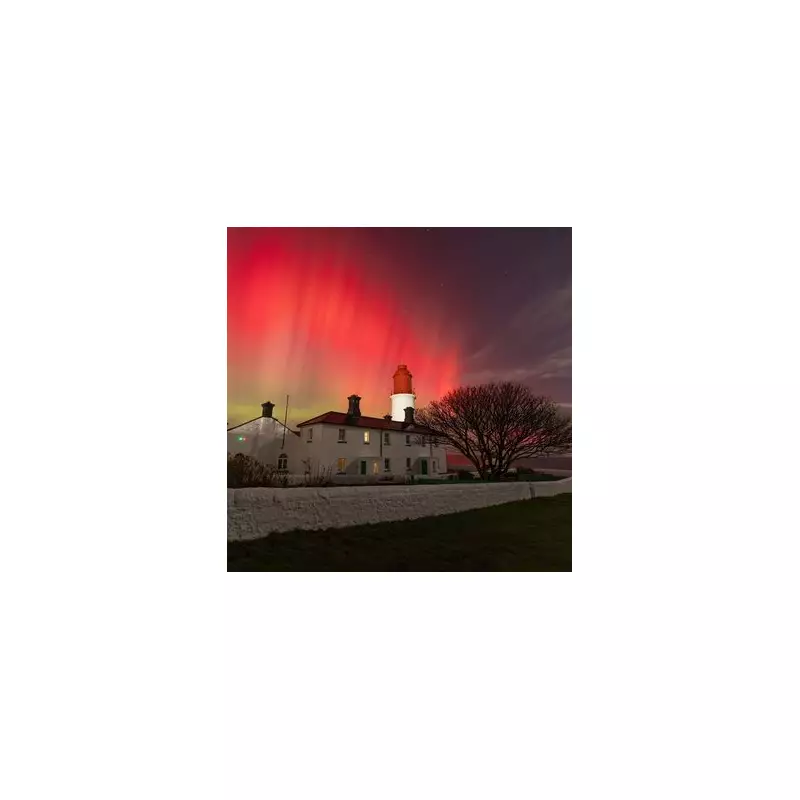
The United Kingdom is poised for a potential celestial spectacle tonight, with forecasters warning that a severe geomagnetic storm could push the Northern Lights much further south than usual. This follows a massive solar flare that has sent a wave of charged particles, known as a Coronal Mass Ejection (CME), directly towards Earth.
Met Office Issues Geomagnetic Storm Watch
The Met Office has issued a Geomagnetic Storm Watch, predicting a storm that could reach G3 (Strong) or G4 (Severe) intensity. The Sun is currently at the peak of its 11-year activity cycle, known as the solar maximum, which is making such events more potent. If the storm hits the G4 level, the aurora borealis could be visible across parts of the Midlands and even Southern England, a rare occurrence for these latitudes.
When and Where to Look for the Aurora
The CME is expected to arrive anytime from late Monday night into the early hours of Tuesday, 20 January 2026. While the peak visibility window is typically around midnight, the exact timing of the impact is uncertain. Experts advise skywatchers to start checking the northern horizon as soon as it gets fully dark, from around 6pm onwards.

To have the best chance of a sighting, you need a clear, unobstructed view to the north. Escaping urban light pollution is crucial. Ideal locations include:
- Coastal areas facing north.
- High vantage points like hills.
- Official Dark Sky Discovery Sites, such as the Peak District, Lake District, or Northumberland.
Smartphone Cameras Could Reveal Hidden Colours
Even if the famous green or pink hues are faint to the naked eye, your smartphone might capture them. Modern camera sensors are highly sensitive to the aurora's specific light wavelengths. To try this, set your phone to Night Mode or manually select a long exposure of 3 to 10 seconds. If a greenish glow appears on your screen that you can't see directly, it indicates active auroral activity that may intensify into a visible display.
The British Weather Remains the Biggest Challenge
The main obstacle for hopeful aurora hunters tonight is the UK's own weather. Forecasts indicate patchy cloud cover across much of the country. The clearest skies are expected in parts of Northern England and Scotland late tonight. Unfortunately, the South West of England and parts of Wales may be hampered by thicker cloud and rain moving in during the early hours of Tuesday.
This event serves as a powerful reminder of our planet's direct connection to solar activity, offering a chance to witness one of nature's most breathtaking phenomena right from British soil.