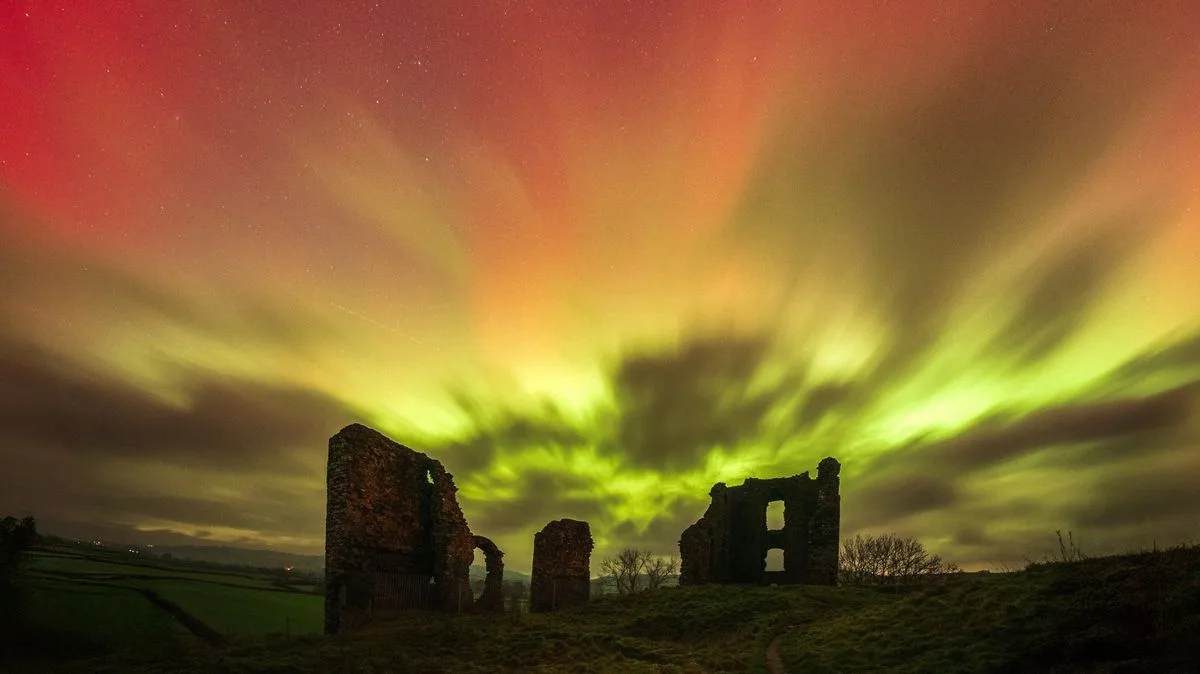
Severe Solar Storm to Paint UK Skies with Northern Lights on Monday Night
Northern Lights to Reach UK Tonight After Solar Storm

The UK's skies are set for a dazzling celestial display as a severe solar storm is predicted to bring the aurora borealis, or Northern Lights, much further south than usual on Monday night.

Met Office Issues Extreme Space Weather Alert

The Met Office has activated an extreme space weather warning following a colossal solar flare that erupted from the Sun's surface on Sunday 18 January 2026. This event launched a vast cloud of magnetised particles known as a coronal mass ejection (CME) directly towards Earth.

The charged particles are forecast to arrive late on Monday 19 January or in the early hours of Tuesday 20 January. Upon impact with Earth's magnetic field, they are expected to generate a G3 or 'Strong' geomagnetic storm.

"A coronal mass ejection is expected to arrive on 20 January, which is likely to give a G3/ Strong Storm, with the chance of seeing aurora down to mid-latitudes," the Met Office confirmed. The full intensity of the light show will hinge on the precise timing of the CME's arrival.

Viewing Prospects and Cloud Cover Challenge

While the astronomical conditions appear promising, terrestrial weather may pose a challenge for hopeful stargazers. The latest forecast indicates patchy cloud over most of the UK on Monday evening, though breaks are possible in many areas.

Krista Hammond, the Met Office's Space Weather Manager, provided further detail. "There is still some uncertainty around the exact timing of the CME’s arrival, but it is expected overnight tonight or tomorrow morning," she said.

"The CME is likely to result in geomagnetic storming, giving the potential to view the aurora. However, sightings are dependent on the CME arriving during hours of darkness and clear skies. Unfortunately, cloud and rain on Tuesday evening may make viewing difficult, even if the timing is favourable."

How and When to See the Aurora

For the best chance of witnessing the Northern Lights, experts advise getting away from towns and cities to locations with minimal light pollution. Allow your eyes at least 15-20 minutes to fully adjust to the darkness.

According to the US National Oceanic and Atmospheric Administration (NOAA) Space Weather Prediction Center, the optimal viewing window is typically within an hour or two of midnight.

The agency notes that "these hours of active aurora expand towards evening and morning as the level of geomagnetic activity increases." While auroral activity may occur earlier or later, the peak visual spectacle is most likely around the middle of the night.

This event follows previous notable displays, such as the one seen over Whitley Bay in England in May 2024, and serves as a powerful reminder of the dynamic connection between our Sun and Earth.