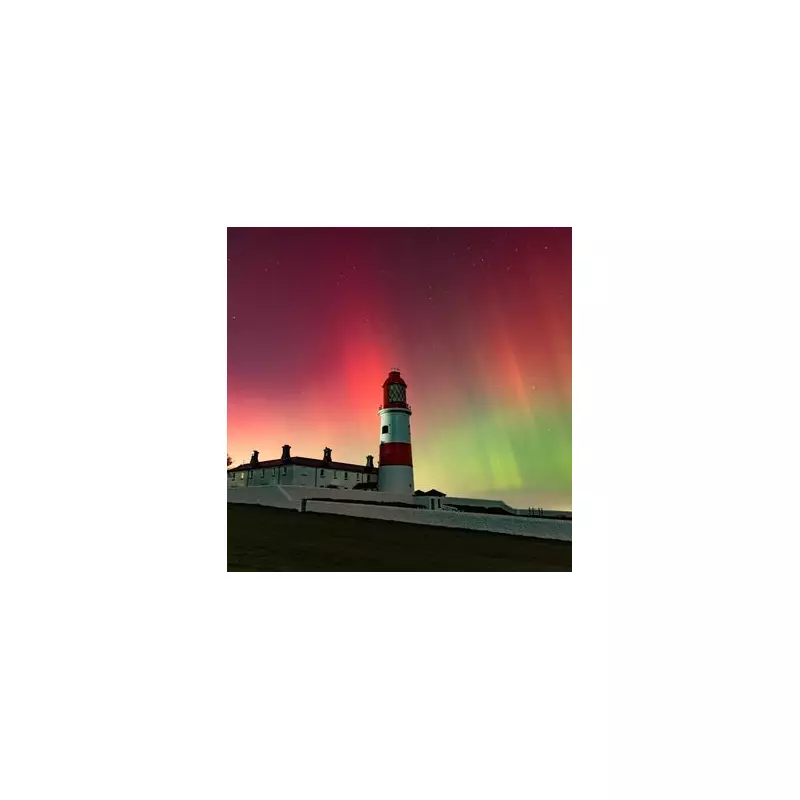
Skywatchers across Britain are being urged to look up this week as a powerful solar storm could paint the night sky with the mesmerising colours of the Aurora Borealis.
Solar Storm Set to Illuminate UK Skies
The Met Office has confirmed that a significant coronal mass ejection (CME) – a massive eruption of charged particles from the Sun – is on a collision course with Earth. This solar flare, which erupted from the Sun on Sunday, 18 January 2026, is expected to reach our planet overnight on Monday, 19 January, or early on Tuesday, 20 January.
The interaction of these charged particles with Earth's magnetic field is what creates the dazzling light show known as the Northern Lights. The Met Office forecasts that this event could trigger a G2 to G3 (Moderate to Strong) geomagnetic storm, with a chance of even reaching G4 (Severe) levels at times.

Where and When to Look for the Aurora
The celestial spectacle has the potential to be seen across Scotland, Northern Ireland, and northern England. Under ideal conditions, there is even a possibility that the aurora could be glimpsed from more southern regions of the UK.
However, visibility hinges on two critical factors: timing and the weather. Krista Hammond, the Met Office Space Weather Manager, explained: "The CME is likely to result in geomagnetic storming, giving the potential to view the aurora. However, sightings are dependent on the CME arriving during hours of darkness and clear skies."
Unfortunately, the forecast presents a challenge. Weather maps indicate heavy cloud cover and rain for much of the UK on Tuesday evening, which could obstruct the view. The Met Office suggests that the thinnest cloud cover is expected around 4am on Tuesday morning, making this the optimal window for a potential sighting.
How to Maximise Your Chances of a Sighting
For those hoping to catch a glimpse of this natural wonder, the Met Office offers clear advice. You should:
- Find a location away from towns and cities to escape light pollution.
- Look towards the northern horizon.
- Be patient and allow your eyes to adjust to the darkness.
- Check local cloud forecasts and aim for the clearest possible skies, with the early hours of Tuesday offering the best hope.
While the arrival time of the solar particles remains uncertain, this event serves as a potent reminder of the dynamic connection between our Sun and Earth. Britons in the north, and perhaps elsewhere, are advised to keep a hopeful eye on the skies tonight and tomorrow morning for a chance to witness one of nature's most breathtaking displays.