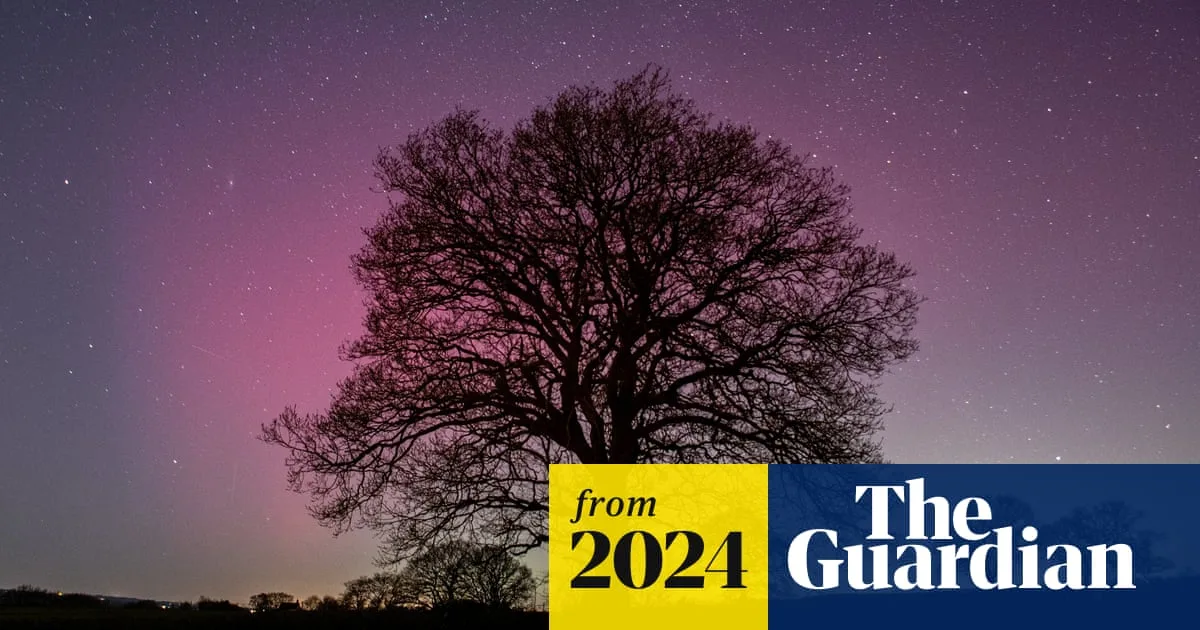
A strong solar storm heading towards Earth may allow parts of the UK to see the Northern lights this weekend. The Met Office has issued a rare severe geomagnetic storm (G4) warning, the first in nearly 20 years.
The storm, caused by powerful eruptions known as coronal mass ejections, could trigger spectacular aurora displays across Scotland, Northern Ireland, and parts of northern England and Wales, according to the Met Office. Krista Hammond, the Met Office's space weather manager, said multiple coronal mass ejections are expected to reach Earth in the coming days, bringing potential for aurora visibility over the UK, particularly on Friday night.
While short nights at this time of year will limit the visibility window, if conditions are right there is a good chance of sightings on Friday night. Aurora visibility may persist through Saturday night, but this is likely to be less widespread, with northern parts of the UK most likely to have the best viewing potential.
Stephen Dixon, a Met Office spokesperson, added that the combination of enhanced solar activity and clear skies would improve chances of seeing the display. He noted there could even be visibility further south with the right equipment. The vast majority of the UK is expected to see sunny and dry weather on Saturday, with highs of 26C predicted for the south-east, and temperatures could rise to 27C on Sunday, which may also bring intense rainfall and thunderstorms.
The US National Oceanic and Atmospheric Administration (NOAA) issued a G4 geomagnetic storm watch for this weekend, the second highest on its scale, last issued in 2005. It said the sun produced strong solar flares beginning Wednesday, resulting in five outbursts of plasma capable of disrupting satellites and power grids. An extreme G5 storm in 2003 took out power in Sweden and damaged transformers in South Africa. NOAA said the latest storm could produce northern lights in the US as far south as Alabama and northern California.